
 Fact checked


We may receive compensation from our partners for placement of their products or services, which helps to maintain our site. We may also receive compensation if you click on certain links posted on our site. While compensation arrangements may affect the order, position or placement of product information, it doesn’t influence our assessment of those products.
BioNTech moved from relative obscurity to global recognition when its mRNA vaccine, developed with Pfizer, became central to the Covid-19 response. For UK investors, the company now represents more than a scientific success story: it is a high-profile stock listed on the Nasdaq under the ticker BNTX.
Unlike buying into familiar British names such as Tesco or Lloyds, investing in BioNTech involves exposure to a sector where valuations shift rapidly on the results of clinical trials and regulatory approvals. That volatility creates both opportunity and risk. For beginners in the UK, the central question is whether Biontech belongs in a balanced portfolio, and how to approach it with an understanding of those risks.
What BioNTech Does Beyond Vaccines
Most investors still link BioNTech with the COVID vaccine, yet the company’s ambitions extend far beyond that achievement. Its main expertise is messenger RNA (mRNA) technology, which uses genetic instructions to guide cells into producing proteins that stimulate an immune response.
BioNTech is now applying this approach to cancer therapies, treatments for rare conditions, and other infectious diseases. The potential is significant, but so are the risks. A breakthrough in oncology could transform the company’s financial outlook, while failed trials or regulatory delays could unsettle investors.
For those in the UK, it is important to see BioNTech as a science-driven business. Its revenues rely on discoveries that may take years to prove successful, making it very different from sectors with steadier income streams such as banking or retail.
Innovation and Risk in Biotech
BioNTech is now one of the most recognised names in biotechnology. The German company came to prominence during the COVID-19 pandemic through its partnership with Pfizer, which produced one of the first vaccines approved worldwide. For UK investors, that success raised a direct question:
is BioNTech still a growth story worth backing, or has much of the optimism already been priced into its shares?
Investing in biotech is very different from investing in established companies like Tesla or Glencore. Share prices can rise sharply on positive trial results, but they can also fall just as quickly if regulators raise concerns or a treatment fails. Patents, competition, and scientific progress all play a central role in shaping the company’s value. This mix of opportunity and uncertainty makes Biontech an appealing, yet demanding, option for beginners looking to diversify beyond the FTSE 100.
How UK Investors Can Buy BioNTech Shares
BioNTech is listed on the Nasdaq in New York under the ticker “BNTX”, so it is not available directly through the London Stock Exchange. UK investors need a broker that offers access to US markets.
The process is straightforward. You open an account with a suitable broker, complete the standard identity checks, and deposit funds in pounds. The broker will then convert your money into US dollars. Once your account is active, you can search for “BNTX” on the trading platform and place an order.
Currency adds another layer of risk. If the pound weakens against the dollar, the value of your US shares rises when converted back into sterling. If the pound strengthens, the opposite effect applies.
Best Brokers to Buy BioNTech Stocks in the UK
Choosing the right broker is essential for UK investors looking to access BioNTech. As the company is listed on the Nasdaq in the US, you need a platform that offers access to American markets and manages the currency conversion from pounds to dollars. Costs, usability, and available products vary, so comparing leading options is important. Below are three platforms that many beginners in the UK consider when buying BioNTech shares.
1. eToro

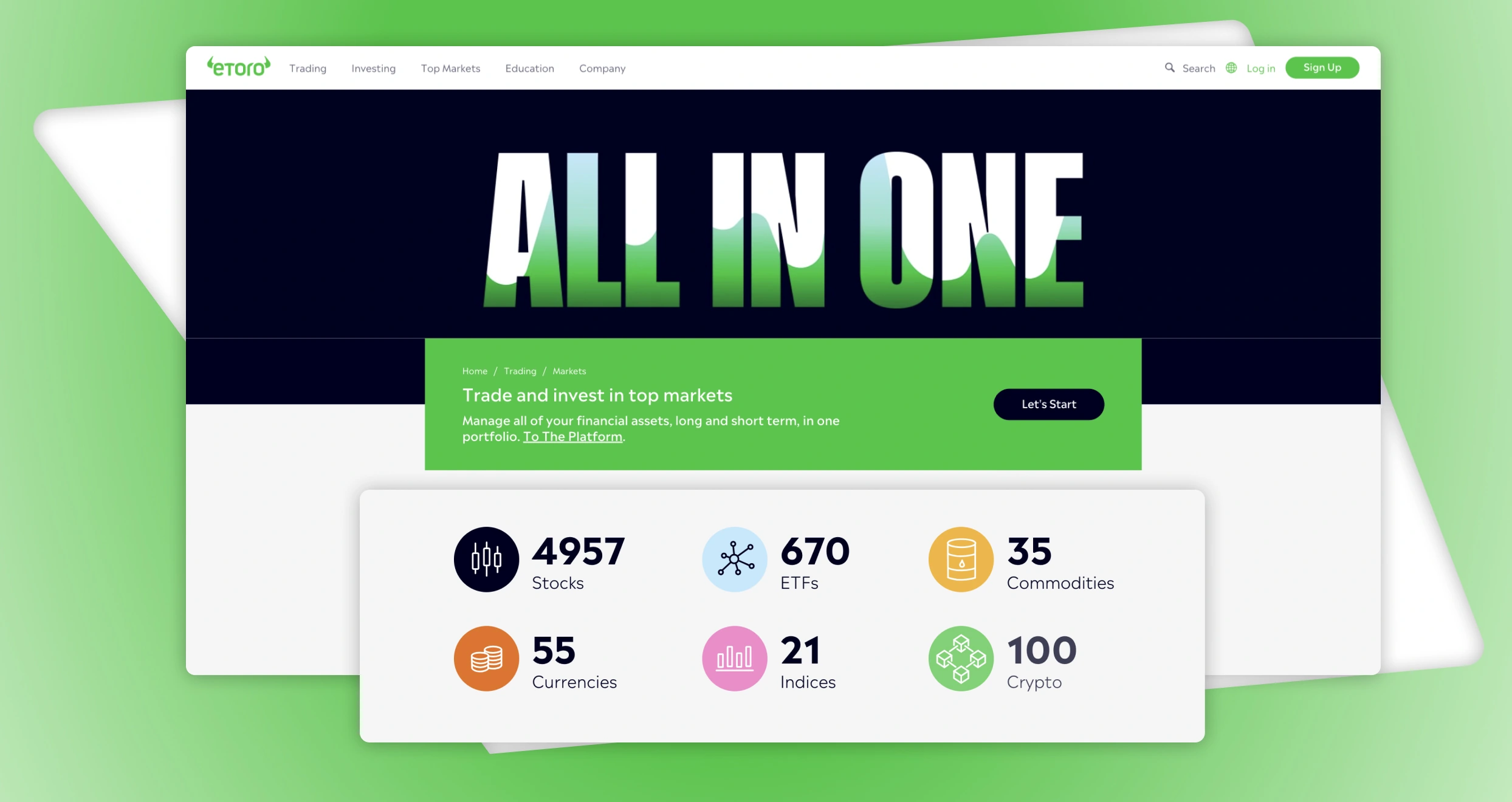
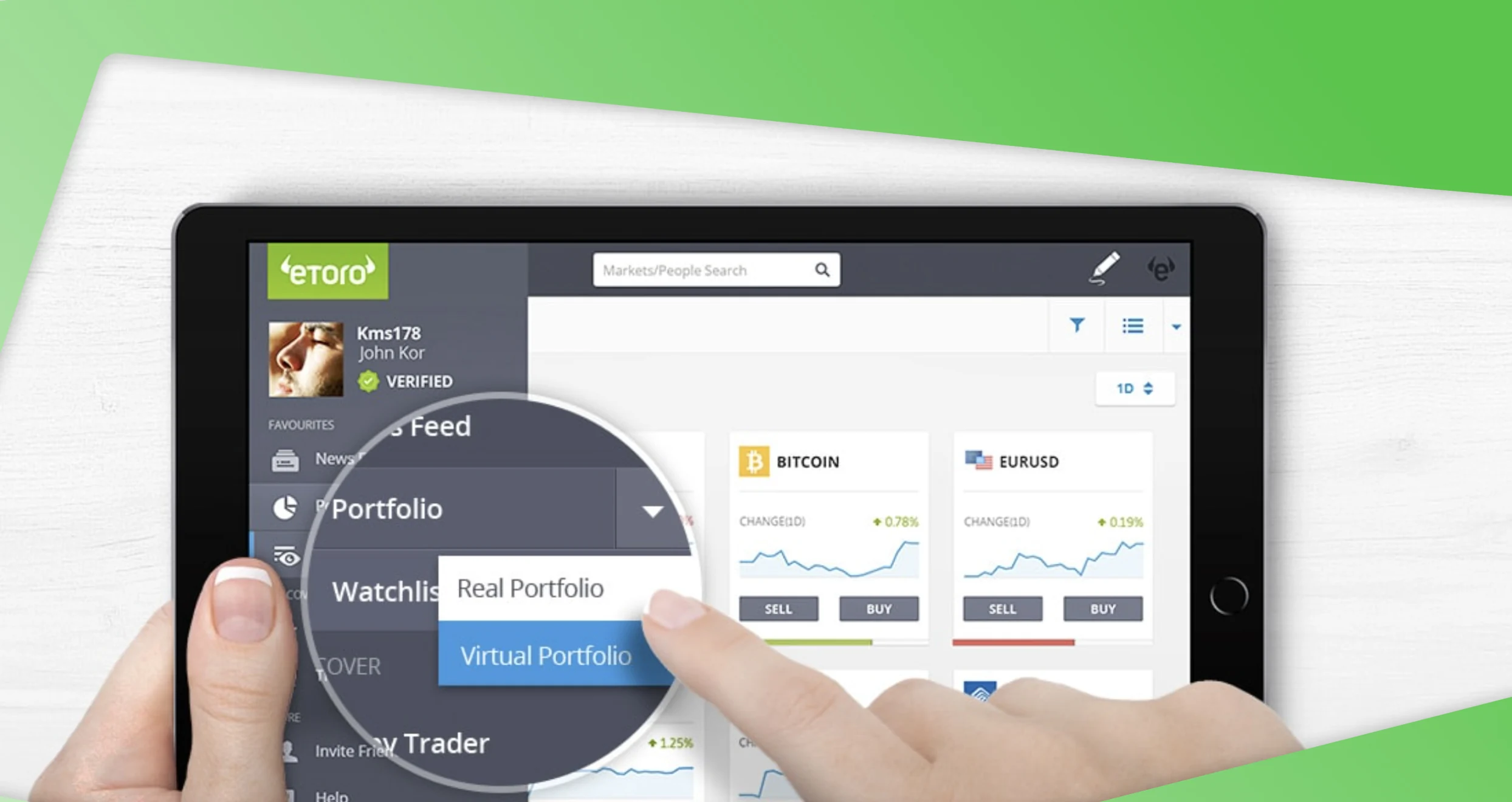

eToro has become one of the most popular online platforms for retail investors in the United Kingdom. Its main appeal lies in ease of use: the sign-up process is quick, the interface is clear, and beginners can trade US-listed shares like BioNTech without needing advanced knowledge. The platform supports fractional investing, which means you can buy part of a share instead of paying the full price. For a stock like BNTX, this makes access far more affordable. eToro also offers social trading features, allowing you to see and even copy the strategies of other users.

✔5000+ financial instruments
✔Cost-free deposits




Pros
- Simple and user-friendly platform.
- Fractional shares lower the cost of entry.
- Social trading tools provide extra learning opportunities.
Cons
- Currency conversion fees apply when depositing or withdrawing in pounds.
- Customer service can be slow during peak times.
If there’s anything that can eat away at your profit margins, it’s unnecessary costs. Thankfully, eToro fees UK are reasonable and pocket-friendly. We acquired a new account without paying a single cent, which was quite a relief. We also noticed that you can enjoy free deposits by using USD. That said, eToro supports many other currencies, including GBP, EUR, and RMB.
You will incur conversion fees if you use any currency other than USD. And if you use any currency that eToro doesn’t support, you must pay conversion fees to your payment provider. The exact conversion fees you may incur at any moment will depend on various factors, including your preferred currency and payment method.
Please note that eToro subjects each withdrawal request to a £5 fee. The platform uses this money to pay expenses arising from international money transfers. Most importantly, you can’t withdraw less than £30 from the eToro trading platform.
While depositing money into our account, we noticed that eToro has strict minimum deposit requirements. Britons using this platform have to deposit at least £100 the first time. Afterwards, you can fund your account with as little as £10, depending on your preferred payment method.
Commission-wise, eToro is very friendly to people who trade ETFs or invest in real stocks since the broker charges 0% for these assets. On the other hand, if you buy or sell crypto on this platform, expect to pay a 1% fee. CFD trading also attracts variable spreads depending on the involved instruments. For instance, the spreads for currencies and commodities start from 1 pip and 2 pips, respectively.
Not to forget, eToro charges a £10 monthly inactivity fee that kicks in after 12 months of dormancy.
2. Plus500
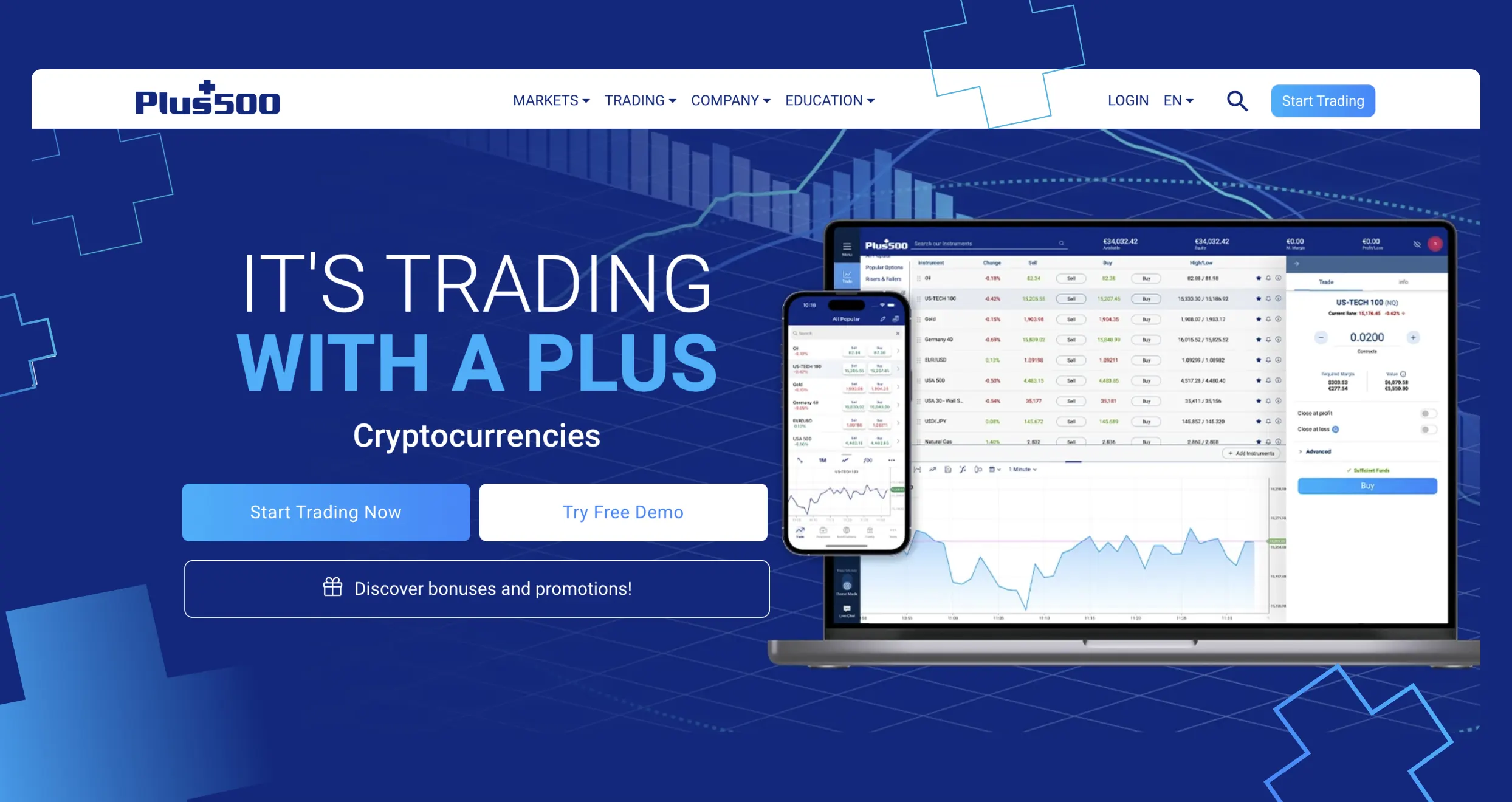
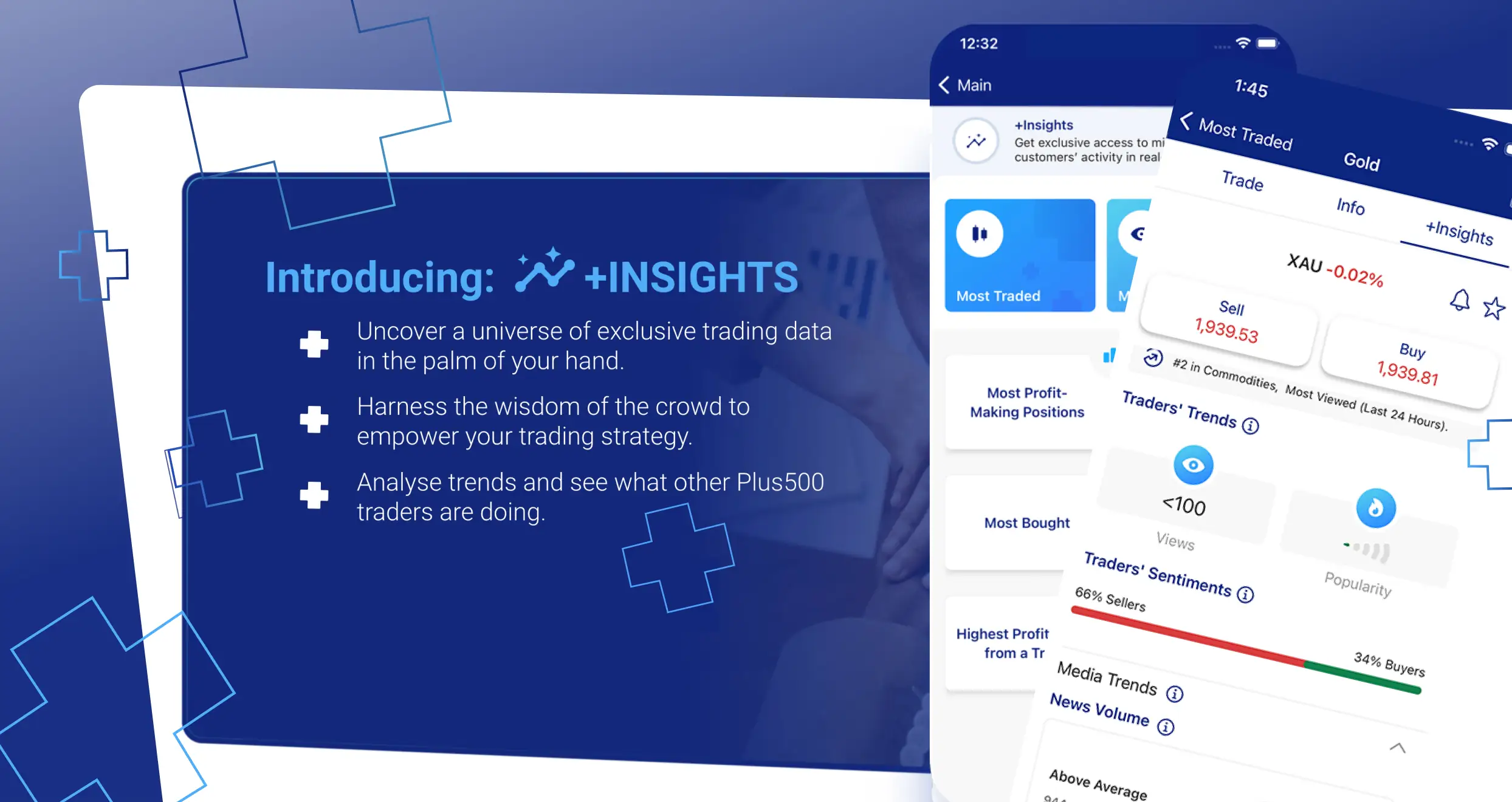


Plus500 is well known for offering Contracts for Difference (CFDs). With CFDs, you do not own the underlying BioNTech shares, but instead speculate on whether the price will rise or fall. This gives flexibility, and it also allows the use of leverage. Leverage can amplify gains, but it can also increase losses, making CFDs higher risk than direct share ownership. The Plus500 app is streamlined, making it easy to place trades on the move, and the company is regulated in several major markets, which provides reassurance.

✔User-friendly interface
✔Zero deposit and withdrawal fees
Pros
- Broad choice of CFDs across global stocks, indices, and commodities.
- Intuitive mobile app designed for fast trading.
- Strong regulatory record with multiple licences.
Cons
- Leverage can lead to rapid losses if trades move against you.
- No ownership of the shares, so you do not receive dividends or voting rights.
Brokers need to generate revenue and cover operating costs. That’s why many have fees and commissions. Sadly, high charges can undermine your profitability in the long run. That’s why looking for an affordable service provider is necessary.
With that in mind, we evaluated Plus500 fees UK. The process was easy since this broker values transparency. Our team was impressed by the fact that the trading platform doesn’t charge a dime for most services. First, opening an account is free. Deposits and withdrawals also attract zero charges. Furthermore, the broker offers free live CFD prices and dynamic charts. But note that the Plus500 minimum deposit UK is $50.
Plus500 primary source of compensation is the spread. While trading with this platform, you’ll have to cover the spread whenever you open a position. Your costs will depend on various factors, including your preferred instrument and current market conditions.
This broker also charges overnight funding and currency conversion fees. The former fee kicks in whenever you keep a position open overnight. On the other hand, you have to cover currency conversion fees whenever you interact with any currency besides your account’s base currency. Lastly, dormant Plus500 accounts attract a £10 monthly inactivity fee.
3. IG Markets
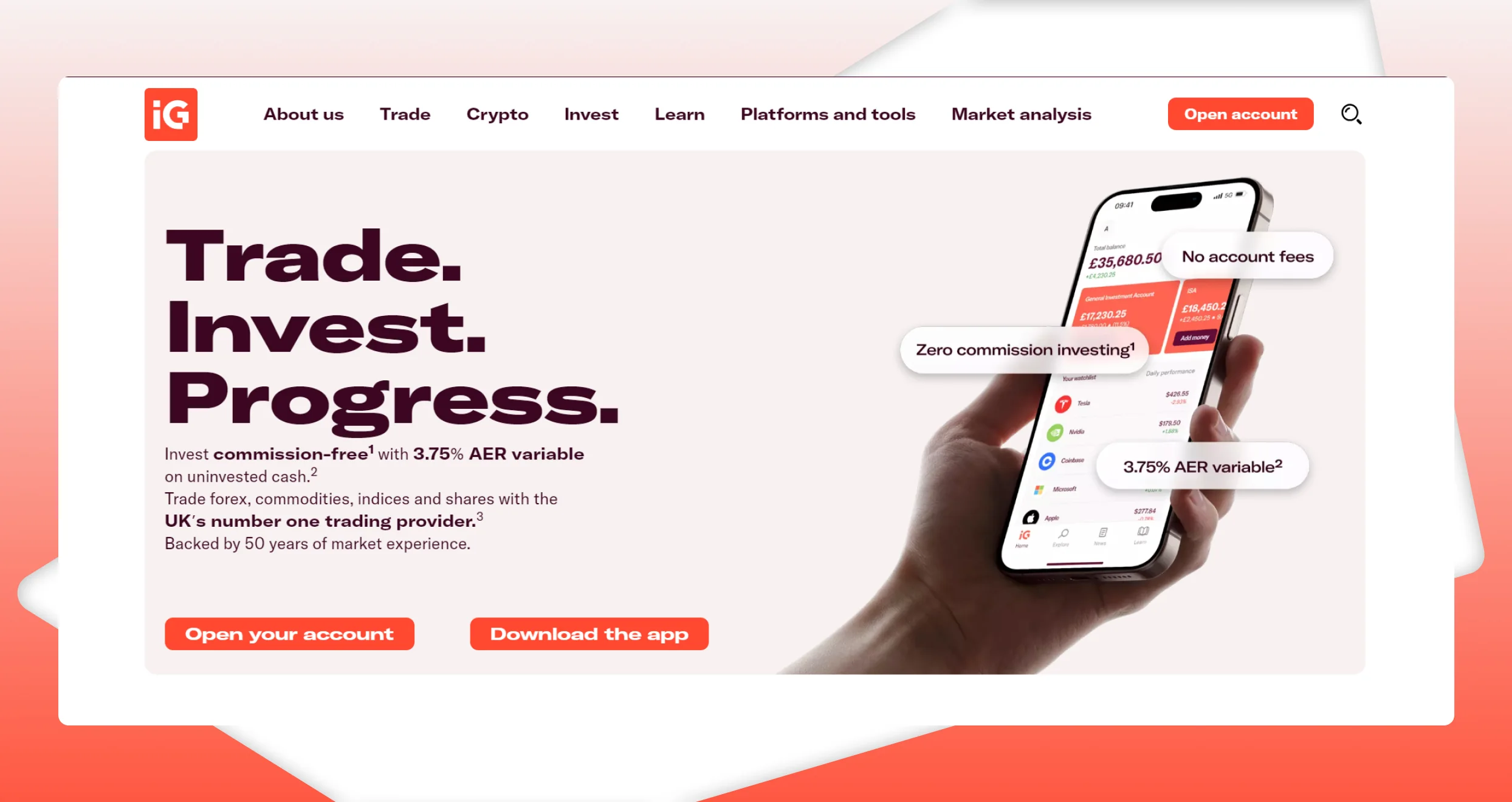
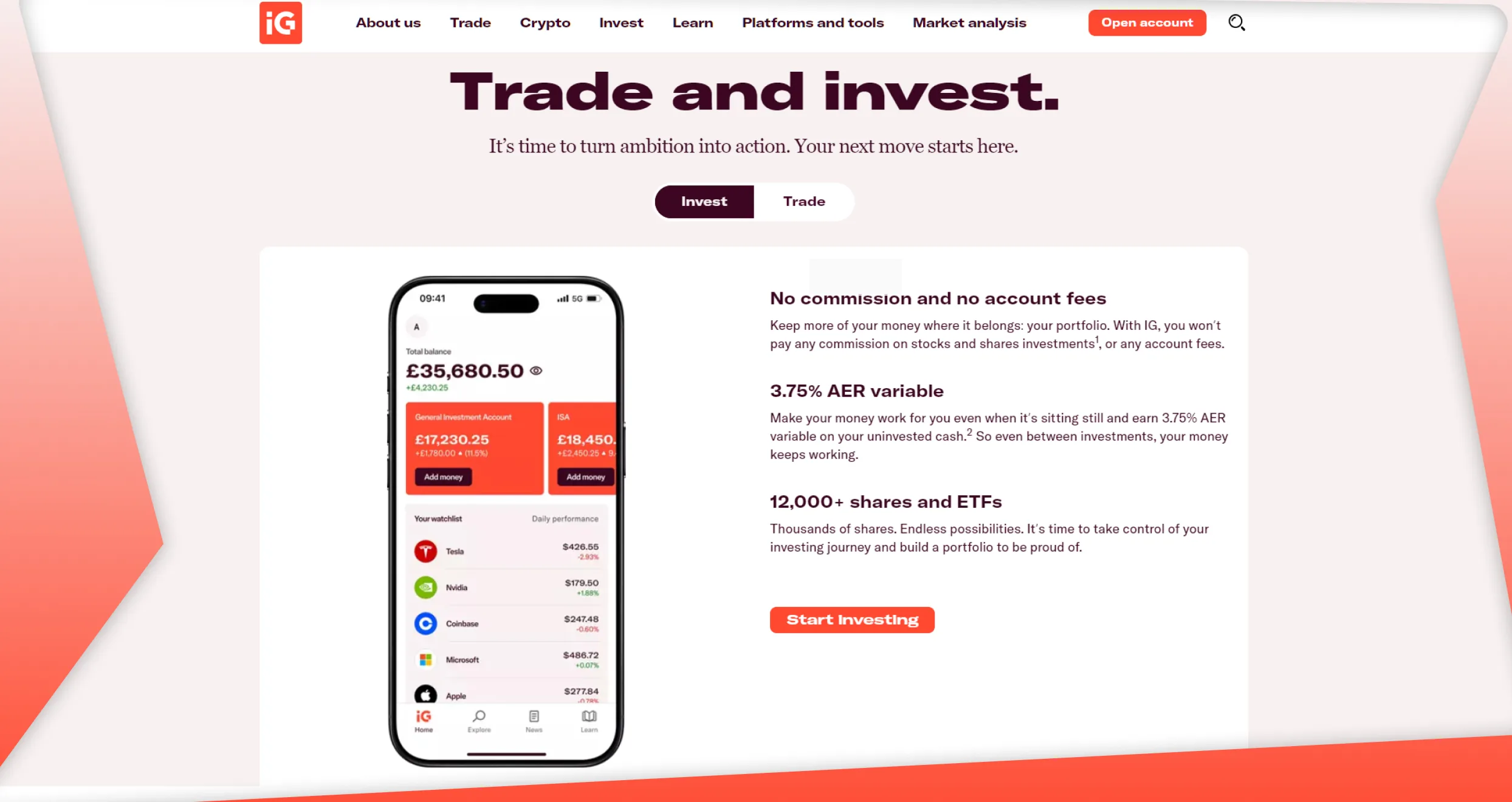
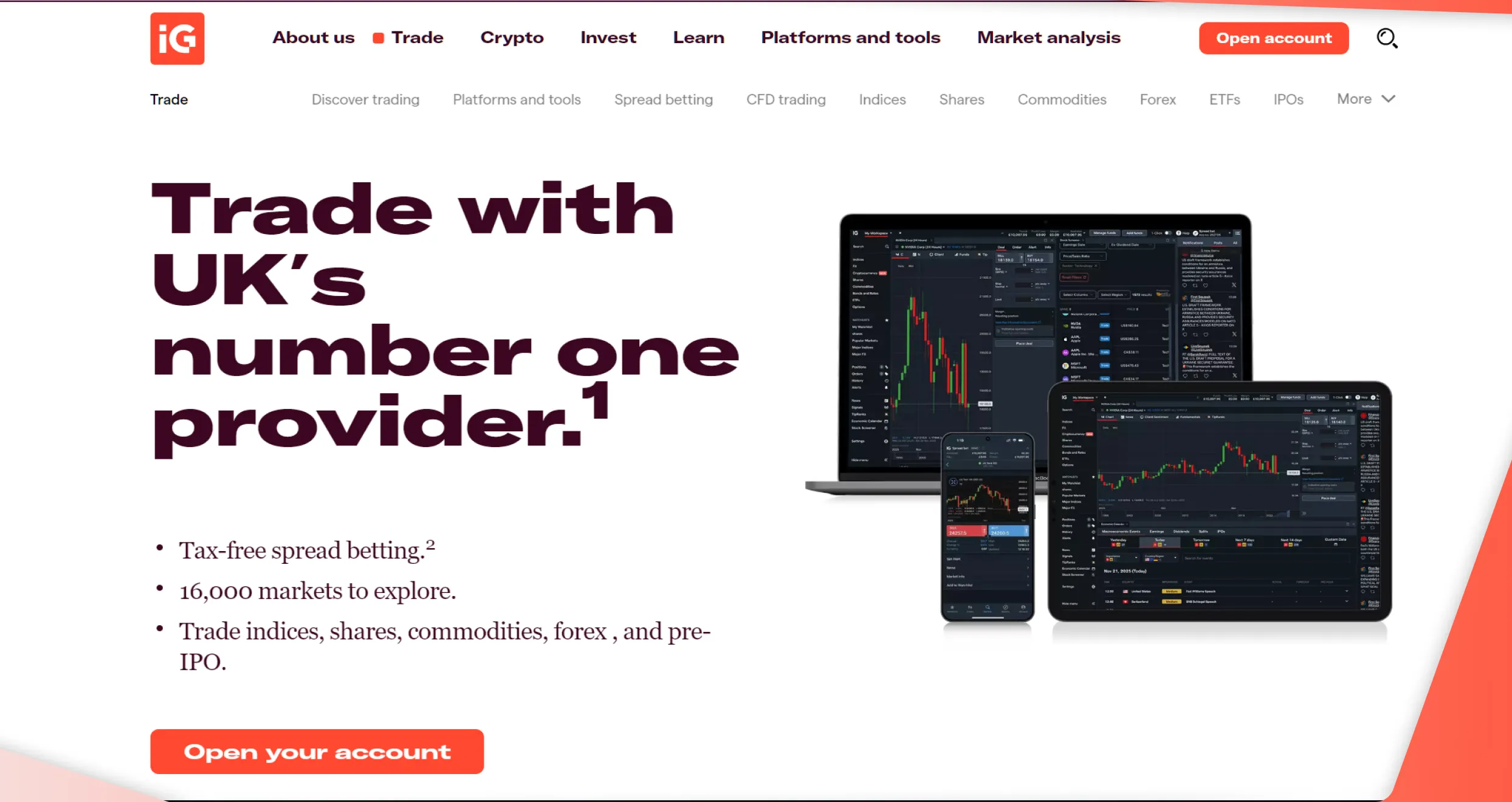
IG Markets is one of the most established trading firms in the UK, with a history stretching back to the 1970s. The platform provides access to both direct share purchases and derivatives, giving investors the flexibility to choose between long-term holding or shorter-term strategies. IG is also well regarded for its research and educational resources, which help beginners learn how to approach international stocks such as BioNTech. Its professional-grade tools are useful for more advanced traders, although they may appear complex at first.

✔Zero minimum deposit requirements
✔17,000+ available products
Pros
- Wide choice of investment options, including US-listed shares like BNTX.
- Comprehensive research, analysis, and educational materials.
- Strong reputation and regulatory oversight built over decades.
Cons
- Trading fees are higher than some budget platforms.
- The interface can feel complicated for new investors.
Opening an IG Markets account doesn’t cost a dime. Moreover, this broker has no minimum deposit, so you don’t have to worry about compromising your budget. You can also enjoy significant savings by trading with IG Markets since it offers tight spreads, starting from 0.1 points on commodities and 0.6 points on popular currency pairs.
With that in mind, IG Markets charges overnight funding for cash CFD positions and daily funded bets (DFBs) that remain open past 10 pm UK time. The broker also requires traders to cover a small guaranteed stop fee. The fee kicks in every time the guaranteed stop feature is triggered. You should also expect to incur additional when shorting stocks and augmenting your trading experiences with premium services like live data streams.
Luckily, deposits and withdrawals are free on IG Markets. The broker only requires traders to pay a 0.5% standard currency conversion fee. Furthermore, the platform has zero inactivity fees, though your account will be terminated if it remains dormant for 24 consecutive months.
Tax and Regulation for UK Investors
Profits from selling BioNTech shares through a UK broker may be liable for Capital Gains Tax (CGT) if they exceed the annual allowance. Dividend income, although limited for biotech firms, can also be taxed once it passes the dividend allowance.
Some brokers allow US-listed shares to be held inside a Stocks and Shares ISA, which protects gains and dividends from UK tax. Not every platform offers this feature, so it is worth confirming before you open an account.
UK investors will usually need to complete a W-8BEN form when buying US stocks. This document lowers the withholding tax on dividends from 30% to 15% under the tax treaty between the UK and the US.
Key Risks to Consider
Investing in BioNTech is not only about confidence in its science. Several factors can shape how the shares perform:
- Volatility: Biotech stocks often react strongly to trial results or regulatory news, which can push prices up or down in a single day.
- Competition: Rivals such as Moderna are developing similar mRNA technologies, and success elsewhere can affect BioNTech’s market position.
- Revenue cycles: Income from COVID vaccines has slowed since the pandemic, raising questions about how future products will replace that stream.
- Regulation: Approvals from health authorities in the US, UK, and Europe can be delayed or rejected, with a direct impact on investor sentiment.
For those who prefer steady returns, these swings may feel uncomfortable. For investors with a higher risk appetite, BioNTech may appeal to investors who accept higher risk in pursuit of growth, but it is not suited to those seeking steady returns.
FAQs
No. Many brokers, such as eToro, allow fractional investing, so you can buy part of a share rather than paying the full price. This makes it possible to start with a modest amount.
When you buy shares, you own a stake in the company and may receive dividends or voting rights. CFDs only track the price of the stock, allowing you to speculate on movements, but they carry higher risk because of leverage and do not give ownership.
Some brokers support US-listed shares within a Stocks and Shares ISA, though not all do. It is important to check this feature before opening an account if you want the potential tax benefits.
Biotech tends to be more volatile than areas like retail or banking. Prices often react to clinical trial results or regulatory decisions, which can lead to sharp swings. The risks are higher, but so is the chance of strong gains if new treatments succeed.
Final Thoughts
Investing in BioNTech is as much about confidence in future discoveries as it is about current financials. The company has already played a central role in global healthcare, yet its long-term value depends on treatments that are still undergoing trials. For UK beginners, BioNTech can offer exposure to a sector driven by innovation, but it also brings a level of risk that should not be overlooked.
As part of a balanced portfolio, the stock can add diversity and growth potential. The key is to treat it as one element of a wider investment approach rather than a single bet on science.