
 Fact checked


We may receive compensation from our partners for placement of their products or services, which helps to maintain our site. We may also receive compensation if you click on certain links posted on our site. While compensation arrangements may affect the order, position or placement of product information, it doesn’t influence our assessment of those products.
For UK investors who grew up with Mickey Mouse, Marvel or ESPN, buying Disney shares is more than nostalgia. It connects a portfolio to a company that has shaped global culture for over a century, though purchasing the stock is not straightforward.
Disney is listed in New York, not London, and its business spans streaming, theme parks and sports broadcasting, each carrying different risks. For beginners, this mix can be hard to assess, and the mechanics of buying overseas shares involve brokers, costs and taxes.
This guide sets out how UK investors can buy Disney stock step by step, while outlining what drives its price, the role it may play in a portfolio, and the risks involved.
Disney’s Place in the Market Today
Founded in 1923 by Walt and Roy Disney, the company has grown from a small cartoon studio into a global media group listed on the New York Stock Exchange under the ticker DIS.
Disney shares trade at approximately $ 117.92 with a market value of nearly $ 212 billion. Over the past year, the price has ranged between 80.10 and 124.69 dollars, reflecting optimism over streaming but also concerns about debt and costs.
The business is split into three main divisions:
- Entertainment: television networks, film studios, streaming services such as Disney+ and Hulu, and content licensing.
- Experiences: theme parks, resorts, cruises and merchandise.
- Sports: ESPN and ESPN+ in the US, plus Star Sports in India.
This mix gives Disney powerful brands, valuable physical assets and strong consumer reach, while also adding complexity for investors to evaluate.
Why UK Investors Look at Disney
For beginners in the UK, Disney is less about chasing a quick profit and more about accessing themes that the FTSE 100 does not cover.
- Streaming growth: Disney+ launched in 2019 and now has more than 150 million subscribers. Profitability remains a work in progress, but the scale is significant.
- Tourism and leisure: Revenue from parks and resorts is substantial, but also tied to the strength of the global economy and travel trends.
- Content ownership: From Star Wars to Frozen, Disney holds valuable libraries that generate returns across generations.
- Dividend income: The dividend was suspended during the pandemic but has resumed at a modest yield of approximately 0.85%, with potential for growth if earnings improve.
For UK investors, holding Disney stock introduces exposure to the American consumer and media markets, providing a useful counterbalance to domestic companies such as Tesco, Lloyds or firms in the FTSE 250.
Step by Step: How to Buy Disney Stock
Buying overseas shares may seem complicated, but once you have the right account, the process is clear. Here is a step-by-step outline of how UK investors can buy Disney stock.
Choose a broker that provides access to US markets. Most leading UK platforms do, but their fees and features differ. Pay close attention to dealing charges, foreign exchange costs and ease of use.
You will deposit pounds, but remember that US shares are priced in dollars. Brokers either convert each time you trade or allow you to keep a dollar balance. Exchange rates can impact your returns, so carefully review the conversion terms to ensure you understand them.
Use the search bar and enter the ticker DIS or “Walt Disney”. This will bring up the trading page, which displays the current price, charts and company information.
Consider how Disney fits into your overall portfolio. New investors often begin with a small sum, such as £200 to £500, to learn without taking on too much risk. Some platforms offer fractional shares, so you can commit even less if you prefer.
A market order will buy the shares at the best price available. A limit order allows you to set a maximum price you are prepared to pay, which can be helpful when markets are volatile. Review the details before confirming.
Confirm the order on your platform, and the broker will execute it. Within moments, Disney stock should appear in your account.
Owning shares is not a one-off action. Check your investment periodically, focusing on Disney’s quarterly earnings, subscriber growth in streaming services, park attendance, and overall debt levels. Long-term investors typically place more emphasis on broad trends than on short-term price fluctuations.
Best Brokers for Buying Disney Stock in the UK
If you want to add Disney shares to your portfolio, selecting the right broker is just as important as the investment itself. The choice of platform affects how much you pay in fees, how easily you can trade, and what tools are available to support your decisions. Below are three brokers that stand out for UK investors.
1. eToro

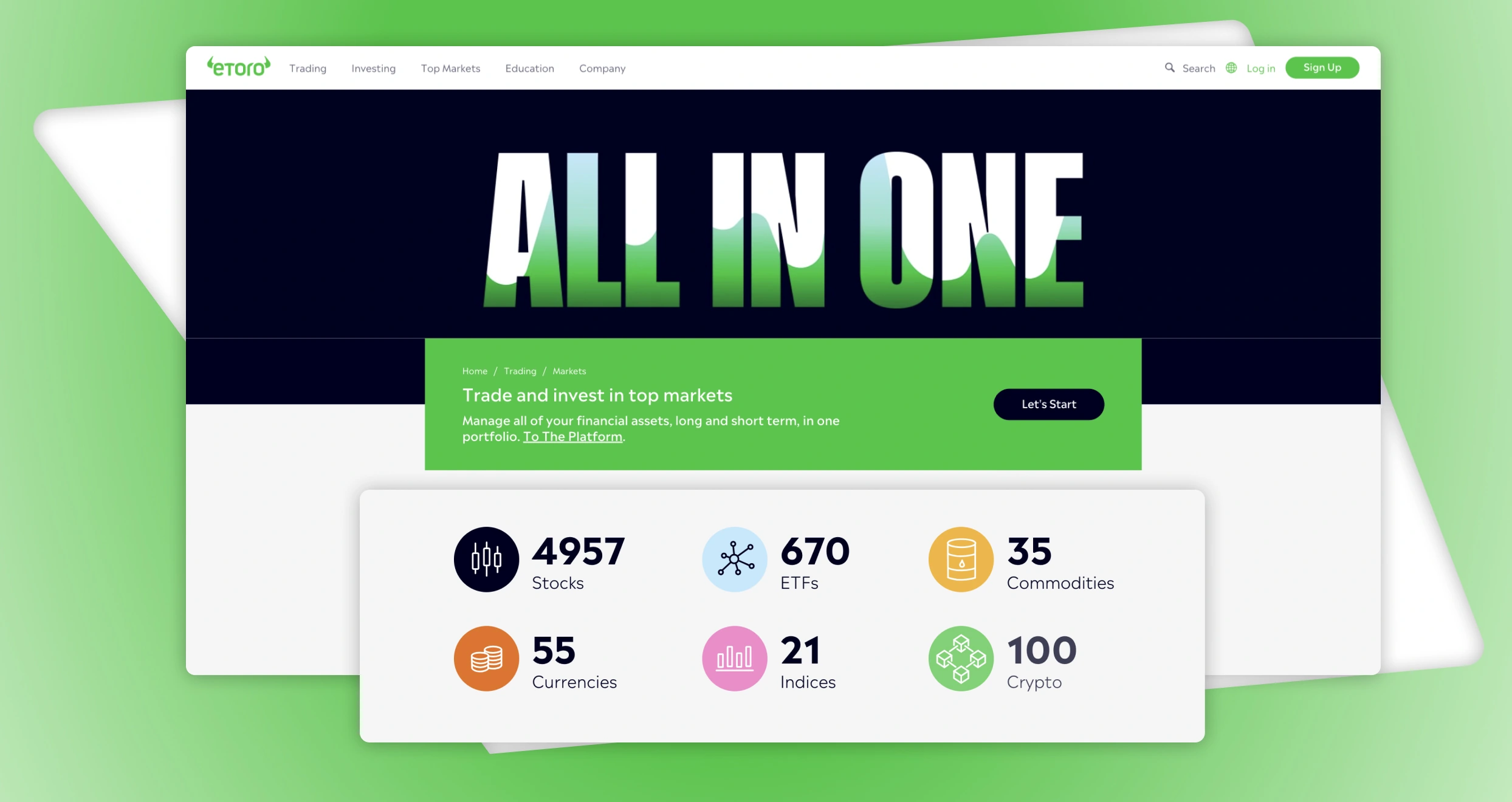
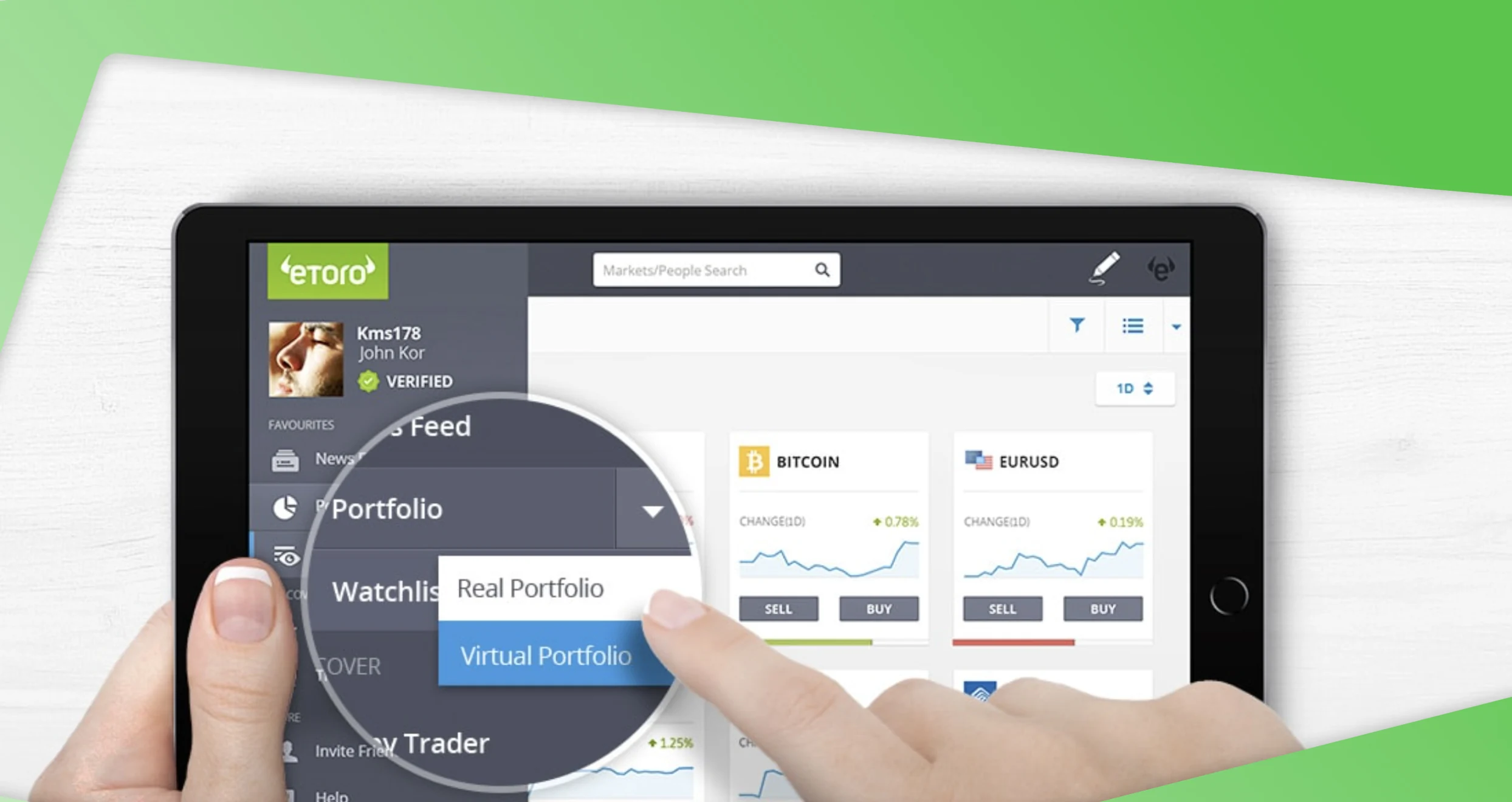

eToro is one of the most popular options for beginners. It offers commission-free trading on US stocks and a simple platform that is easy to navigate. Investors can also buy fractional shares, which makes it possible to start with smaller amounts.

✔5000+ financial instruments
✔Cost-free deposits




Pros
- No commission on US share trades.
- User-friendly platform suited to new investors.
- Fractional shares available.
Cons
- Currency conversion costs apply when funding in pounds.
- Advanced tools are limited compared with professional platforms.
If there’s anything that can eat away at your profit margins, it’s unnecessary costs. Thankfully, eToro fees UK are reasonable and pocket-friendly. We acquired a new account without paying a single cent, which was quite a relief. We also noticed that you can enjoy free deposits by using USD. That said, eToro supports many other currencies, including GBP, EUR, and RMB.
You will incur conversion fees if you use any currency other than USD. And if you use any currency that eToro doesn’t support, you must pay conversion fees to your payment provider. The exact conversion fees you may incur at any moment will depend on various factors, including your preferred currency and payment method.
Please note that eToro subjects each withdrawal request to a £5 fee. The platform uses this money to pay expenses arising from international money transfers. Most importantly, you can’t withdraw less than £30 from the eToro trading platform.
While depositing money into our account, we noticed that eToro has strict minimum deposit requirements. Britons using this platform have to deposit at least £100 the first time. Afterwards, you can fund your account with as little as £10, depending on your preferred payment method.
Commission-wise, eToro is very friendly to people who trade ETFs or invest in real stocks since the broker charges 0% for these assets. On the other hand, if you buy or sell crypto on this platform, expect to pay a 1% fee. CFD trading also attracts variable spreads depending on the involved instruments. For instance, the spreads for currencies and commodities start from 1 pip and 2 pips, respectively.
Not to forget, eToro charges a £10 monthly inactivity fee that kicks in after 12 months of dormancy.
2. IG Markets
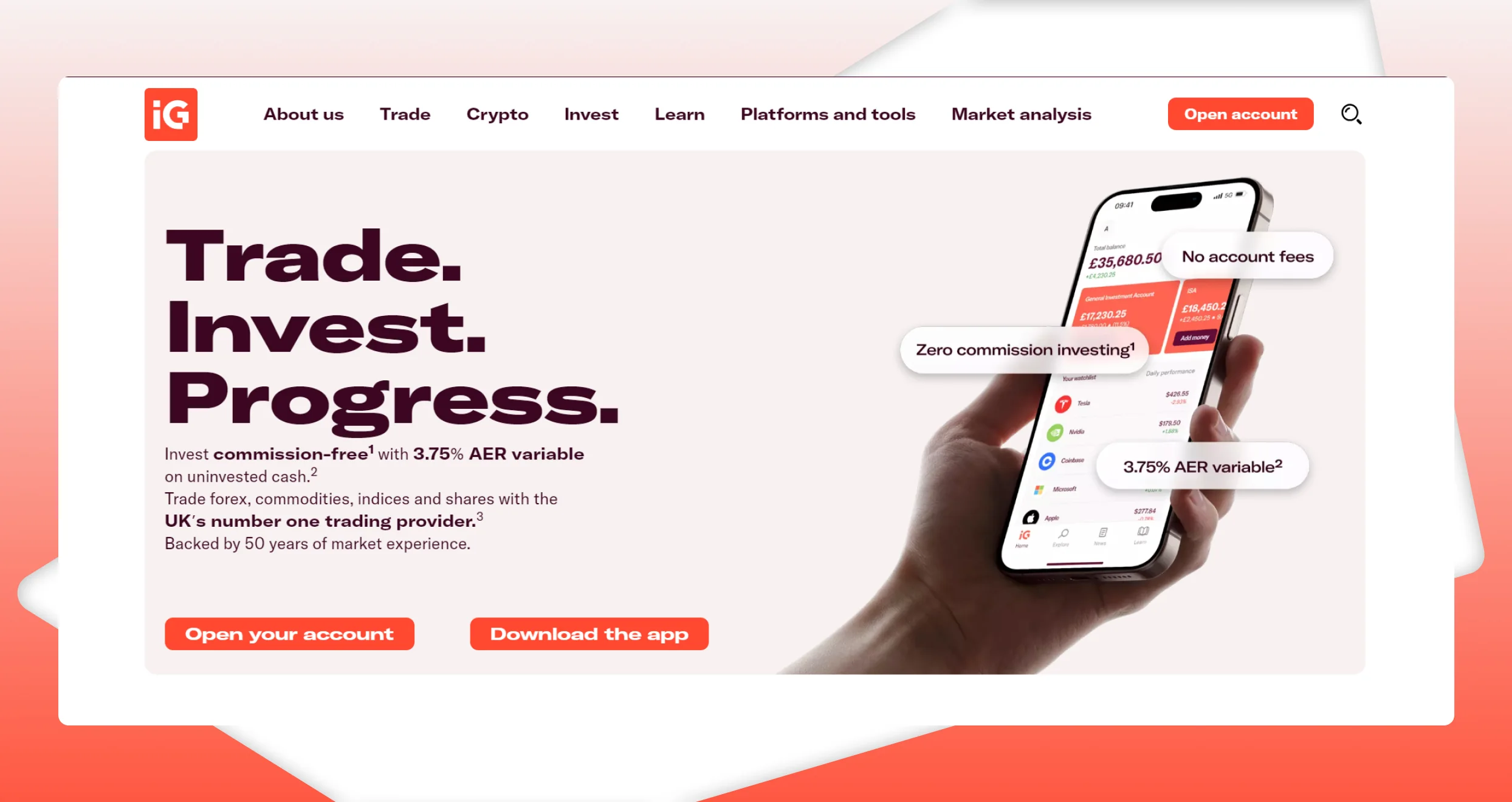
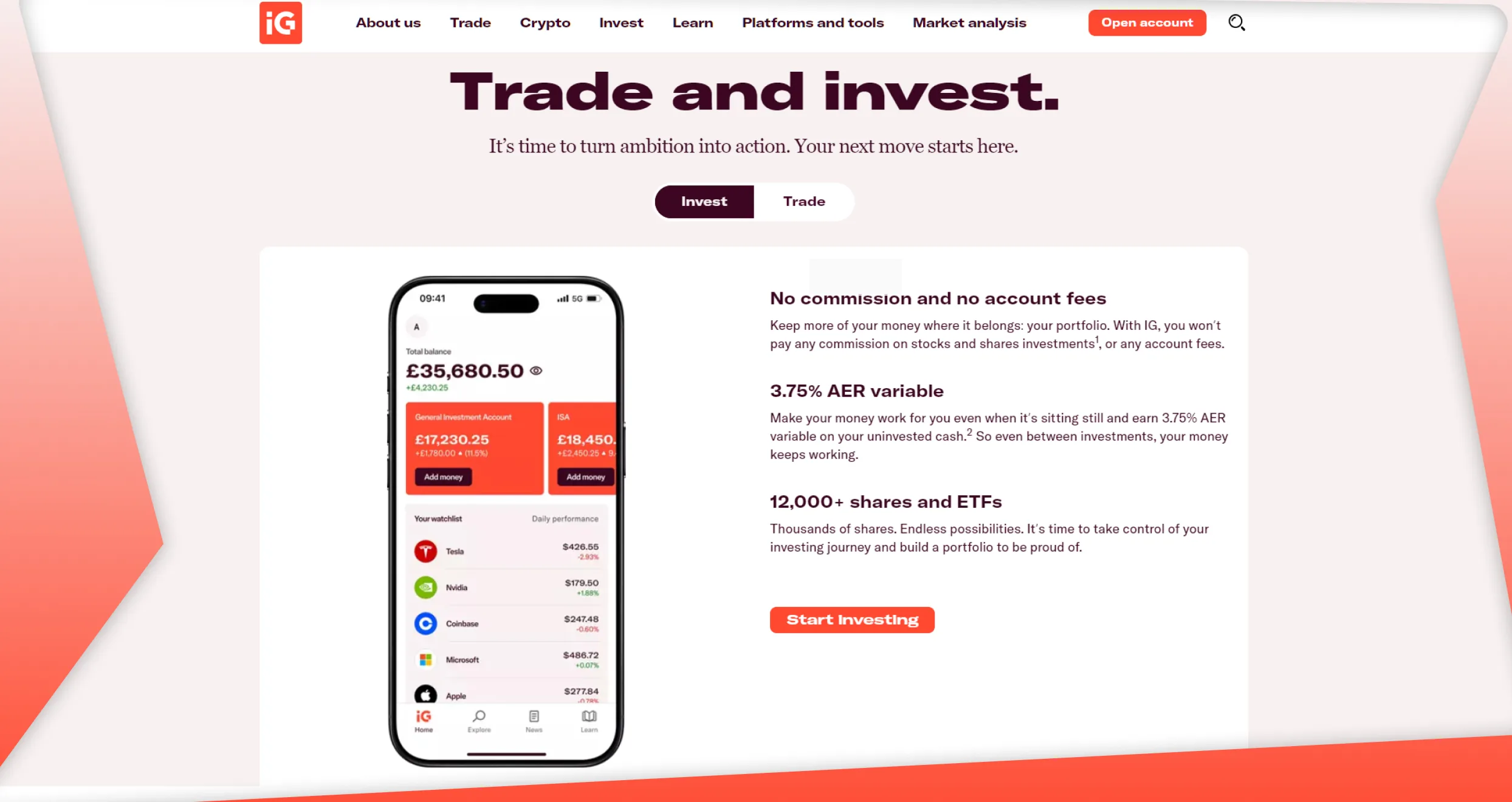
IG Markets is a long-established UK broker regulated by the Financial Conduct Authority. It provides access to a wide range of global assets, including shares, ETFs and indices. The platform is known for its strong research tools, educational resources and advanced charting features.

✔Zero minimum deposit requirements
✔17,000+ available products
Pros
- Highly regulated and reputable UK broker.
- Large selection of markets beyond Disney shares.
- Excellent research and charting tools.
Cons
- Trading fees are higher than some discount rivals.
- Better suited for active investors who use research features regularly.
Opening an IG Markets account doesn’t cost a dime. Moreover, this broker has no minimum deposit, so you don’t have to worry about compromising your budget. You can also enjoy significant savings by trading with IG Markets since it offers tight spreads, starting from 0.1 points on commodities and 0.6 points on popular currency pairs.
With that in mind, IG Markets charges overnight funding for cash CFD positions and daily funded bets (DFBs) that remain open past 10 pm UK time. The broker also requires traders to cover a small guaranteed stop fee. The fee kicks in every time the guaranteed stop feature is triggered. You should also expect to incur additional when shorting stocks and augmenting your trading experiences with premium services like live data streams.
Luckily, deposits and withdrawals are free on IG Markets. The broker only requires traders to pay a 0.5% standard currency conversion fee. Furthermore, the platform has zero inactivity fees, though your account will be terminated if it remains dormant for 24 consecutive months.
3. Plus500


Plus500 is designed for investors who value user-friendly design and mobile access. The platform is intuitive and comes with useful risk management tools, including stop-loss orders. It is a regulated broker across several jurisdictions and offers competitive spreads.

✔User-friendly interface
✔Zero deposit and withdrawal fees
Pros
- Easy-to-use mobile and desktop platforms.
- Tight spreads with built-in risk management tools.
- Regulated in the UK and Europe.
Cons
- Primarily focused on CFDs rather than direct share ownership.
- Limited educational content for beginners.
Brokers need to generate revenue and cover operating costs. That’s why many have fees and commissions. Sadly, high charges can undermine your profitability in the long run. That’s why looking for an affordable service provider is necessary.
With that in mind, we evaluated Plus500 fees UK. The process was easy since this broker values transparency. Our team was impressed by the fact that the trading platform doesn’t charge a dime for most services. First, opening an account is free. Deposits and withdrawals also attract zero charges. Furthermore, the broker offers free live CFD prices and dynamic charts. But note that the Plus500 minimum deposit UK is $50.
Plus500 primary source of compensation is the spread. While trading with this platform, you’ll have to cover the spread whenever you open a position. Your costs will depend on various factors, including your preferred instrument and current market conditions.
This broker also charges overnight funding and currency conversion fees. The former fee kicks in whenever you keep a position open overnight. On the other hand, you have to cover currency conversion fees whenever you interact with any currency besides your account’s base currency. Lastly, dormant Plus500 accounts attract a £10 monthly inactivity fee.
Choosing the right broker depends on your trading style and goals. If you want low costs and simplicity, eToro may appeal. IG Markets suits investors who want depth and strong research tools, while Plus500 is a straightforward option for those comfortable with CFDs. Taking the time to compare platforms before buying Disney stock will help you manage costs, reduce risks and ensure you have the right tools to support your investment journey.
Costs and Taxes for UK Investors
Owning US-listed shares incurs a few additional costs compared to buying domestic stocks.
- Currency conversion: Every time you buy or sell, pounds are converted into dollars. The rate applied by your broker can affect overall returns.
- Dealing fees: Some platforms charge a set fee per trade, while others offer commission-free trading but widen the spread.
- Withholding tax: US dividends are typically taxed at a rate of 30 per cent. Completing a W-8BEN form reduces this to 15 per cent under the UK-US tax treaty.
- Capital gains tax: Profits from selling shares may attract capital gains tax if they exceed your annual allowance. Holding Disney shares inside an ISA or SIPP protects you from both dividend and capital gains tax.
For beginners, using an ISA can simplify the process and reduce paperwork.
Risks to Keep in Mind
All investments involve risk, and Disney is no exception. Key factors for UK investors are:
- Debt levels: Borrowing rose during the pandemic and the 21st Century Fox acquisition, leaving repayment an ongoing challenge.
- Streaming profitability: Disney+ has expanded rapidly but still lags behind Netflix in margins.
- Economic cycles: Parks, resorts and merchandise depend on consumer spending, which falls in downturns.
- Competition: Strong rivals in streaming and leisure, including Netflix and Universal Studios.
- Currency movements: Shifts between sterling and the US dollar can affect returns, even if the share price is stable.
Weighing these risks against Disney’s long-term potential is essential before investing.
FAQs
No. UK investors must go through a broker that offers access to the US markets. Many platforms also provide fractional shares, which allow you to start with smaller amounts.
You deposit pounds into your account, and the broker converts them into dollars when you buy. Keep an eye on the conversion rate, as unfavourable rates can reduce your returns.
Yes. Several UK brokers let you hold US shares like Disney in a Stocks and Shares ISA. This protects you from UK dividend and capital gains tax, although US withholding tax on dividends still applies.
Disney currently pays dividends twice a year. The payments have been modest since the pandemic, and the policy can change, so it is worth checking recent company updates if income is important to you.
Final Thoughts
Buying Disney stock from the UK is straightforward once you have the right account, but it deserves careful consideration. The company combines global brands, streaming growth and valuable real-world assets, making it attractive to many first-time investors. Yet debt levels, strong competition and exposure to economic cycles mean it is not without risk.
For UK beginners, Disney can be a valuable addition to a broader portfolio. Take a measured approach, manage costs, and see it as one component of a longer investment journey rather than the centrepiece of your holdings.