
 Fact checked


We may receive compensation from our partners for placement of their products or services, which helps to maintain our site. We may also receive compensation if you click on certain links posted on our site. While compensation arrangements may affect the order, position or placement of product information, it doesn’t influence our assessment of those products.
Coffee ranks among the world’s most heavily traded commodities, often grouped with oil and gold due to its global demand and investment activity. For UK investors seeking exposure beyond familiar names in the FTSE 100 or a standard ISA, coffee represents a tangible link to global supply chains, consumer demand, and shifting climate patterns. But investing in coffee isn’t as straightforward as buying shares in a supermarket brand. It involves understanding how this commodity is priced, the instruments used to access it, and the risks that can brew beneath the surface.
Why Coffee Appeals to Investors
Coffee is the second most traded commodity after oil, with a supply chain that stretches from growers in South America and Africa to consumers worldwide. This global reach makes its price sensitive to inflation, weather shocks, political unrest, and shifting demand.
Unlike equities or bonds, coffee often reacts quickly to real-world events. A drought in Brazil, a strike in Colombia, or weak results from a major coffee chain can all move the market. Although sharp price swings may discourage certain investors, they can also open the door to short-term trades.
At the same time, global coffee consumption remains consistently strong. People drink it daily even during downturns, giving the market a stable base. As part of the wider food and agriculture sector, coffee can also diversify portfolios that are heavily weighted toward equities or property.
How to Invest in Coffee
Coffee can be accessed through several routes, depending on your goals, risk appetite, and level of involvement. Here are five common options for UK investors.
An easy starting point is investing in companies linked to the coffee industry.
- Producers: Some large agricultural firms grow and export coffee, though many are privately owned.
- Roasters and Retailers: Firms like Starbucks (NASDAQ: SBUX), Nestlé (SWX: NESN), and Keurig Dr Pepper (NASDAQ: KDP) profit from branding and global distribution.
- Equipment Brands: Companies like De’Longhi and Bunn supply coffee machines and accessories.
These shares are listed on international exchanges and can be bought via UK brokers such as Hargreaves Lansdown or Freetrade.
ETFs allow investors to access the coffee sector without selecting specific company shares. While the LSE doesn’t list coffee-specific ETFs, you can access some via global platforms.
- iPath Bloomberg Coffee ETN (NYSEARCA: JO) – tracks coffee futures directly.
- VanEck Agribusiness ETF (NYSEARCA: MOO) – includes firms involved in agriculture, including coffee.
Be mindful of foreign exchange risk and additional platform fees.
Coffee futures give traders a way to take direct positions on price movements. These contracts are traded on global exchanges like ICE and typically require a specialist broker account.
Options offer leverage but involve added complexity. These are generally suited to experienced traders rather than beginners.
Some actively managed funds include coffee as part of a wider mix of soft commodities. UK-based funds from providers like BlackRock may include indirect exposure.
You can hold these in an ISA or SIPP, gaining tax benefits along with professional management.
Buying green beans or roasted coffee for storage isn’t practical. Coffee is perishable and hard to resell. Physical ownership suits traders, not private investors.
Best Brokers for Coffee Investing in the UK
Selecting the right broker is a crucial step when exploring the coffee market. Platform features, fees, and market access can influence both your costs and your trading results. Below are three established brokers that UK investors often consider for trading commodities such as coffee.
1. Plus500
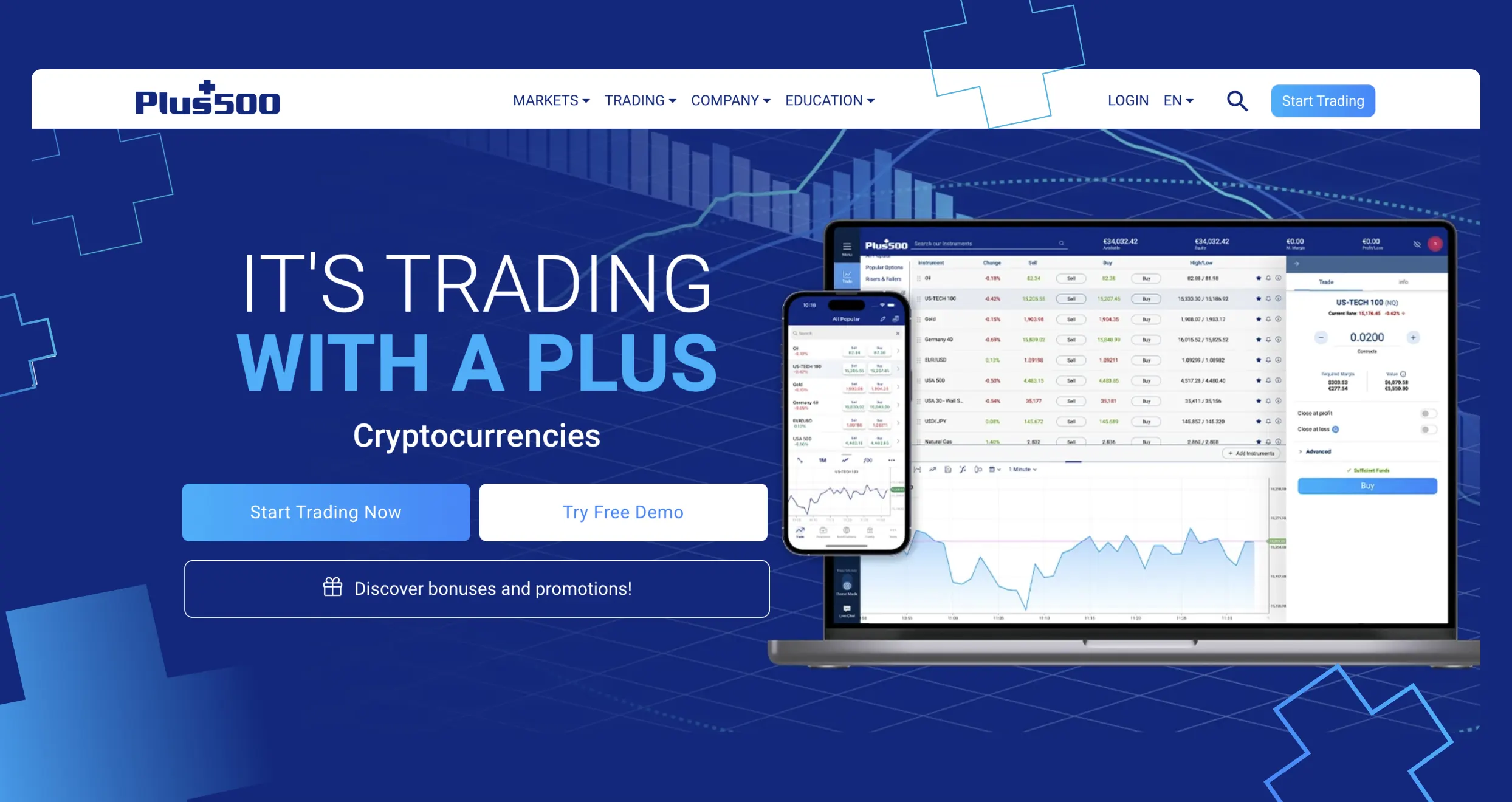
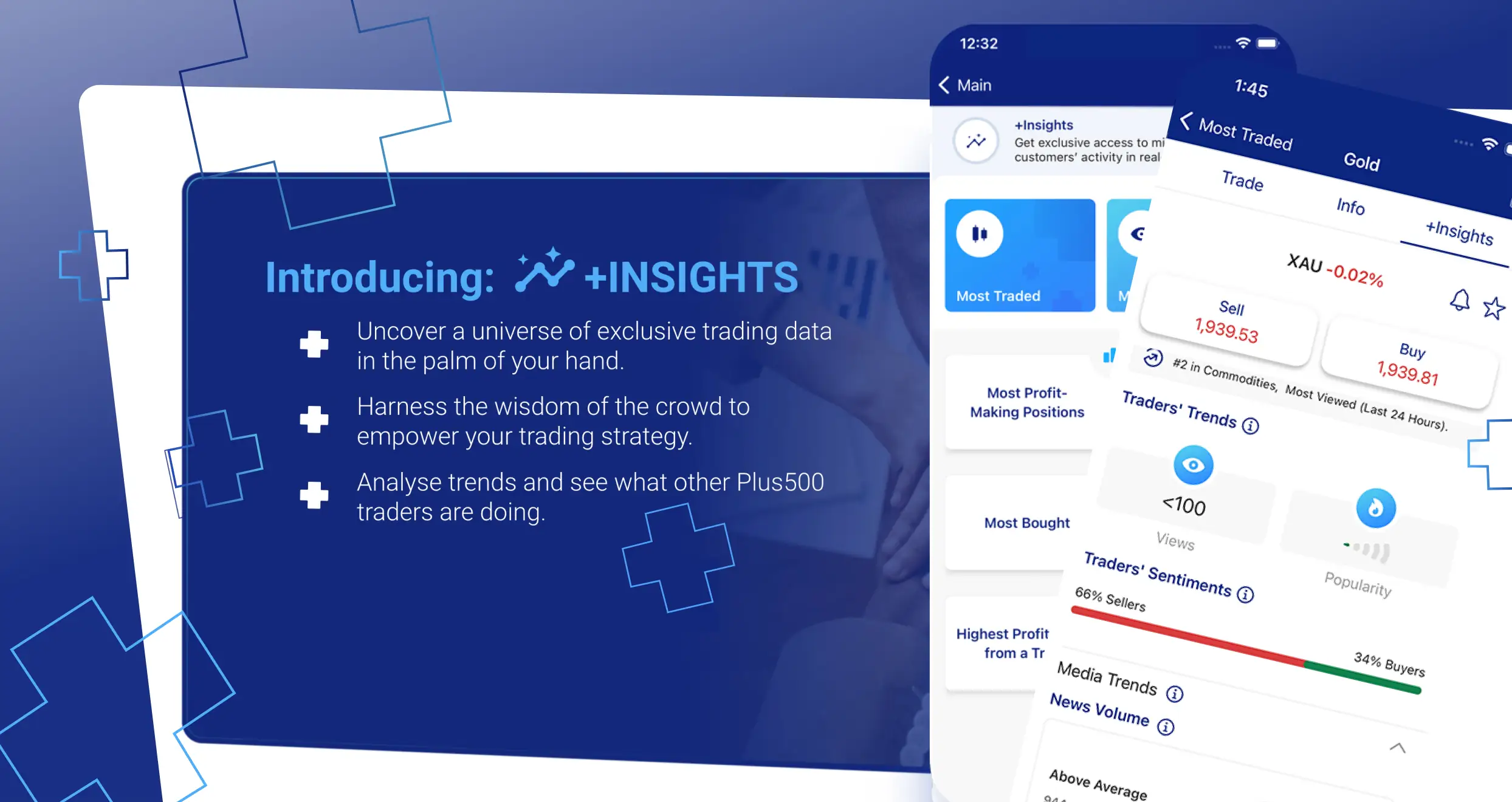


Plus500 is a recognised CFD trading provider with a strong track record in the UK. It gives investors access to a wide range of assets, including commodities, indices, forex, and shares, making it suitable for those looking for a straightforward trading experience. The broker is FCA-regulated and operates in more than 50 countries, offering its services through a user-friendly web and mobile platform. Through Plus500, traders can access coffee futures via CFDs, enabling them to benefit from price changes without holding the physical commodity.

✔User-friendly interface
✔Zero deposit and withdrawal fees




Pros
- Broad choice of commodity CFDs, including coffee futures.
- Simple trading platform that is easy to navigate.
- FCA-regulated with negative balance protection.
- Competitive spreads on popular markets.
Cons
- CFDs only, so no direct investment in shares or ETFs.
- Overnight financing charges can add up for longer positions.
- Limited in-depth research tools compared with specialist brokers.
Brokers need to generate revenue and cover operating costs. That’s why many have fees and commissions. Sadly, high charges can undermine your profitability in the long run. That’s why looking for an affordable service provider is necessary.
With that in mind, we evaluated Plus500 fees UK. The process was easy since this broker values transparency. Our team was impressed by the fact that the trading platform doesn’t charge a dime for most services. First, opening an account is free. Deposits and withdrawals also attract zero charges. Furthermore, the broker offers free live CFD prices and dynamic charts. But note that the Plus500 minimum deposit UK is $50.
Plus500 primary source of compensation is the spread. While trading with this platform, you’ll have to cover the spread whenever you open a position. Your costs will depend on various factors, including your preferred instrument and current market conditions.
This broker also charges overnight funding and currency conversion fees. The former fee kicks in whenever you keep a position open overnight. On the other hand, you have to cover currency conversion fees whenever you interact with any currency besides your account’s base currency. Lastly, dormant Plus500 accounts attract a £10 monthly inactivity fee.
2. eToro

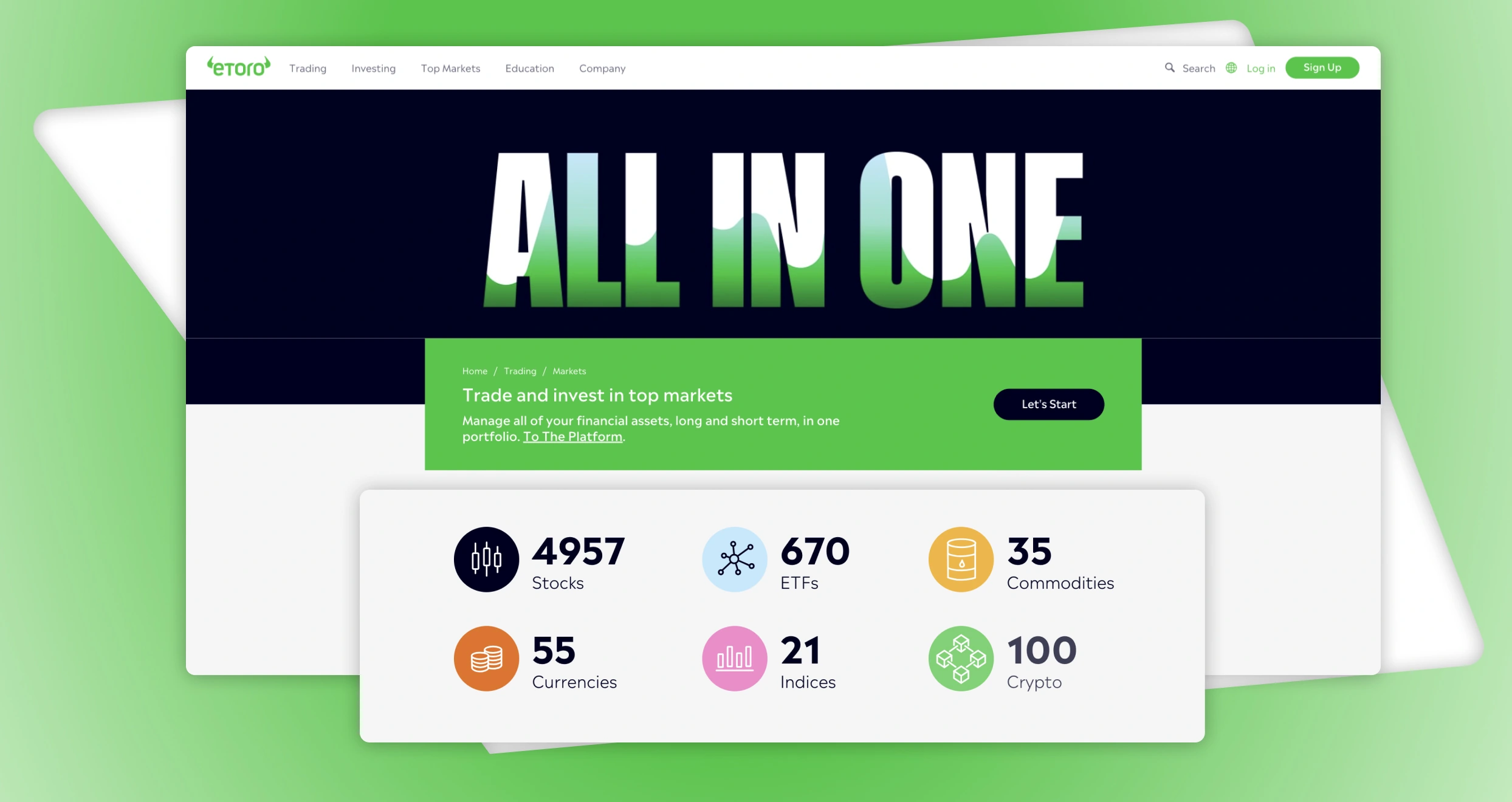
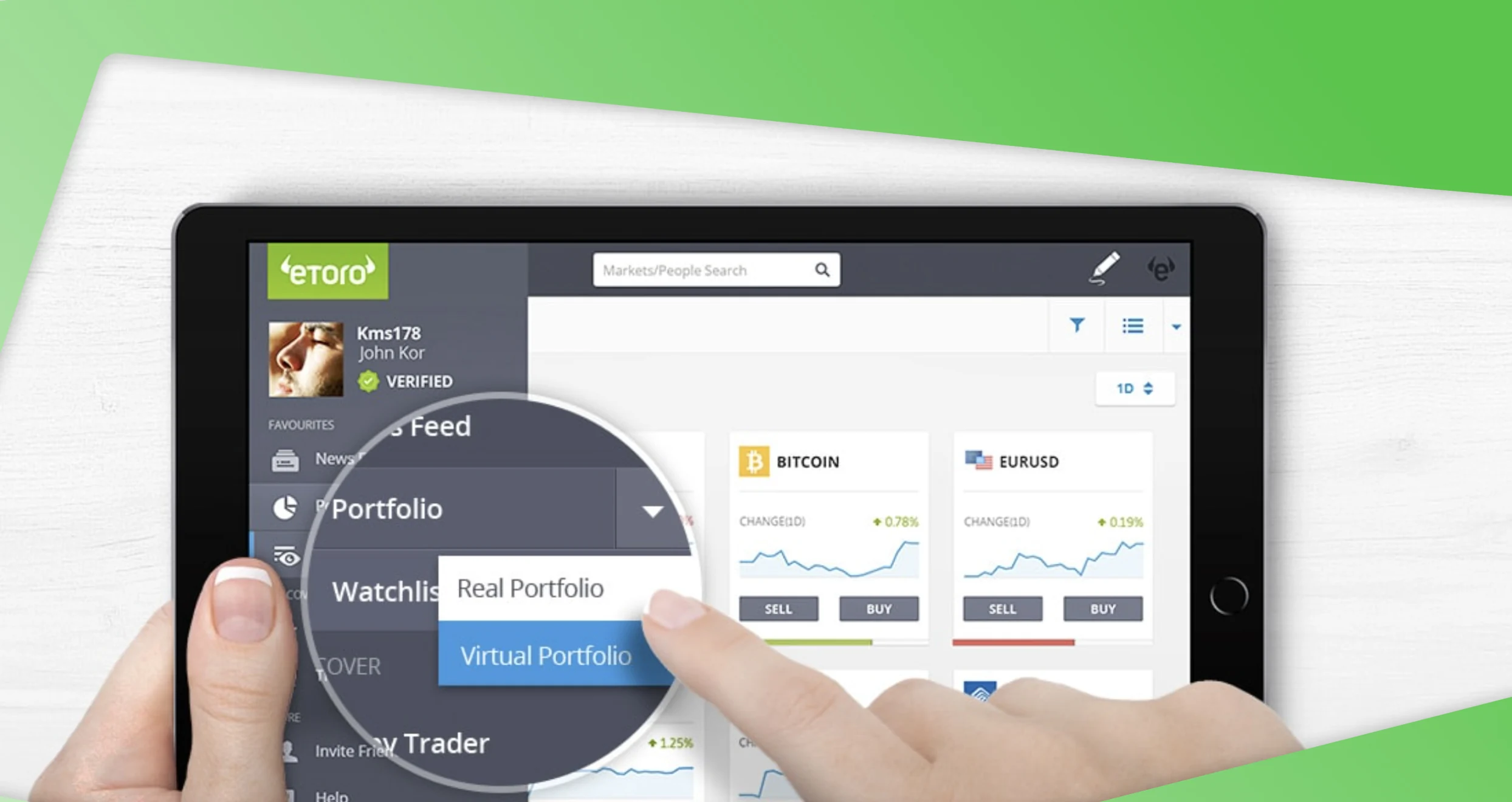

eToro combines access to global markets with its popular social trading network. Investors can gain exposure to coffee through stocks, ETFs, and commodities, while also benefiting from features designed for beginners. The platform is FCA-regulated and used by more than 30 million clients worldwide, giving it strong credibility. It also offers a demo account and a wide choice of asset classes, making it a flexible option for both new and intermediate traders interested in commodities like coffee.

✔5000+ financial instruments
✔Cost-free deposits
Pros
- Copy trading lets users follow experienced investors.
- Access to coffee-linked equities and ETFs.
- Easy-to-use interface suitable for new traders.
- Zero commission on share dealing.
Cons
- Spreads on CFDs can be higher than some rivals.
- Withdrawal and currency conversion fees apply.
- Advanced research tools are less comprehensive than on specialist platforms.
If there’s anything that can eat away at your profit margins, it’s unnecessary costs. Thankfully, eToro fees UK are reasonable and pocket-friendly. We acquired a new account without paying a single cent, which was quite a relief. We also noticed that you can enjoy free deposits by using USD. That said, eToro supports many other currencies, including GBP, EUR, and RMB.
You will incur conversion fees if you use any currency other than USD. And if you use any currency that eToro doesn’t support, you must pay conversion fees to your payment provider. The exact conversion fees you may incur at any moment will depend on various factors, including your preferred currency and payment method.
Please note that eToro subjects each withdrawal request to a £5 fee. The platform uses this money to pay expenses arising from international money transfers. Most importantly, you can’t withdraw less than £30 from the eToro trading platform.
While depositing money into our account, we noticed that eToro has strict minimum deposit requirements. Britons using this platform have to deposit at least £100 the first time. Afterwards, you can fund your account with as little as £10, depending on your preferred payment method.
Commission-wise, eToro is very friendly to people who trade ETFs or invest in real stocks since the broker charges 0% for these assets. On the other hand, if you buy or sell crypto on this platform, expect to pay a 1% fee. CFD trading also attracts variable spreads depending on the involved instruments. For instance, the spreads for currencies and commodities start from 1 pip and 2 pips, respectively.
Not to forget, eToro charges a £10 monthly inactivity fee that kicks in after 12 months of dormancy.
3. IG Markets
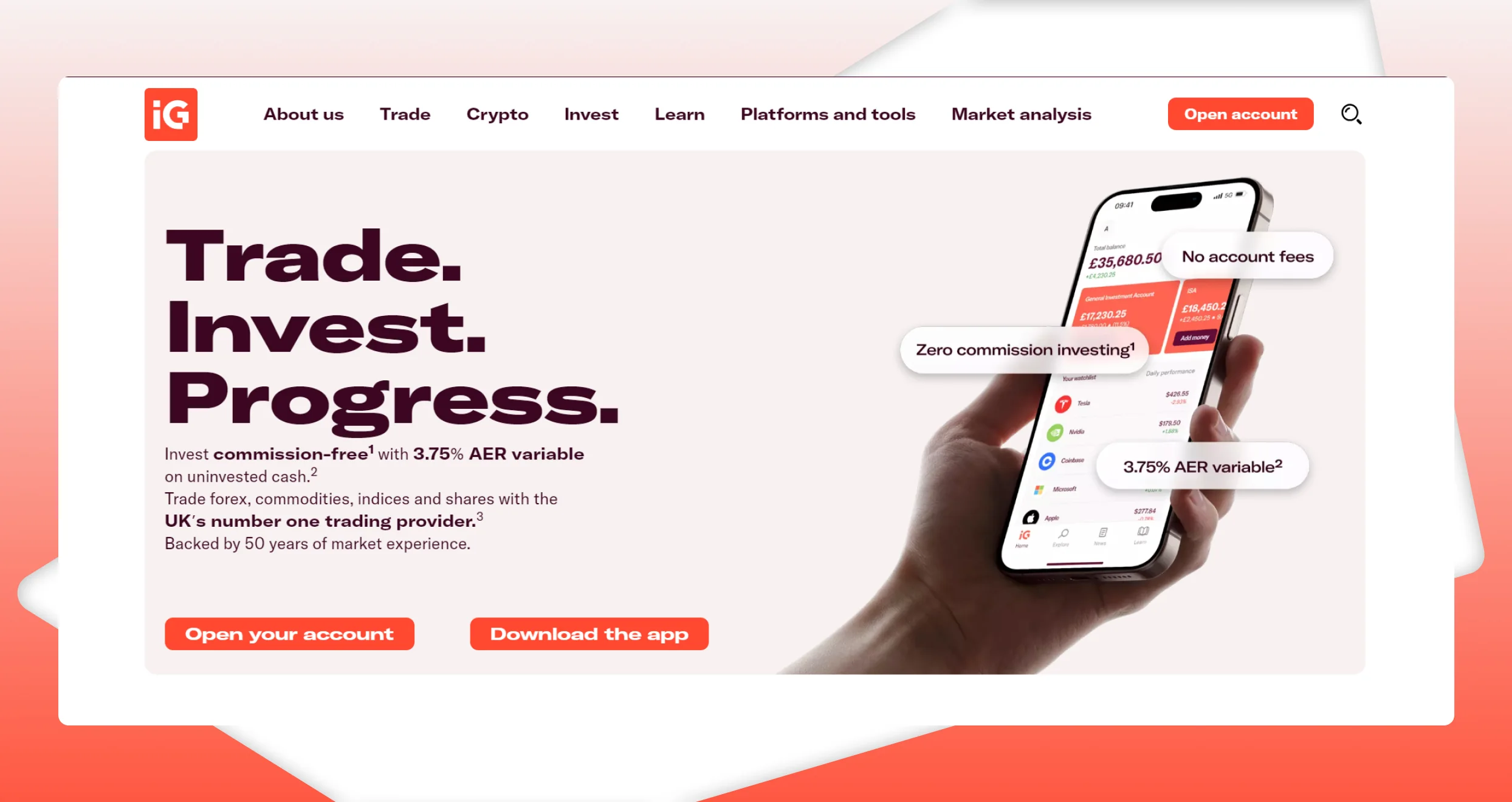
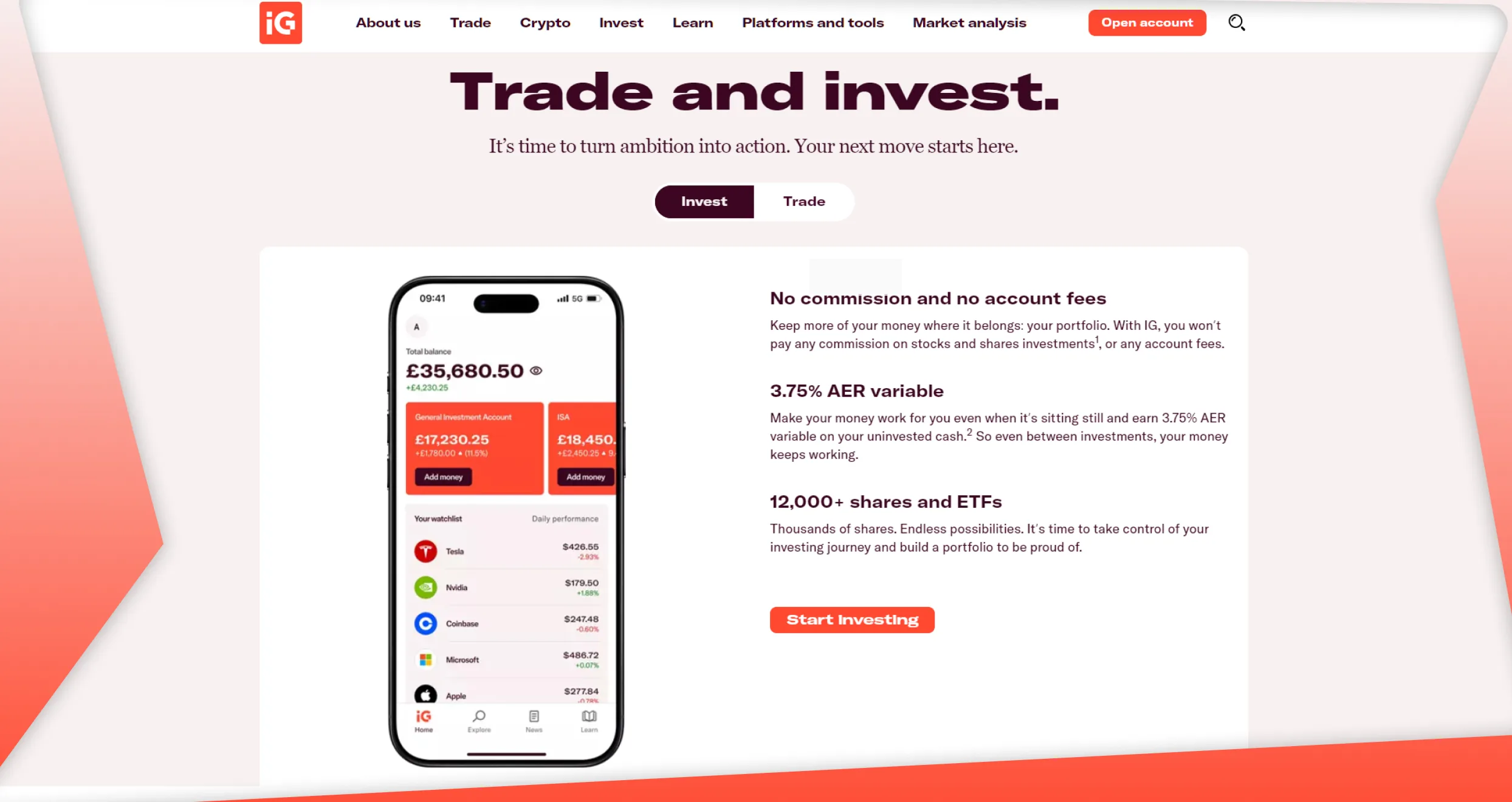
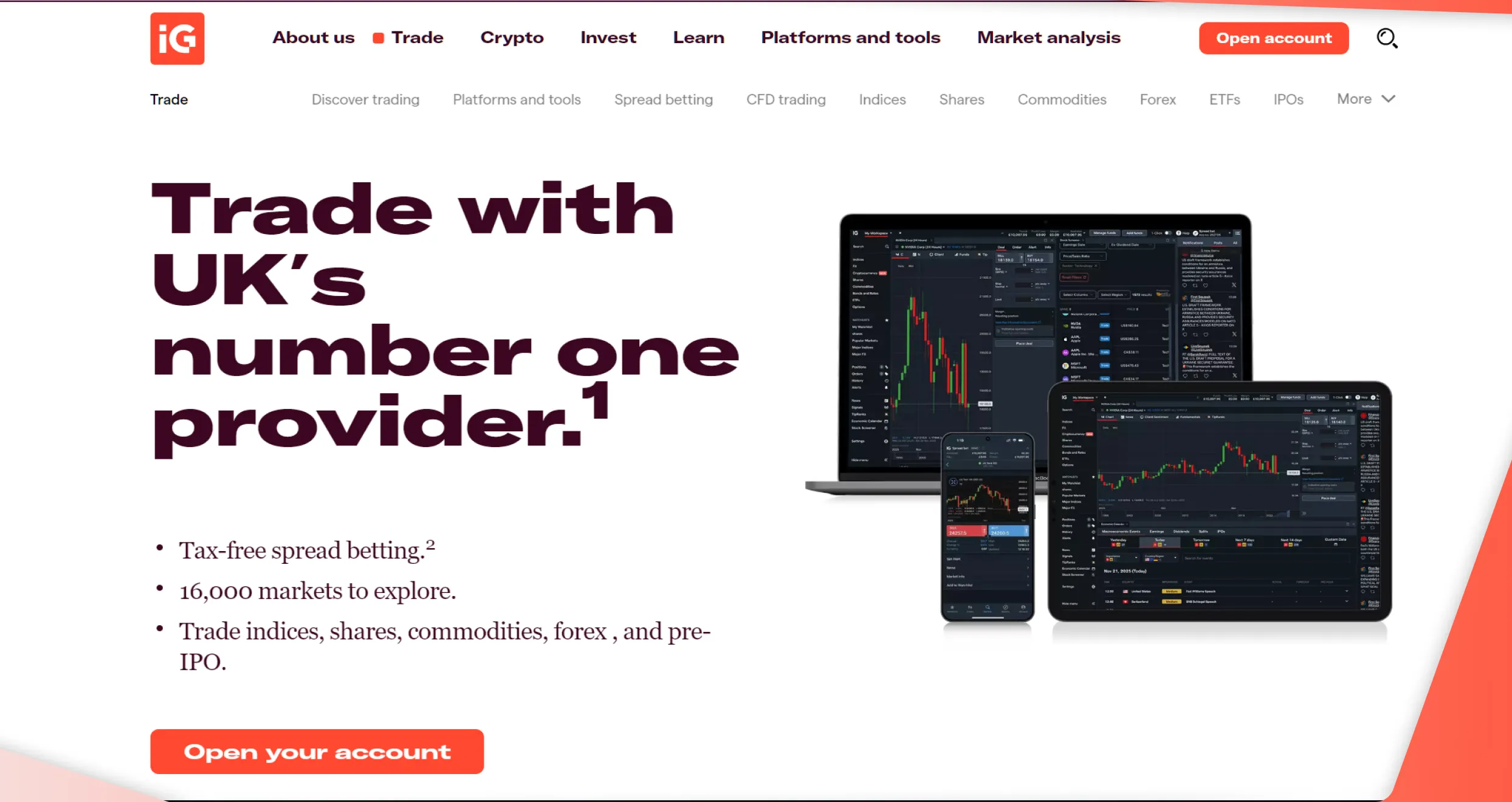
IG Markets is one of the UK’s most established brokers, founded in 1974 and regulated by the FCA. It is also listed on the London Stock Exchange, which adds credibility and transparency. The platform gives access to a wide range of markets, including commodities like coffee, alongside indices, forex, equities, and ETFs.
For coffee investors, IG Markets provides CFDs and futures contracts with advanced charting, analysis tools, and real-time data. It also offers educational resources, daily market insights, and a trading academy, making it suitable for both beginners and experienced traders.

✔Zero minimum deposit requirements
✔17,000+ available products
Pros
- Wide coverage of soft commodities and global markets.
- High-quality analysis and trading resources.
- Well-established and FCA-regulated.
- Choice of accounts for retail and professional traders.
Cons
- Higher minimum deposit than some competitors.
- Fee structure may appear complex to new investors.
- Platform features can be overwhelming for casual traders.
Opening an IG Markets account doesn’t cost a dime. Moreover, this broker has no minimum deposit, so you don’t have to worry about compromising your budget. You can also enjoy significant savings by trading with IG Markets since it offers tight spreads, starting from 0.1 points on commodities and 0.6 points on popular currency pairs.
With that in mind, IG Markets charges overnight funding for cash CFD positions and daily funded bets (DFBs) that remain open past 10 pm UK time. The broker also requires traders to cover a small guaranteed stop fee. The fee kicks in every time the guaranteed stop feature is triggered. You should also expect to incur additional when shorting stocks and augmenting your trading experiences with premium services like live data streams.
Luckily, deposits and withdrawals are free on IG Markets. The broker only requires traders to pay a 0.5% standard currency conversion fee. Furthermore, the platform has zero inactivity fees, though your account will be terminated if it remains dormant for 24 consecutive months.
Each of these brokers has distinct strengths, so the best choice depends on whether you value simplicity, social features, or advanced research. A careful comparison will help you select a platform that aligns with both your coffee trading goals and your broader investment strategy.
Key Risks of Coffee Investing
Like all commodities, coffee comes with risks that investors should weigh carefully.
- Price Volatility – Weather events or supply disruptions can trigger sharp price swings.
- Concentration Risk – Heavy exposure to coffee leaves portfolios reliant on a single sector.
- Currency Exposure – Most coffee assets are priced in US dollars, so pound fluctuations affect returns.
- Regulation and Access – Stricter environmental rules and limited broker access to US-listed products can impact costs and availability.
Understanding these risks is crucial in determining whether coffee is a suitable addition to your portfolio and the appropriate level of exposure.
Tax Considerations for UK Investors
The way you invest in coffee determines how your returns are taxed. UK investors have several routes to reduce or manage liabilities.
Stocks and ETFs in an ISA: Holding coffee-related shares or qualifying ETFs in a stocks and shares ISA shields gains and dividends from tax. Not all overseas ETFs qualify, so always check HMRC recognition before investing.
SIPPs and Pension Wrappers: Some agricultural funds with coffee exposure can be held in a SIPP, offering tax relief on contributions and tax-free growth. This option is best suited to long-term retirement planning.
Futures and Options: Derivatives such as futures and options cannot be held in an ISA or SIPP. Profits are subject to capital gains tax, and detailed record-keeping is required. Losses may sometimes be used to offset other gains.
Allowances and Currency: Investments in standard accounts may still be taxed if returns exceed HMRC’s annual allowances. When assets are priced in US dollars, gains must be converted into pounds at the correct exchange rate for reporting.
Tax rules change over time. If you trade frequently or use complex financial products, consider seeking professional advice to ensure compliance.
FAQs
Yes, you can hold coffee-related shares or eligible ETFs in a stocks and shares ISA, which shelters gains and dividends from tax. However, many US-listed ETFs don’t qualify, so check eligibility before investing.
Arabica is considered higher quality and typically costs more. Robusta is cheaper and more bitter. They’re traded as separate contracts, and prices react differently to supply and demand shifts.
Only partly. Starbucks is tied to coffee demand but also depends on retail trends, property costs, and global consumer spending. It’s a brand investment, not a pure commodity play.
It’s possible, but not recommended without experience. Futures involve leverage, margin, and expiry rules. Most investors start with stocks or ETFs to build confidence first.
Final Thoughts
Coffee may not be a core portfolio asset, but it offers a unique way to engage with global markets. Its price is shaped by real-world forces, from weather patterns and trade routes to consumer demand and supply chain costs, making it an accessible entry point for those exploring commodities.
For UK investors looking beyond mainstream funds or blue-chip stocks, coffee provides a different kind of exposure. It comes with volatility, but also with insight. Start small, stay informed, and treat it as a way to build both market awareness and portfolio diversity.