








Yulia Pavliuk is a financial content writer with a background in language, education, and clear communication. She creates SEO-friendly articles that make complex finance topics like ETFs and forex signals clear and accessible, with a strong focus on UK audiences.
 Fact checked


Advertising Disclosure
We may receive compensation from our partners for placement of their products or services, which helps to maintain our site. We may also receive compensation if you click on certain links posted on our site. While compensation arrangements may affect the order, position or placement of product information, it doesn’t influence our assessment of those products.
Automated trading platforms allow UK investors to execute trades 24/7 using algorithms and preset strategies. These tools help reduce emotional decision-making, improve consistency, and save time.
We’ve reviewed the top platforms for automated trading in the UK and selected four standout options. Whether you’re a beginner or an experienced trader, this guide will help you find the right platform for your goals.
List of the Best Automated Trading Platforms
-
1

 Visit site
Risk Warning
86% of retail investor accounts lose money when trading on margin with this provider. You should consider whether you understand how margin trading works and whether you can afford to take the high risk of losing your money.
 Read review
-
2
 Visit site
Risk Warning
68.4% of retail investor accounts lose money when trading CFDs and Spread Bets with this provider. You should consider whether you understand how CFDs and Spread Bets work and whether you can afford to take the high risk of losing your money.
Read review
-
3
 Visit site
{etoroCFDrisk}% of retail investor accounts lose money when trading CFDs with this provider.
Read review
-
4
 Visit site
68% of retail investor accounts lose money when trading spread bets and CFDs with this provider.
Read review
-
5
Visit site
65% of retail investor accounts lose money when trading spread bets and CFDs with this provider.
Read review
In This Guide
Comparison Table: Top UK Automated Trading Platforms
Several brokers in the UK now offer automated trading features, making it easier to trade using algorithms and preset strategies. To help you determine the right fit, we compared the top platforms based on key factors like tools, cost, user experience, and regulation.
Our review process included testing platform functionality and analysing user feedback from Google Play, the App Store, and Trustpilot. Below, we outline the criteria we used to assess each service and why they matter for UK traders.
| Automated Trading Platform | Licenсe & Regulation | Support Service | Software | Payment Method | Demo Account | Money Insurance |
|---|---|---|---|---|---|---|
| Pepperstone | FCA, ASIC, DFSA, SCB, CMA, CySEC, BaFin | 24/7 | TradingView, MT4, MT5, cTrader, Pepperstone Trading Platform, Social trading | Visa, Mastercard, Bank transfer, Neteller, Skrill, PayPal | Yes | Not specified |
| FxPro | FCA, FMA, FSCA, SCB | 24/5 | FxPro Mobile App, MT4, MT5, cTrader, FxPro WebTrader | Credit/debit cards, Bank wire transfers, Neteller, Skrill, PayPal | Yes | Not specified |
| eToro | FCA, MAS, CySEC, FSCA, ASIC, SFSA, ADGM, MFSA, FSAS, GFSC, SEC | 24/5 | eToro investing platform and app, Multi-asset platform, Social Trading, Copy Trader, Smart Portfolios | Credit/debit cards, Bank transfer, Klarna, PayPal, Skrill, Neteller | Yes | Not specified |
| IG Markets | FCA, FSCA, CySEC, SCA, DFSA | 24/5 | Online platforms, Mobile apps, MT4, ProRealTime, L2 Dealer, US options and futures | Credit/debit cards, Bank wire transfers, Neteller, Skrill, PayPal | Yes | Yes (up to £85,000) |
| Capital.com | FCA, SCB, ASIC, CySEC, SCA | 24/7 | TradingView, MT4, Web platform, Mobile app | Bank transfer, bank cards, Apple Pay, TrueLayer | Yes | Yes (up to £85,000) |
Platform Overview: Fees and Assets
We also evaluated each broker’s fees and available trading assets, two key factors that directly affect your costs and potential returns.
Fees directly impact returns, while access to diverse asset classes allows you to implement specific strategies more effectively. The tables below summarise how each platform performs across these areas.
Fees
| Automated Trading Platform | Minimum Deposit Requirement | Commission/ Spreads | Deposits/ Withdrawals | Inactivity Fee |
|---|---|---|---|---|
| Pepperstone | £0 | From 0.0 pips | Free | £0 |
| FxPro | £100 | From £3.50 per lot | Free | £10 monthly |
| eToro | £100 | From 0% | £5 withdrawal fee | £10 monthly |
| IG Markets | £0 | From 0.1 points | Free | None |
| Capital.com | £20 | From 0.0006 pips | Free | £10 per month after 12 months of inactivity |
Assets
| Automated Trading Platform | Stocks | Forex | Crypto | Commodities | Indices | ETFs | Options |
|---|---|---|---|---|---|---|---|
| Pepperstone | Yes | Yes | Yes | Yes | Yes | Yes | No |
| FxPro | Yes | Yes | Yes | Yes | Yes | Yes | No |
| eToro | Yes | Yes | Yes | Yes | Yes | Yes | Yes |
| IG Markets | Yes | Yes | No | Yes | Yes | Yes | Yes |
| Capital.com | Yes | Yes | No | Yes | Yes | Yes | No |
Our Expert’s Opinion about the Best Automated Trading Platforms
Our team carefully tested each platform using both demo and live accounts. We also analysed real user feedback across Trustpilot, the App Store, and Google Play. Only brokers that performed strongly across multiple areas made our shortlist.
At InvestingGuide, we prioritise accuracy and transparency. We do not promote any service; our findings are based solely on features, fees, and user experience. If a platform has limitations, we highlight them.
Here’s what we found when reviewing the UK’s top platforms for automated trading.
1. Pepperstone – Advanced Tools for Algorithmic Trading


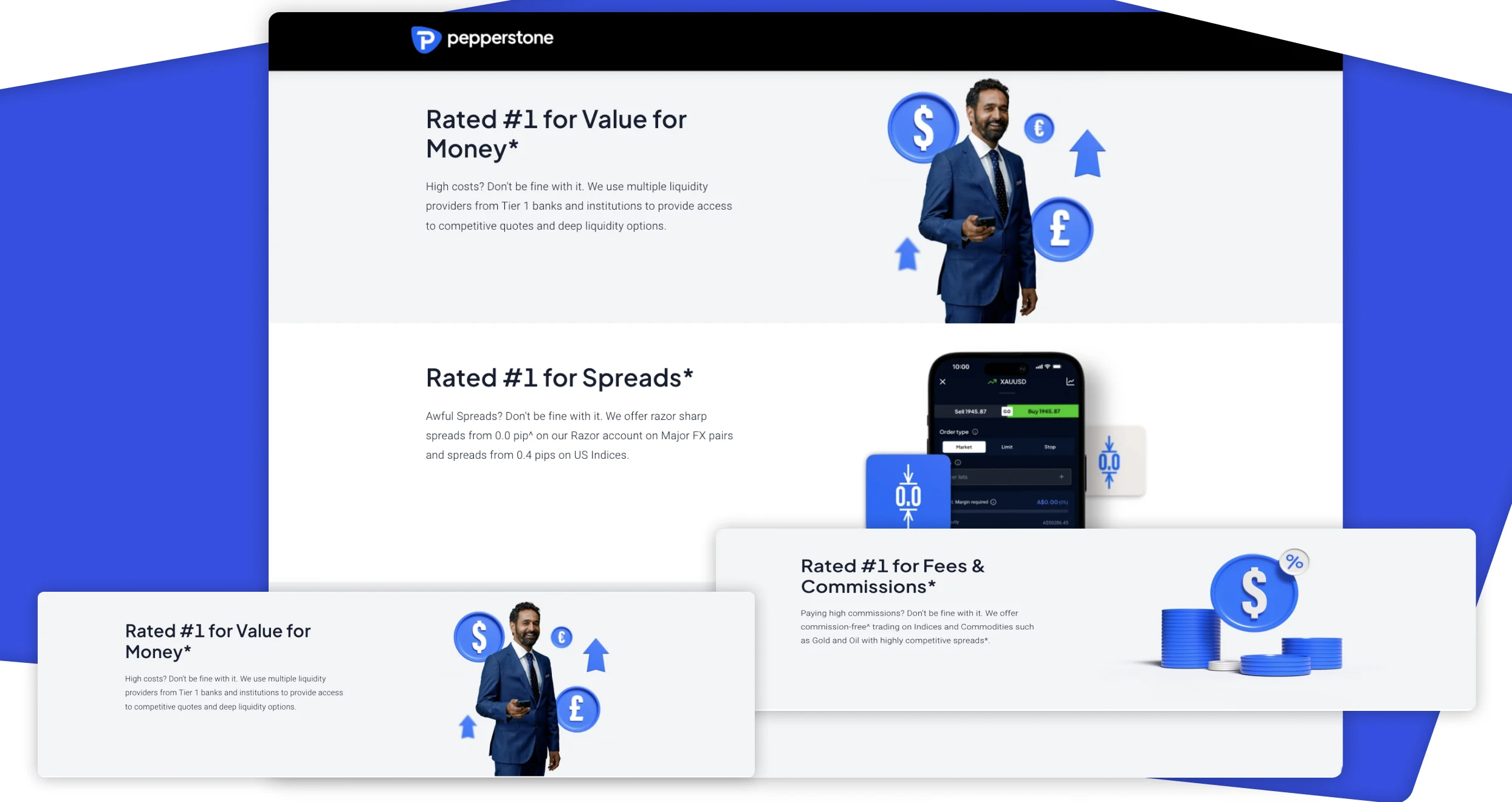
Pepperstone is a top-tier choice for UK traders focused on precision and control. The broker stands out for its institutional-grade execution speeds, access to advanced scripting, and deep integration with algorithmic trading platforms like MetaTrader and cTrader.
Pepperstone provides access to powerful platforms with deep automation features:
- MetaTrader 4 (MT4) – known for its EA compatibility and fast execution.
- MetaTrader 5 (MT5) – newer and ideal for complex market analysis.
- cTrader – offers transparent order execution and an open API for custom scripts.
All three support algorithmic strategies and include tools for advanced technical analysis.
Key highlights from our Pepperstone live account test:
- Access to 2,400+ CFD instruments across asset classes.
- Spreads from 0.0 pips – ideal for scalping and high-frequency trading.
- No minimum deposit – ideal for flexible portfolio sizes.
- Free deposits and withdrawals – no hidden fees.
This makes Pepperstone a low-cost, high-performance broker for traders who value speed, precision, and control.
Pepperstone
✔24/7 customer support
✔No inactivity fees
Pros & Cons
Fees
Trading Assets
Pros
- Supports EA trading and custom algorithm creation
- £0 minimum deposit; start with any amount
- Free deposits and withdrawals via multiple methods
- Tight spreads from 0.0 pips on Razor accounts (Pepperstone’s low-cost trading account designed for high-frequency and algorithmic traders)
- No inactivity fees for dormant accounts
- Also supports spread betting for UK traders
Cons
- Higher spreads on Standard account compared to Razor
- Limited educational support for new traders
After evaluating Pepperstone, we opened a trading account for conducting extensive tests. The process was quick and easy.
But what impressed us most was the Pepperstone minimum deposit requirement. This platform has no minimum deposit, which makes it ideal for low-budget and high-budget traders. If you are a beginner, joining this broker is advisable since you can start with a low amount and increase your stakes with time. To top it off, Pepperstone supports free deposits and withdrawals. This broker allows you to use diverse payment methods for free, from Visa debit and credit cards to PayPal and domestic bank transfers.
When it comes to spreads and commissions, Pepperstone is very cost-friendly. You can open a Razor account with this broker and enjoy 20 commission-free trades. Pepperstone’s Standard accounts also have zero commissions. On the other hand, spreads start from as low as 0.0 pips for forex pairs like EUR/USD and 0.5 for commodities like XAUUSD.
Finally, unlike most of its peers, Pepperstone charges zero inactivity fees. However, any positions you hold overnight with this platform are subject to swap rates. Visit Pepperstone’s pricing page for a detailed account of how this broker calculated swap rates for different financial instruments.
2. FxPro – Best Overall Platform for Automated and Bot-Based Trading


FxPro combines global recognition with flexible automation tools tailored for active traders. It offers full algorithmic trading capability across MetaTrader 4, MetaTrader 5, and cTrader — with access to over 2,100 instruments and advanced scripting environments.
The platform is regulated in multiple jurisdictions, including the UK via the FCA, and has received over 110 industry awards. Technically skilled users can create bots using cTrader’s cAlgo (built on C#) or use MetaEditor and MQL4 for custom EAs. MT4 also supports over 1,700 ready-made bots available for use or adaptation.
FxPro
✔User-friendly platform
✔Low minimum deposit requirement for UK clients
Pros & Cons
Fees
Trading Assets
Pros
- Supports MT4, MT5, cTrader, and cAlgo for automation
- Over 2,100 tradeable instruments across major asset classes
- EA and bot trading guides available
- Free VPS for 24/7 bot hosting
- Fast technical support for issue resolution
Cons
- £10 monthly inactivity fee after 6 months
- Higher average spreads than top competitors
From our broker analysis and comparisons, we find FxPro to be one of the most affordable brokers for Ul clients. For starters, this broker has a free account opening procedure that takes minutes to complete. Moreover, it has a £1000 minimum deposit requirement, though you can deposit as little as £100. And when it comes to transaction costs, FxPro doesn’t impose any. We believe this makes it suitable for newbies who are sceptical about spending a lot of money and low-budget traders.
When it comes to trading charges, FxPro imposes low fees compared to other brokerage firms. For instance, forex trading attracts low fees, starting from 0.0 pips on major currency pairs. However, expect to incur additional costs for positions left overnight. There is also an inactivity fee of £10 monthly should your account remain dormant for over six months.
3. eToro – Best Platform for Copy Trading and Community Investing in the UK

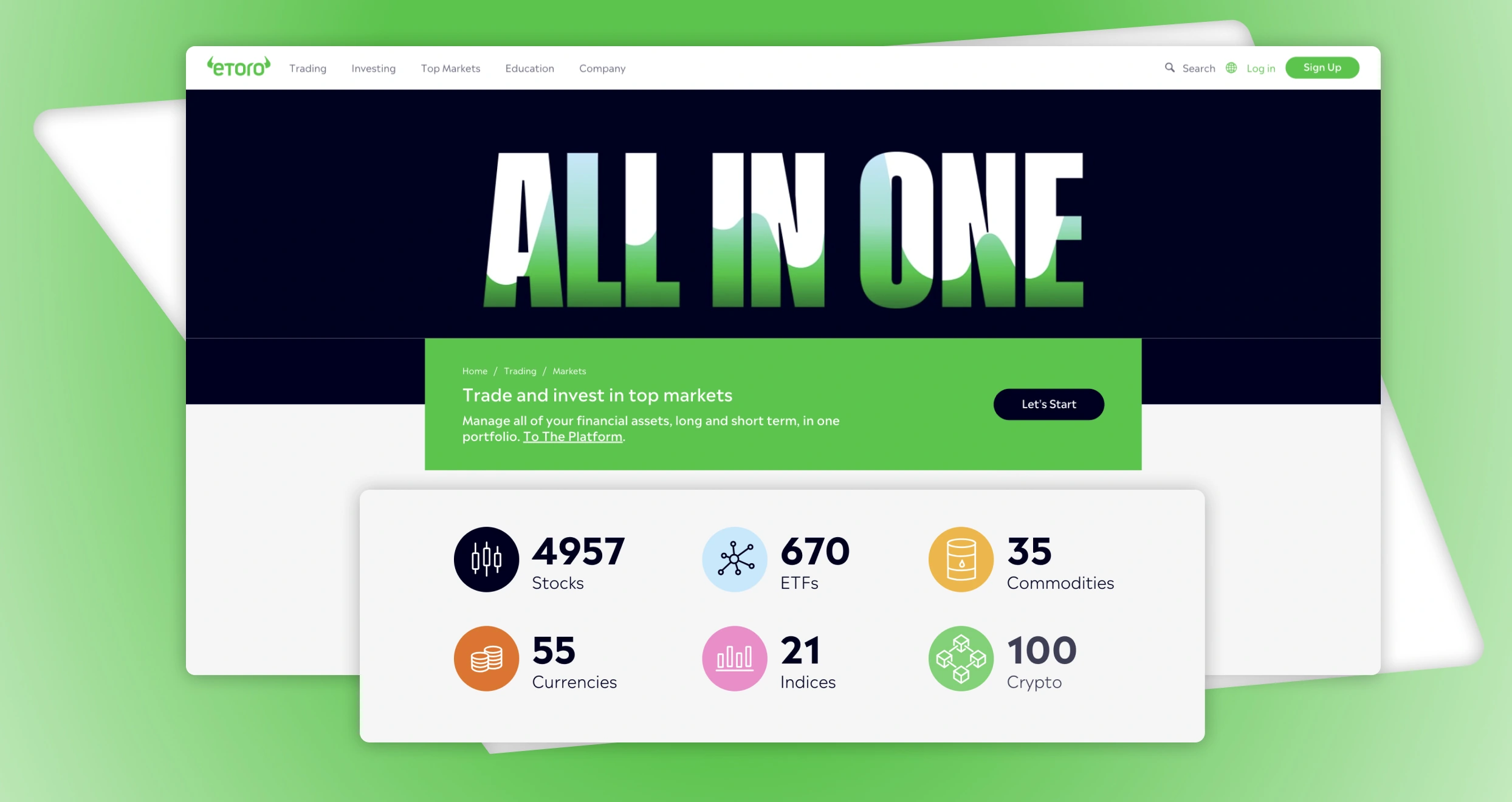
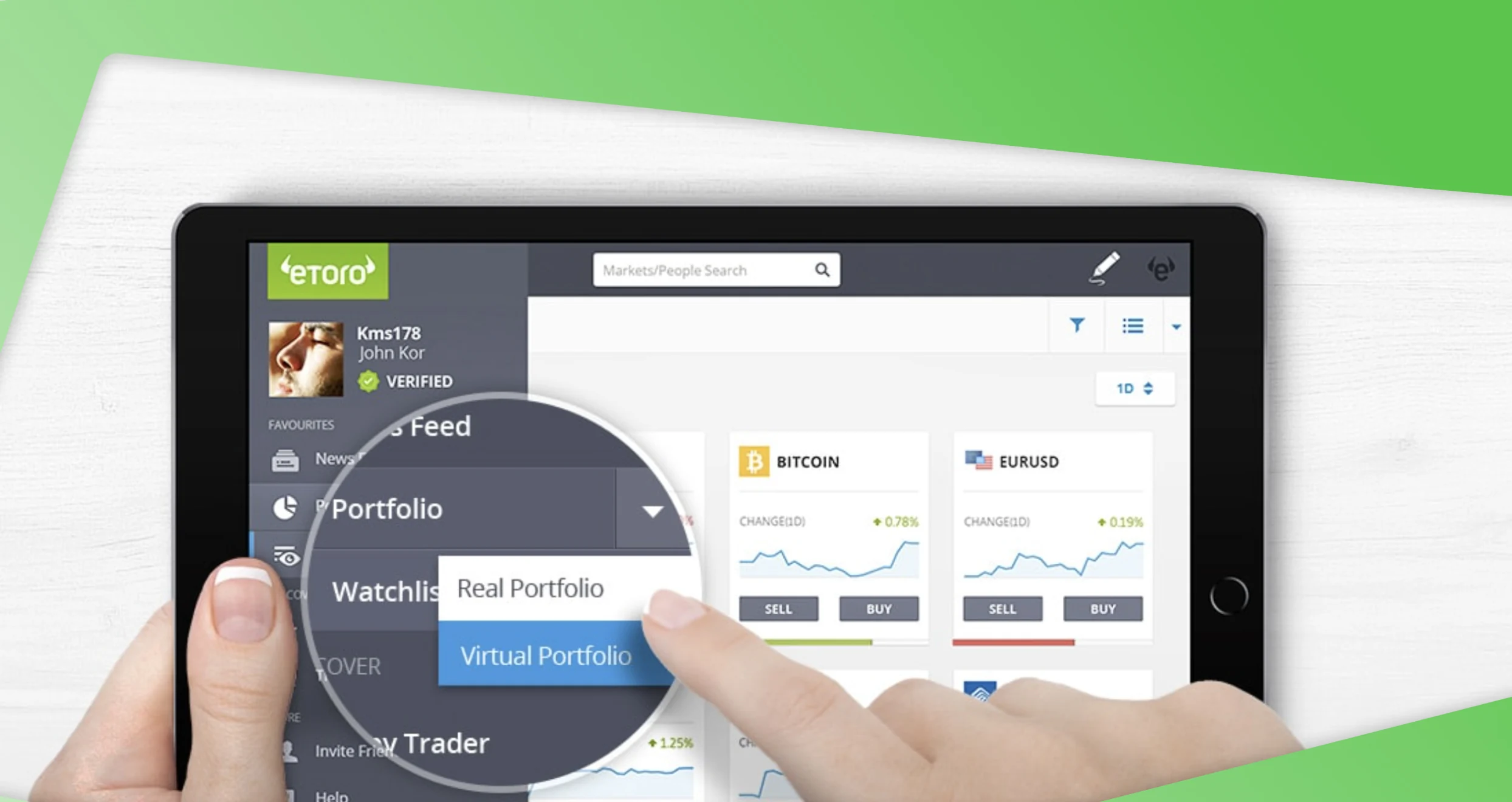

eToro is ideal for beginners and passive investors who want to follow experienced traders rather than build their own strategies. The platform specialises in copy trading — a form of automation where users mirror top traders’ moves in real time without writing code or placing orders manually.
With over 30 million registered users and multi-jurisdictional regulation (including by the FCA), eToro offers both CFDs and real asset exposure. Its large social trading network and user-friendly interface make it especially suitable for those seeking a more accessible route into automated investing.
eToro
✔5000+ financial instruments
✔Cost-free deposits
Pros & Cons
Fees
Trading Assets
Pros
- Simple, beginner-friendly copy trading system
- 5,000+ instruments, including crypto, stocks, and ETFs
- Active global trading community
- Free deposits with selected methods
- Regulated by multiple financial authorities
Cons
- £10 monthly inactivity fee after 12 months
- £5 fee for every withdrawal
If there’s anything that can eat away at your profit margins, it’s unnecessary costs. Thankfully, eToro fees UK are reasonable and pocket-friendly. We acquired a new account without paying a single cent, which was quite a relief. We also noticed that you can enjoy free deposits by using USD. That said, eToro supports many other currencies, including GBP, EUR, and RMB.
You will incur conversion fees if you use any currency other than USD. And if you use any currency that eToro doesn’t support, you must pay conversion fees to your payment provider. The exact conversion fees you may incur at any moment will depend on various factors, including your preferred currency and payment method.
Please note that eToro subjects each withdrawal request to a £5 fee. The platform uses this money to pay expenses arising from international money transfers. Most importantly, you can’t withdraw less than £30 from the eToro trading platform.
While depositing money into our account, we noticed that eToro has strict minimum deposit requirements. Britons using this platform have to deposit at least £100 the first time. Afterwards, you can fund your account with as little as £10, depending on your preferred payment method.
Commission-wise, eToro is very friendly to people who trade ETFs or invest in real stocks since the broker charges 0% for these assets. On the other hand, if you buy or sell crypto on this platform, expect to pay a 1% fee. CFD trading also attracts variable spreads depending on the involved instruments. For instance, the spreads for currencies and commodities start from 1 pip and 2 pips, respectively.
Not to forget, eToro charges a £10 monthly inactivity fee that kicks in after 12 months of dormancy.
4. IG – Best for Advanced Traders
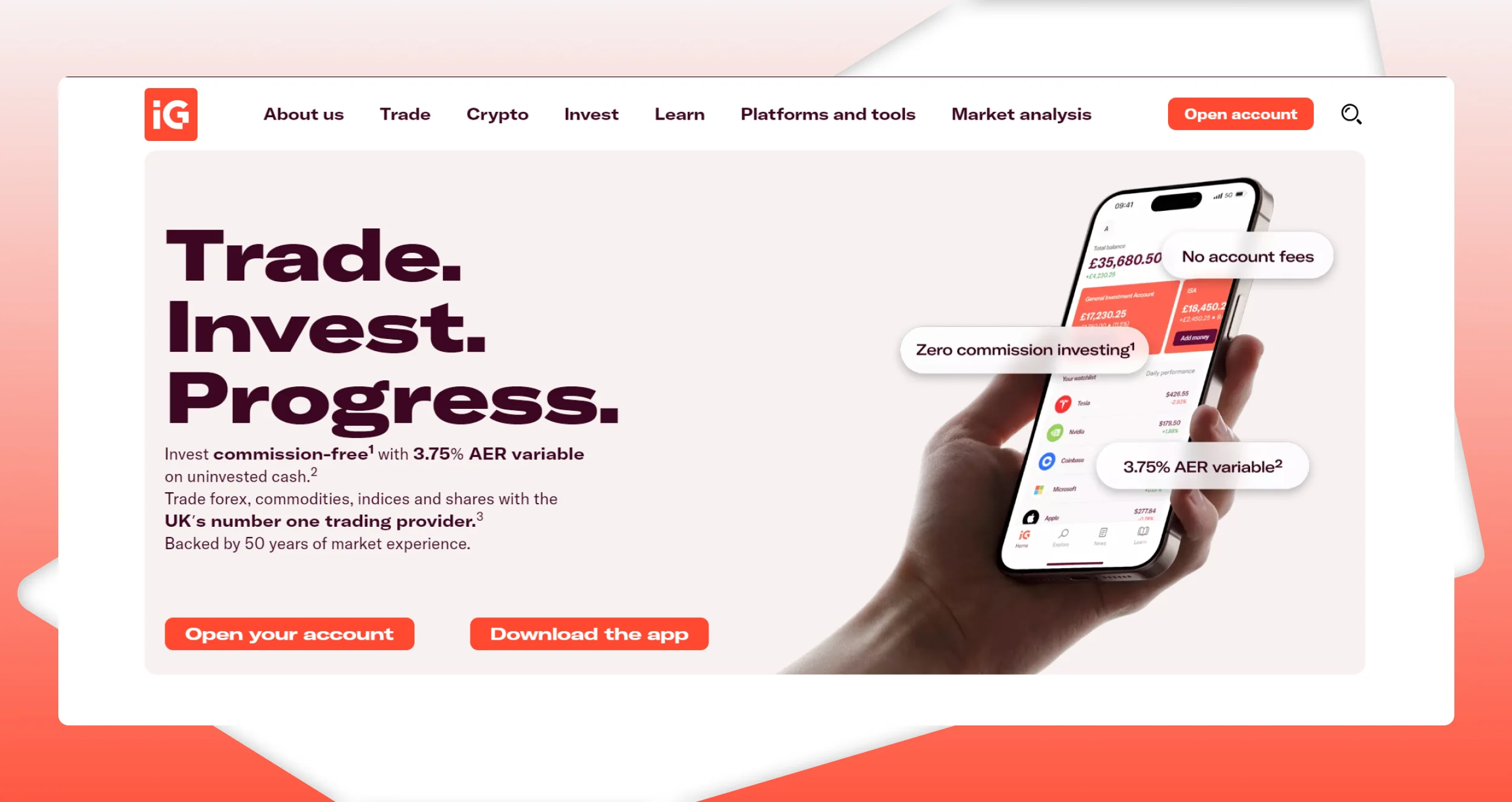
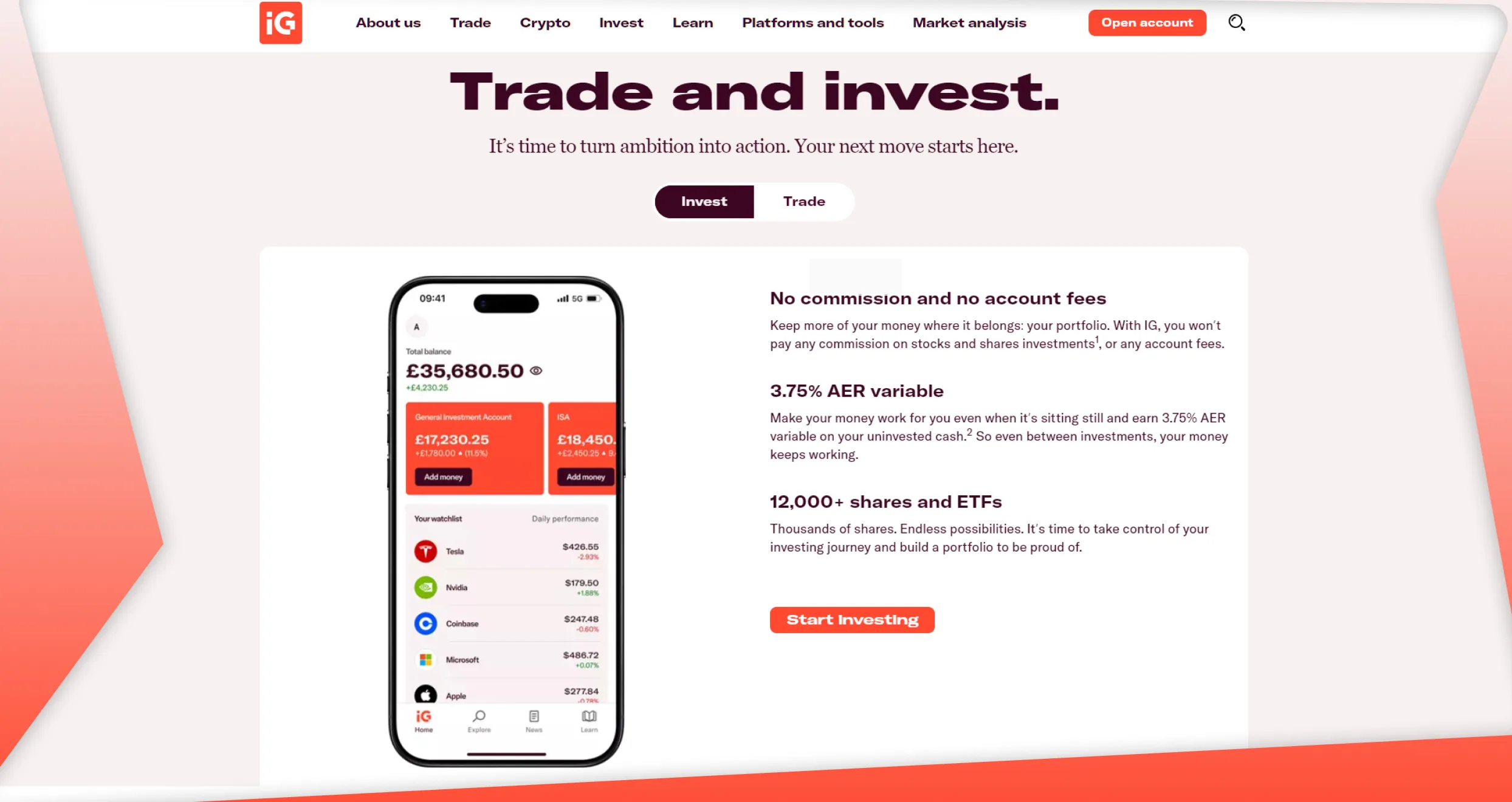
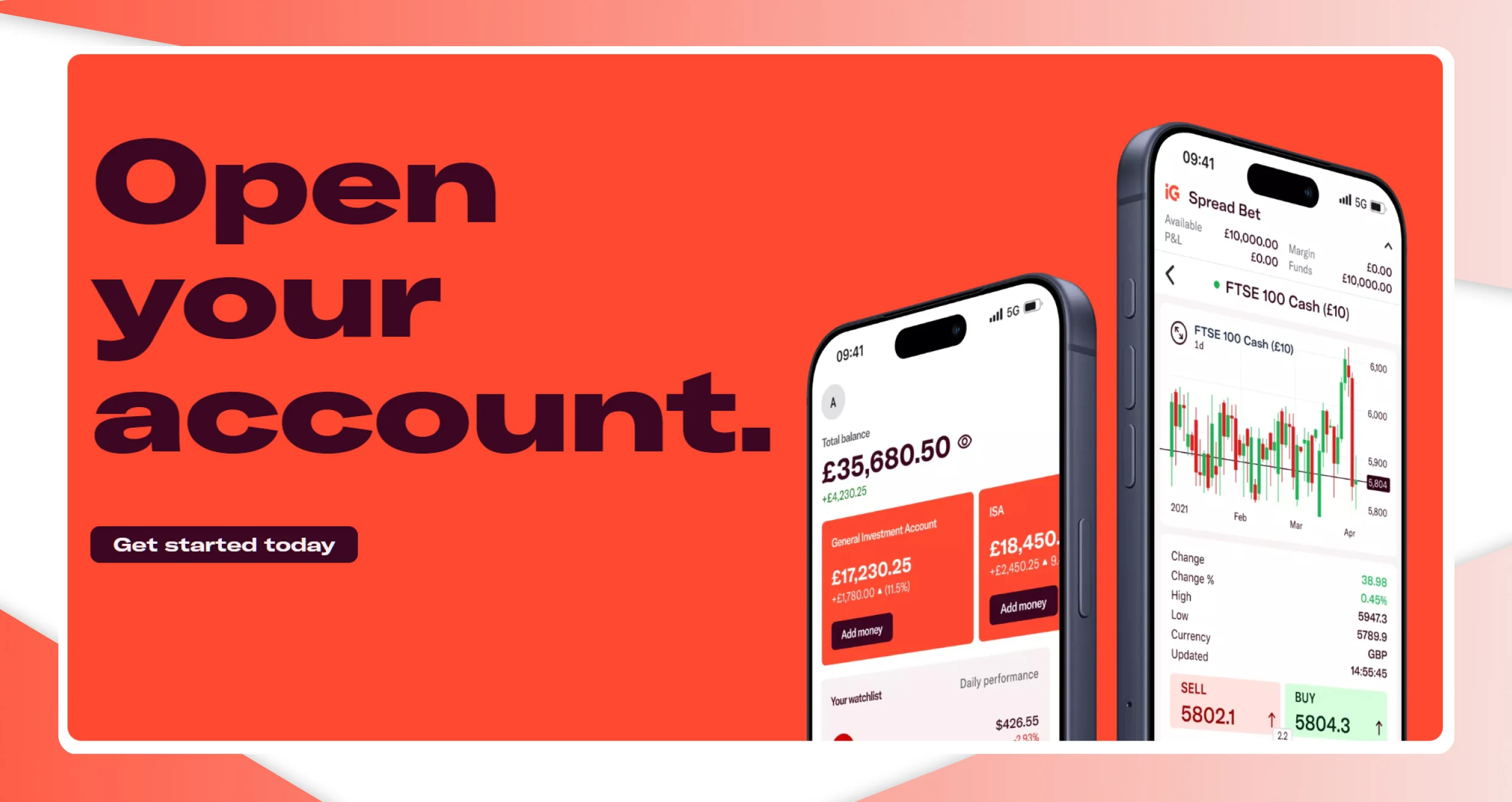
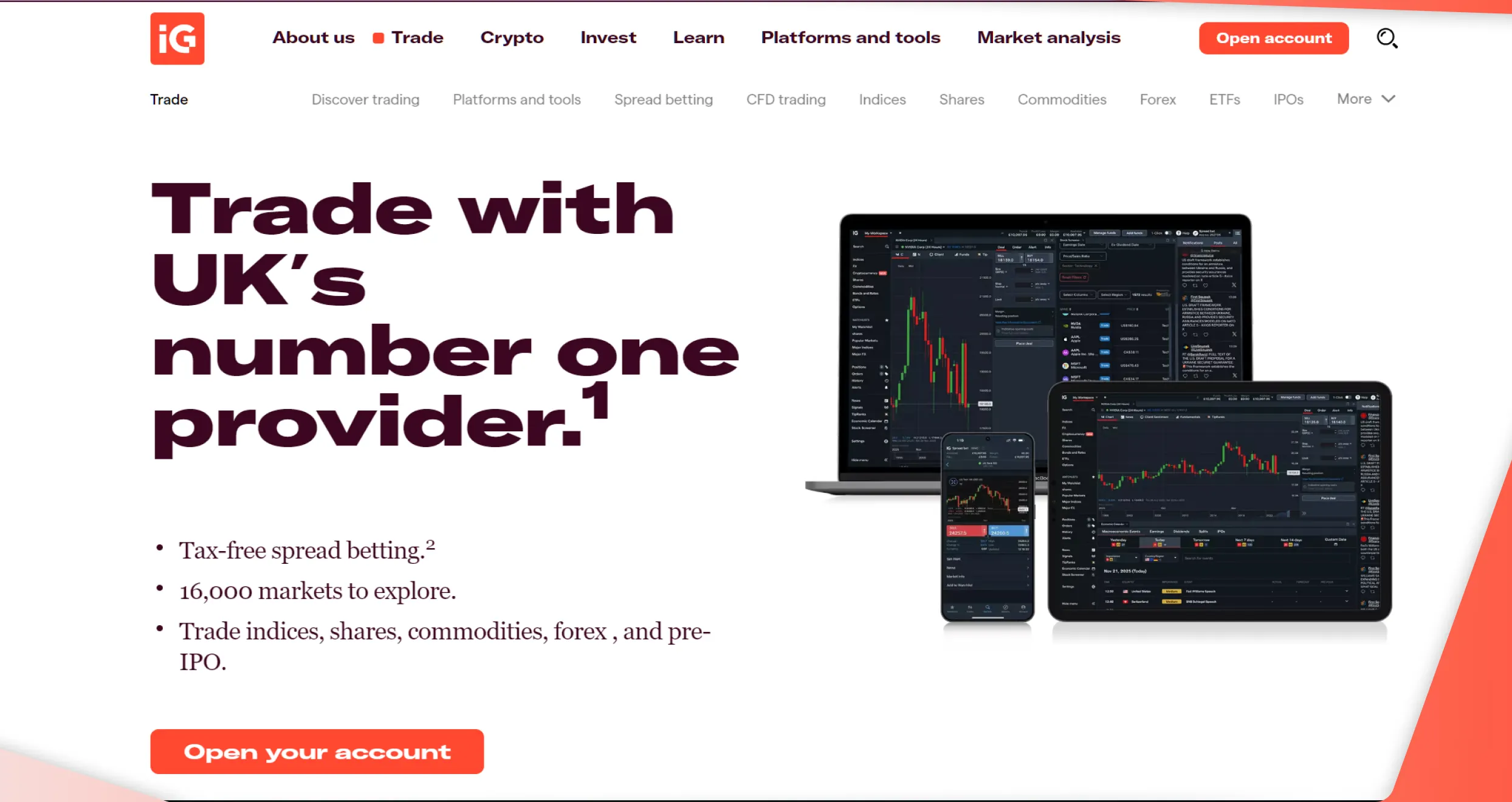
IG covers three distinct routes into algorithmic trading, which is more flexibility than most UK brokers offer. ProRealTime lets you build, backtest and refine your own strategies using its coding language, while MetaTrader 4 gives access to off-the-shelf Expert Advisors from its marketplace, some included free with an IG account.
For traders comfortable with code, IG’s native APIs support Java, Excel VBA, .NET or any language that handles HTTP, covering trade automation, custom integrations and historical market data. Beyond automation, the account gives access to 17,000+ markets with no minimum deposit requirement, and spreads from 0.6 pips on EUR/USD.

IG Markets
✔Zero minimum deposit requirements
✔17,000+ available products
Pros & Cons
Fees
Trading Assets
Pros
- Three routes into algorithmic trading
- Native API support for multiple languages
- 17,000+ markets available
- No minimum deposit requirement
Cons
- Native API access suits coders more than casual traders
- MT5 algo support isn’t clearly confirmed
Opening an IG Markets account doesn’t cost a dime. Moreover, this broker has no minimum deposit, so you don’t have to worry about compromising your budget. You can also enjoy significant savings by trading with IG Markets since it offers tight spreads, starting from 0.1 points on commodities and 0.6 points on popular currency pairs.
With that in mind, IG Markets charges overnight funding for cash CFD positions and daily funded bets (DFBs) that remain open past 10 pm UK time. The broker also requires traders to cover a small guaranteed stop fee. The fee kicks in every time the guaranteed stop feature is triggered. You should also expect to incur additional when shorting stocks and augmenting your trading experiences with premium services like live data streams.
Luckily, deposits and withdrawals are free on IG Markets. The broker only requires traders to pay a 0.5% standard currency conversion fee. Furthermore, the platform has zero inactivity fees, though your account will be terminated if it remains dormant for 24 consecutive months.
5. Capital.com – Best for a Budget-Friendly Entry
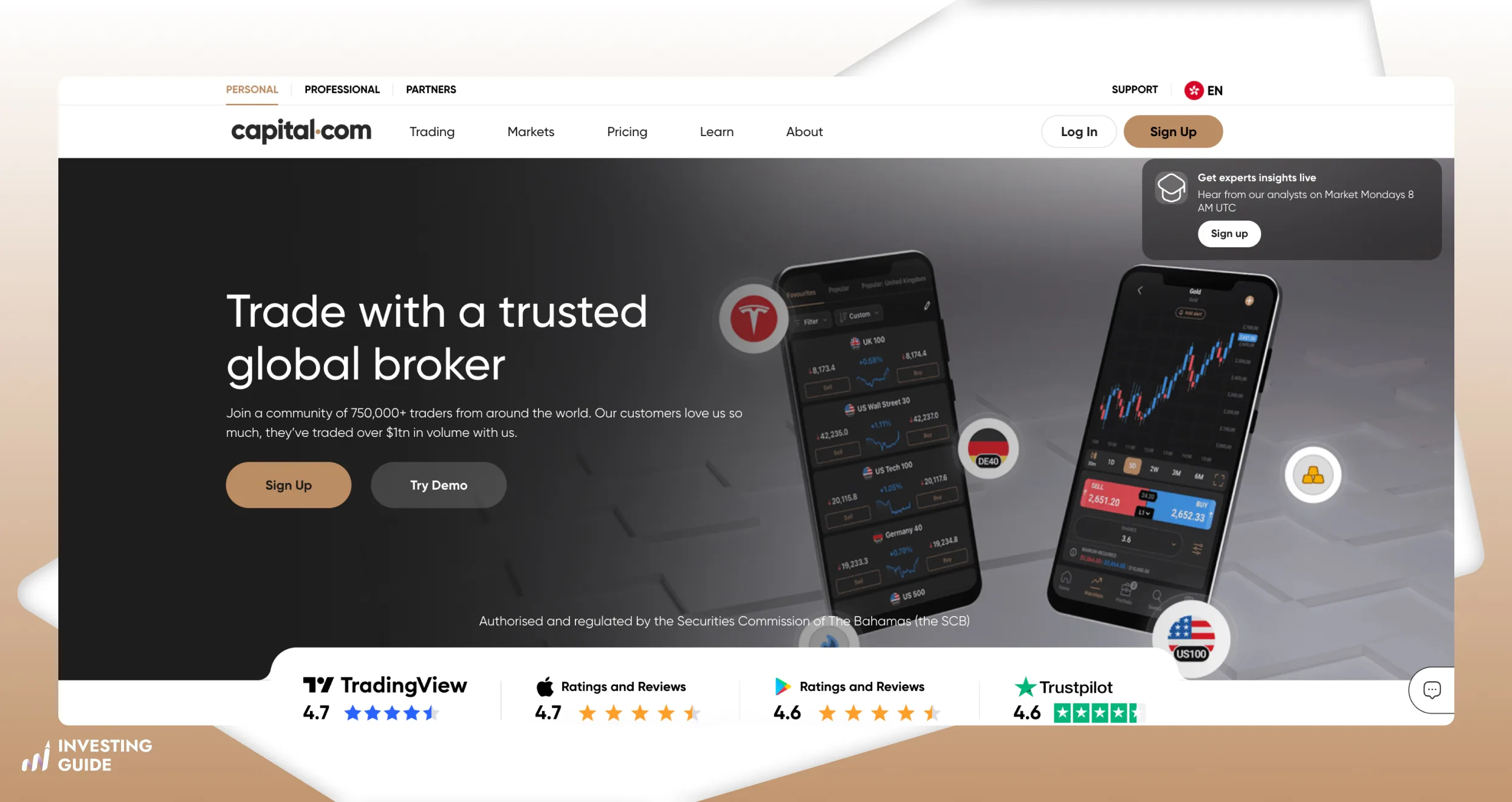
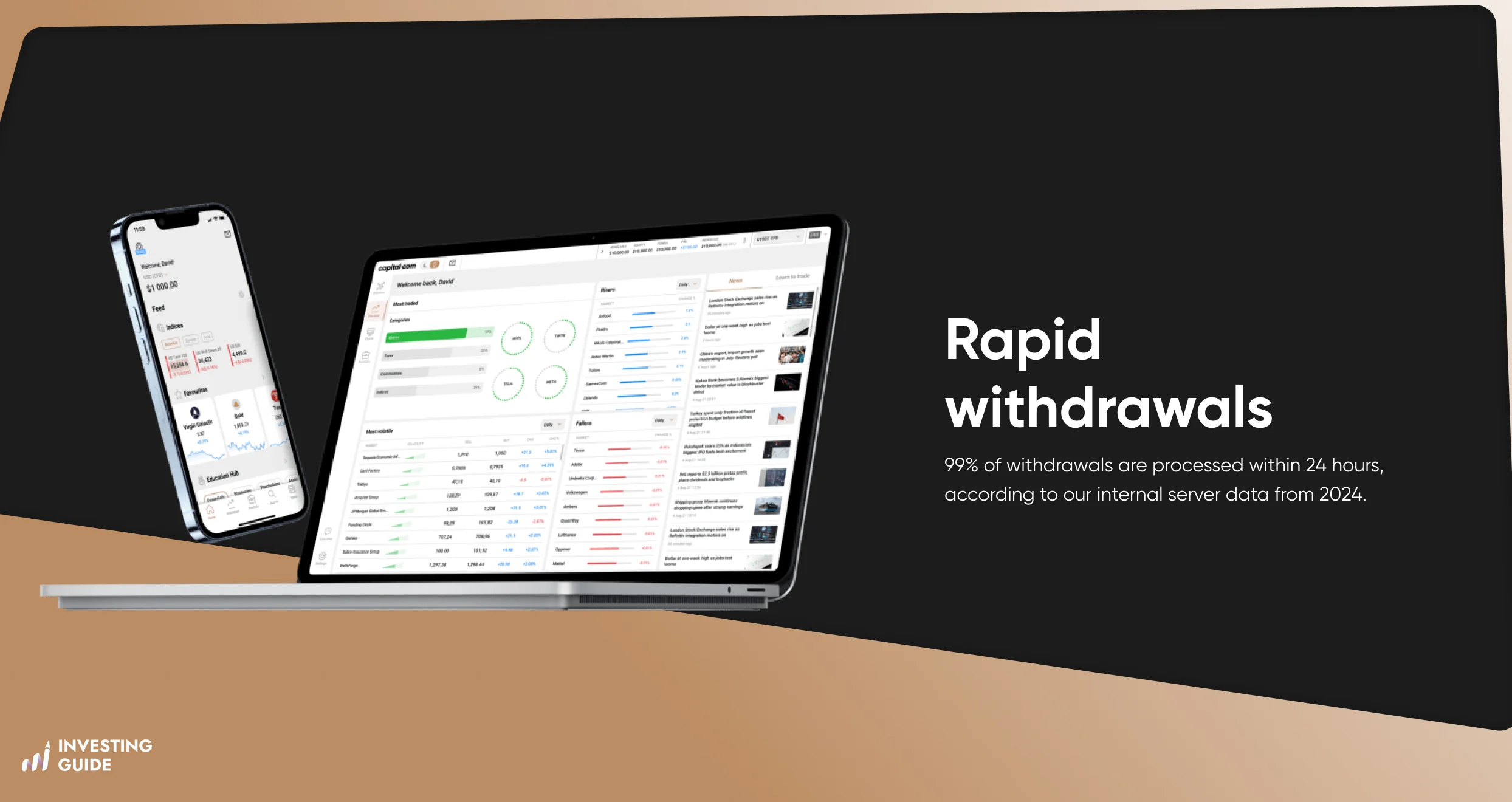
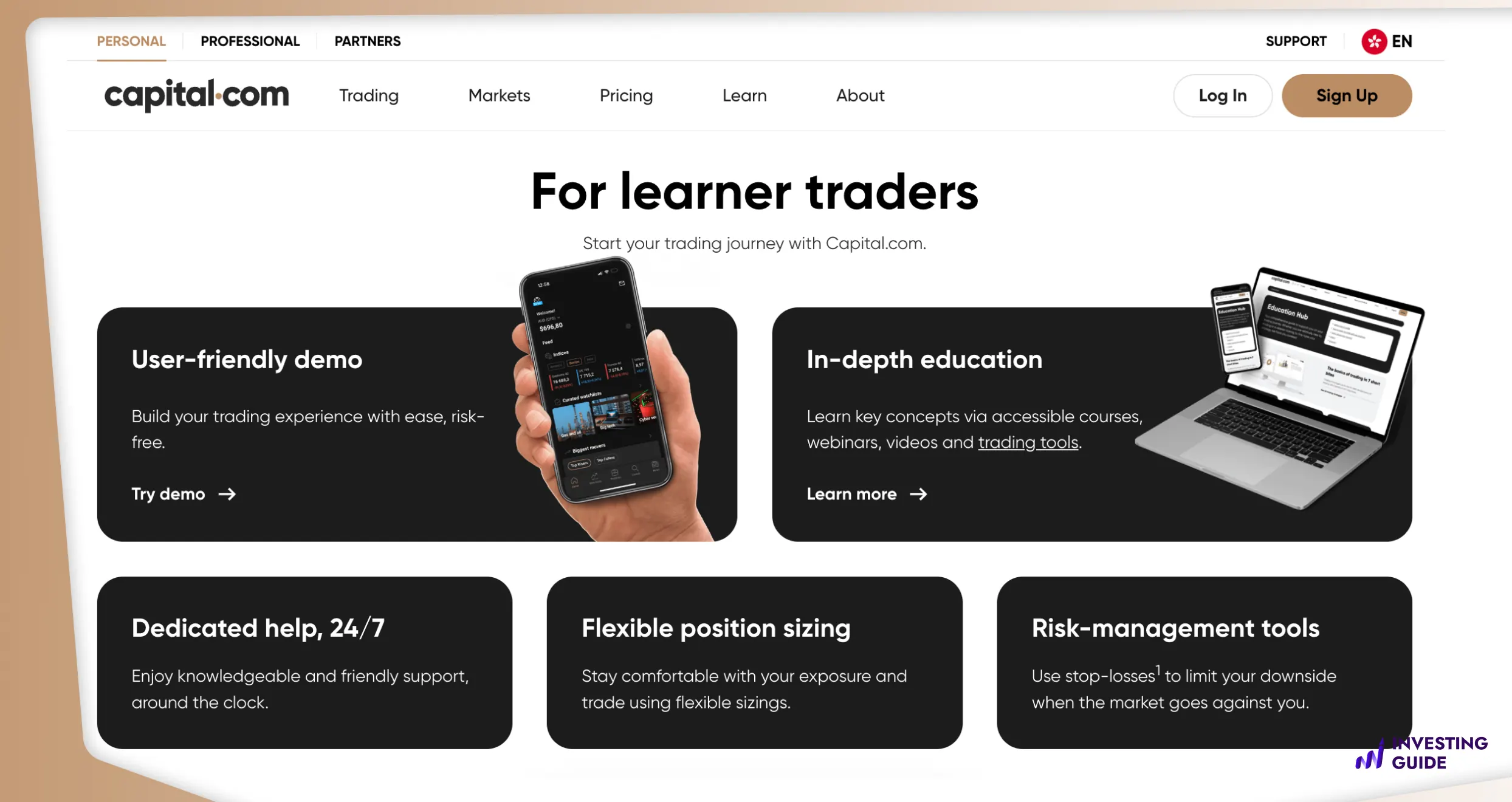
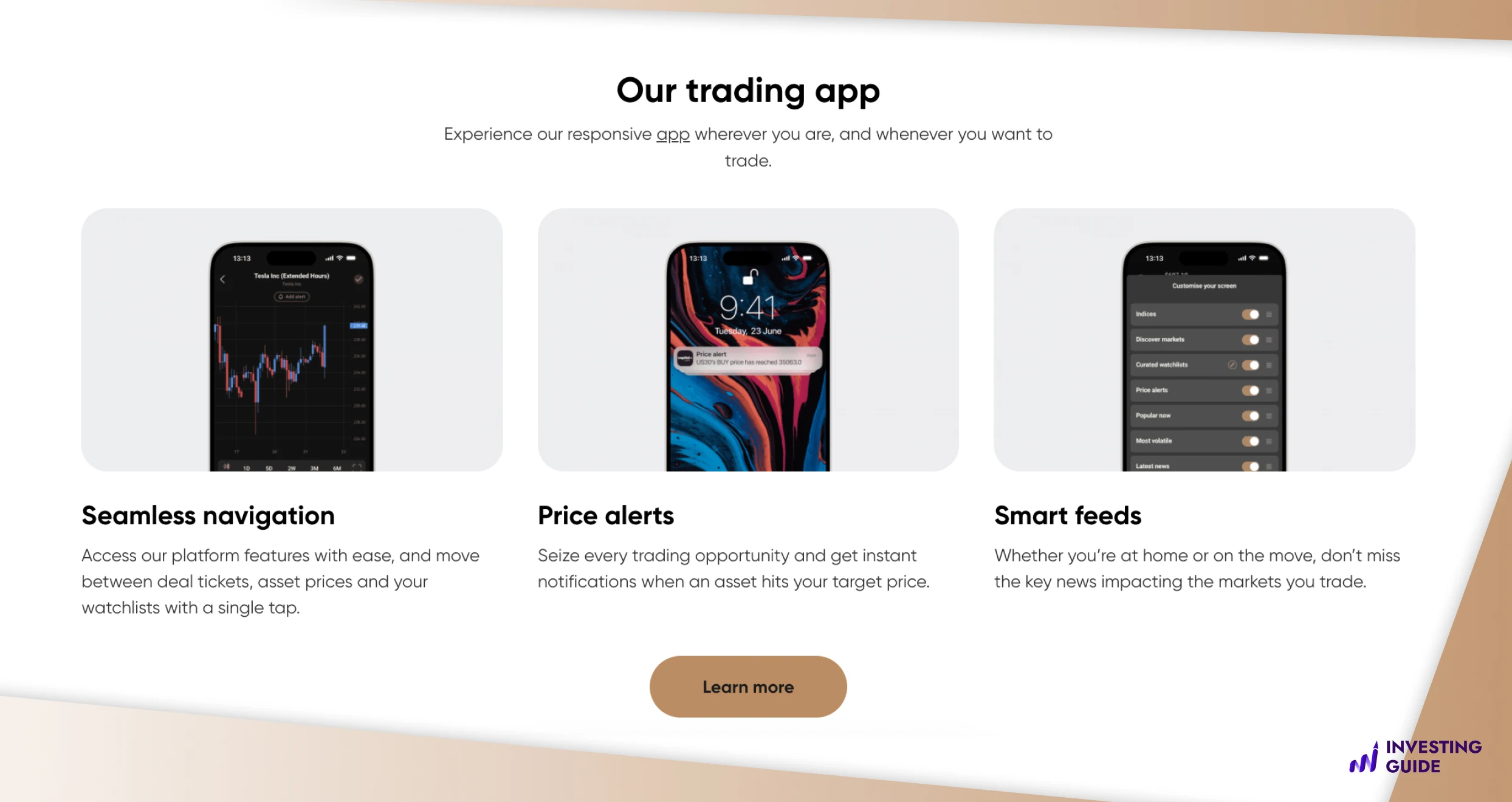
A £20 minimum deposit by card is about as low as automated trading gets at a regulated UK broker, and Capital.com charges 0% commission on top, with costs built into the spread instead. MT4 Expert Advisors handle the automation side, so existing MQL4 strategies carry over without rewriting anything.
The free Investmate app breaks down CFD and automation basics into short, quiz-based lessons for anyone building confidence before setting a strategy live. A demo account lets you test an Expert Advisor risk-free first, and deposits carry no fee, keeping the whole entry process genuinely low-cost.

Capital.com
✔FCA-regulated
✔24/7 customer support
Pros & Cons
Fees
Trading Assets
Pros
- £20 minimum deposit by card
- Costs built into the spread, no added fees
- MT4 support for existing Expert Advisors
- Free Investmate education app
Cons
- No MT5 support for automated strategies
- Financing charges apply the longer a position runs
| Type | Fee |
|---|---|
| Minimum Deposit | £20 |
| Commission/Spreads | Free commissions, with Capital.com spreads from 0.0006 pips |
| Overnight Funding | Yes, except for the 1X account |
| Currency Conversions | £0 |
| Guaranteed Stop-Loss Orders | Yes |
| Inactivity | £10 per month after 12 months of inactivity |
| Deposits and Withdrawals | £0 |
Is Automated Trading Legal in the UK?

Yes, automated trading is fully legal in the UK for individuals aged 18 or over. Retail investors can use algorithmic tools to trade financial instruments such as forex, shares, and commodities.
However, there are important considerations to keep in mind:
- Tax implications: Profits from automated trading – particularly from CFD trading – may be subject to capital gains tax. Tax treatment varies based on asset type, account structure, and total income. For up-to-date guidance, consult the official GOV.UK website or speak with a qualified tax adviser.
- Operational risks: While automation can improve speed and efficiency, it is not without risk. Algorithmic systems can malfunction due to bugs, network failures, or unexpected market volatility.
- Need for oversight: Fully automated platforms may struggle to respond effectively to flash crashes or geopolitical events. Maintaining manual oversight and applying strong risk management measures remain essential.
Automated trading can be a useful tool, but it does not remove the need for careful monitoring and responsible investing practices.
What Is an Automated Trading Platform?

An automated trading platform is a digital tool that executes trades on your behalf using preset rules and algorithms. It can be used to buy and sell financial products like forex, stocks, commodities, and cryptocurrencies, either as a standalone tool or integrated with your broker.
These platforms monitor live market data and news feeds, then place trades based on specific conditions you’ve defined in advance. That could mean entering a position when prices hit a certain level or exiting when volatility spikes. The key benefit is speed and precision, but automated systems still require oversight and regular updates to stay effective in changing markets.
How to Choose the Best Automated Trading Platform in the UK
Not all auto trading platforms are created equal. Some may look impressive at first glance but fall short when tested under pressure. Others come with hidden fees or unreliable execution tools. If you want to trade effectively and safely in the UK, you need to be selective. Below are the five key areas to assess before choosing a provider.
Regulation
Reliability
Support
Costs
Reputation
Trust starts with regulation. Choose a provider that’s fully authorised and regulated by the Financial Conduct Authority (FCA). This ensures your funds are protected, platforms follow strict operational standards, and you can trade with confidence on a level playing field.
A strong platform runs smoothly even when markets are volatile. Look for high uptime, consistent execution speeds, and tools like strategy backtesting and historical performance data. The best platforms don’t just work; they work every time.
Glitches happen. When they do, support should be fast, helpful and available when you need it. Whether it’s a technical hiccup or a trading delay, responsive customer service can make all the difference. Always check support hours and channels before signing up.
Fees can eat into profits fast, especially on high-frequency strategies. Review the full cost structure, including trading commissions, platform subscriptions, inactivity fees, and any costs tied to automation features. Avoid platforms that lack transparent pricing.
Finally, reputation matters. What are other traders saying? Platforms with consistently strong reviews on Trustpilot, Google Play or the App Store tend to offer better overall experiences. Look beyond marketing and check real feedback before you commit.
Future Trends in Automated Trading
Automated trading is evolving rapidly, shaped by advances in technology, changing regulations, and shifting investor expectations. Below are several key trends likely to influence the UK market in the coming years:
- Increased use of AI and machine learning
Platforms are integrating AI to analyse patterns, adapt to changing conditions, and execute trades more intelligently. These systems can now learn from historical and real-time data, potentially improving both speed and accuracy.
- Customisation and user control
As more retail investors adopt algorithmic trading, platforms are focusing on user-friendly customisation. Drag-and-drop strategy builders, modular dashboards, and adjustable risk parameters are becoming standard.
- Stronger regulatory frameworks
With the rise of automation, the FCA and other regulators are expected to implement clearer standards for algorithmic trading. This could include stricter testing requirements and transparency on automated strategy risks.
- Integration with smart devices and APIs
Trading is no longer confined to desktops. Expect deeper integration with mobile apps, wearables, and third-party APIs that allow traders to automate strategies in real time from any device.
- Human oversight remains essential
Despite automation, human input remains critical—especially in volatile markets. Future platforms are expected to blend automation with real-time alerts, manual override features, and better visualisation tools for risk monitoring.
As the market matures, successful traders will likely be those who combine automation with sound judgement, platform knowledge, and a strong understanding of risk.
How to Open an Account with an Automated Trading Platform
Opening an account with a UK-based automated trading platform is typically a straightforward process. Follow these five steps:
Step 1: Visit the official platform website
Step 2: Register your account
Step 3: Verify your identity (KYC)
Step 4: Deposit funds
Step 5: Start trading with automation tools
Go to the broker’s website and review its account types, trading instruments, fees, and regulatory status. If you plan to trade on mobile, download the official app via Google Play or the App Store.
Enter your full name, date of birth, email address, and contact details. Create a strong password and ensure that all information is accurate.
UK-regulated platforms are required to conduct Know Your Customer (KYC) checks. You will need to upload a valid passport or driving licence and a recent utility bill or bank statement to confirm your identity and address.
Choose a payment method such as bank transfer, debit card, or e-wallet. Check the platform’s minimum deposit before funding your account. If you’re new to trading, consider starting with a small amount to minimise risk.
Once your account is funded, access the trading dashboard and explore available automated tools. You can use pre-built strategies or configure your own. Most platforms offer demo trading to test strategies before going live. Monitor performance and make adjustments as needed.
FAQs
Are automated trading platforms suitable for beginners?
Yes, many platforms are beginner-friendly and include demo accounts, pre-set strategies, and educational resources. Look for providers with clear interfaces and FCA regulation for added safety.
Can I build my own trading strategies?
Most advanced platforms support custom strategy creation using tools like Expert Advisors (EAs) or scripts. You can code your own algorithm or use drag-and-drop builders if you’re not a programmer.
How can I track the performance of an automated strategy?
Performance metrics are usually shown on your dashboard and include return on investment (ROI), win/loss ratios, drawdown, and trade frequency. Review these regularly and compare them with benchmarks or past results.
What if the algorithm starts making losses?
Most platforms allow you to pause or stop an automated strategy at any time. You can also set stop-loss and take-profit parameters to manage exposure. Regular performance monitoring is key to limiting downside risk5
Conclusion
Automated trading offers greater speed and consistency, but it should be approached with care. Performance can vary depending on market conditions, and strategies require regular review and adjustment.
Platforms regulated by the FCA generally provide higher levels of transparency and investor protection. Use automation to support, not replace, your trading decisions.
Related Articles:


I’ve used eToro for automated copy trading, and it’s been great for me as a beginner. It really simplifies things by automatically copying successful traders, which helped me avoid emotional mistakes early on.
This is a solid breakdown! Thank you!
I’m just starting out and this guide made automated trading seem way less intimidating. eToro looks like a solid pick for beginners like me who want a hands-off approach