
 Fact checked


We may receive compensation from our partners for placement of their products or services, which helps to maintain our site. We may also receive compensation if you click on certain links posted on our site. While compensation arrangements may affect the order, position or placement of product information, it doesn’t influence our assessment of those products.
For UK investors watching global energy markets, natural gas often plays a secondary role to oil or renewable energy sources. But its price swings, driven by geopolitical events, supply disruptions, and seasonal shifts in demand, can have a direct impact on energy portfolios and inflation-sensitive assets.
With rising interest in how commodities affect long-term investing, natural gas is drawing fresh attention. This article explains how gas markets operate, what moves prices, and the practical ways UK-based beginners can gain exposure through stocks, funds, or more advanced tools.
What Moves the Price of Natural Gas?
Natural gas prices are shaped by several global forces. Unlike oil, gas is harder to store and transport, which makes it more sensitive to short-term shifts in supply and demand. For UK investors, understanding these drivers helps explain market fluctuations and indicates which sectors may gain or lose value.
- Seasonal demand – Extreme weather raises demand for heating and cooling, with global consumption influencing UK energy costs.
- Geopolitical risk – Supply often depends on unstable political ties. Reduced Russian exports during the Ukraine war, for example, drove prices sharply higher.
- Storage levels – Low reserves in the UK or EU before winter can trigger rapid price rises, making storage data an early warning sign.
- Currency movements – Gas trades in US dollars, so a weaker pound makes imports costlier and adds pressure to UK inflation.
- Industrial demand – Heavy users such as manufacturing, fertiliser, and power generation affect overall consumption.
These factors ripple through markets, shaping the performance of energy producers, utilities, and industrial companies.
How to Buy Natural Gas in the UK
You can’t invest in physical gas, but UK investors have several ways to gain exposure to the market. These range from simple share purchases to more advanced trading tools.
The most accessible option is buying shares in companies involved in gas production, transportation, or supply. Some are major energy players, while others specialise in LNG or infrastructure.
Examples:
- Centrica – British Gas parent with direct exposure to UK households
- Cheniere Energy – US-based LNG exporter
- Williams Companies – Runs a major network of natural gas pipelines across North America
These stocks respond not only to changes in gas prices but also to company performance, regulatory changes, and dividend policies.
ETFs offer a convenient way to gain broad exposure to the natural gas industry. Some focus on producers and infrastructure, while others track gas prices via futures.
Common choices:
- United States Natural Gas Fund (UNG) – Tracks the performance of natural gas futures
- SPDR S&P Oil & Gas Exploration & Production ETF – Tracks energy firms active in oil and gas
Note: Many gas-related ETFs are US-listed. Buying them may involve currency fees, and they are usually not ISA-eligible.
Futures and options let experienced traders speculate on short-term gas price movements. These products require a margin account and carry a high level of risk.
- Futures are agreements to purchase or deliver gas at a predetermined price on a specified date
- Options give the right, but not the obligation, to trade those futures before expiry
These are complex tools and not suitable for beginners.
Some UK platforms offer contracts for difference (CFDs) and spread betting based on gas prices. These allow for leveraged trades without owning the asset.
While accessible, they carry a high risk. Losses can exceed deposits, and they are generally unsuitable for long-term investors or ISAs.
Best Brokers for Natural Gas Trading in the UK
Choosing the right broker depends on whether you want long-term exposure through shares and funds, or short-term trading with contracts for difference (CFDs) and spread bets. Here are three well-known options for UK investors:
1. eToro

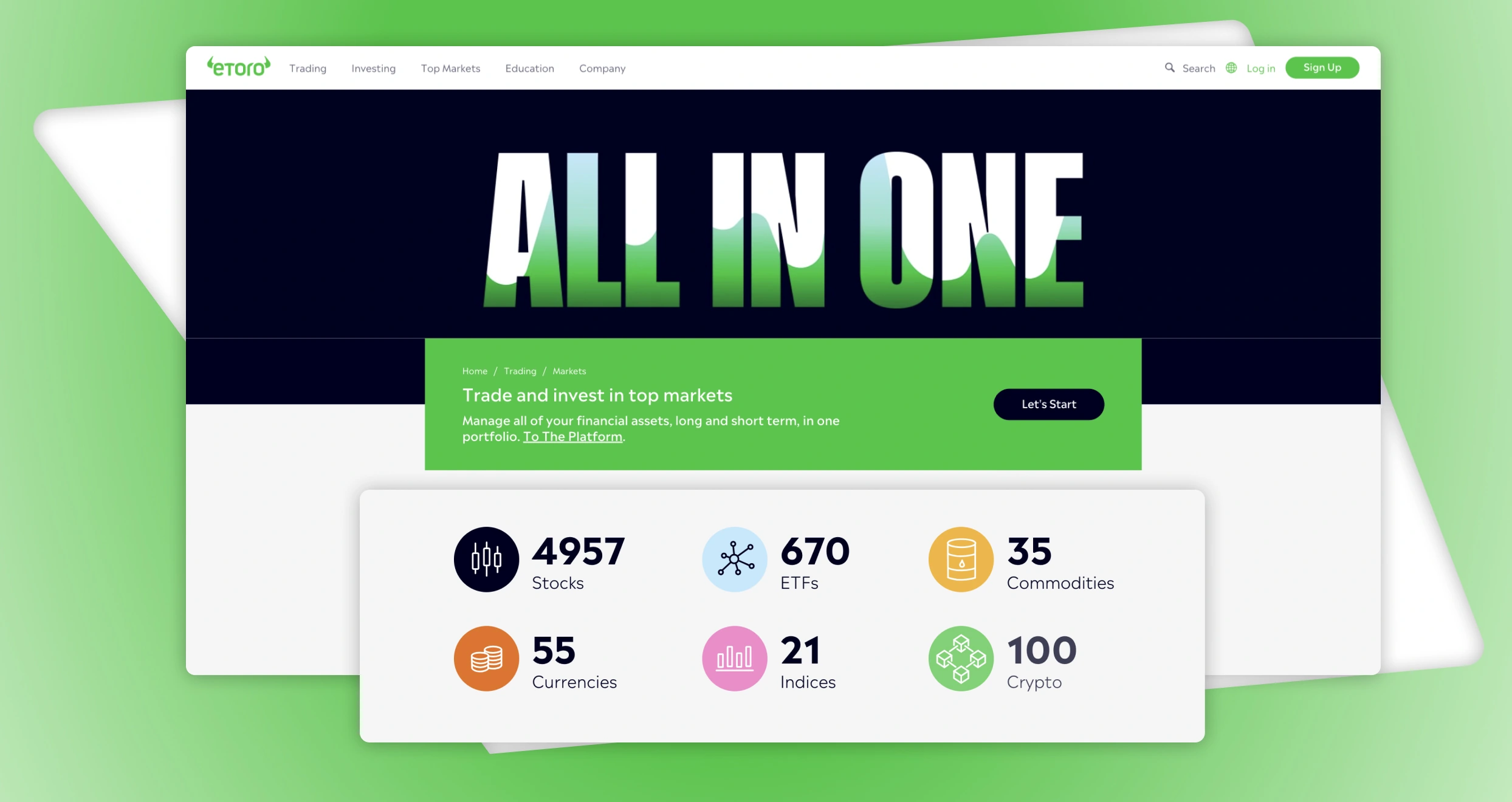
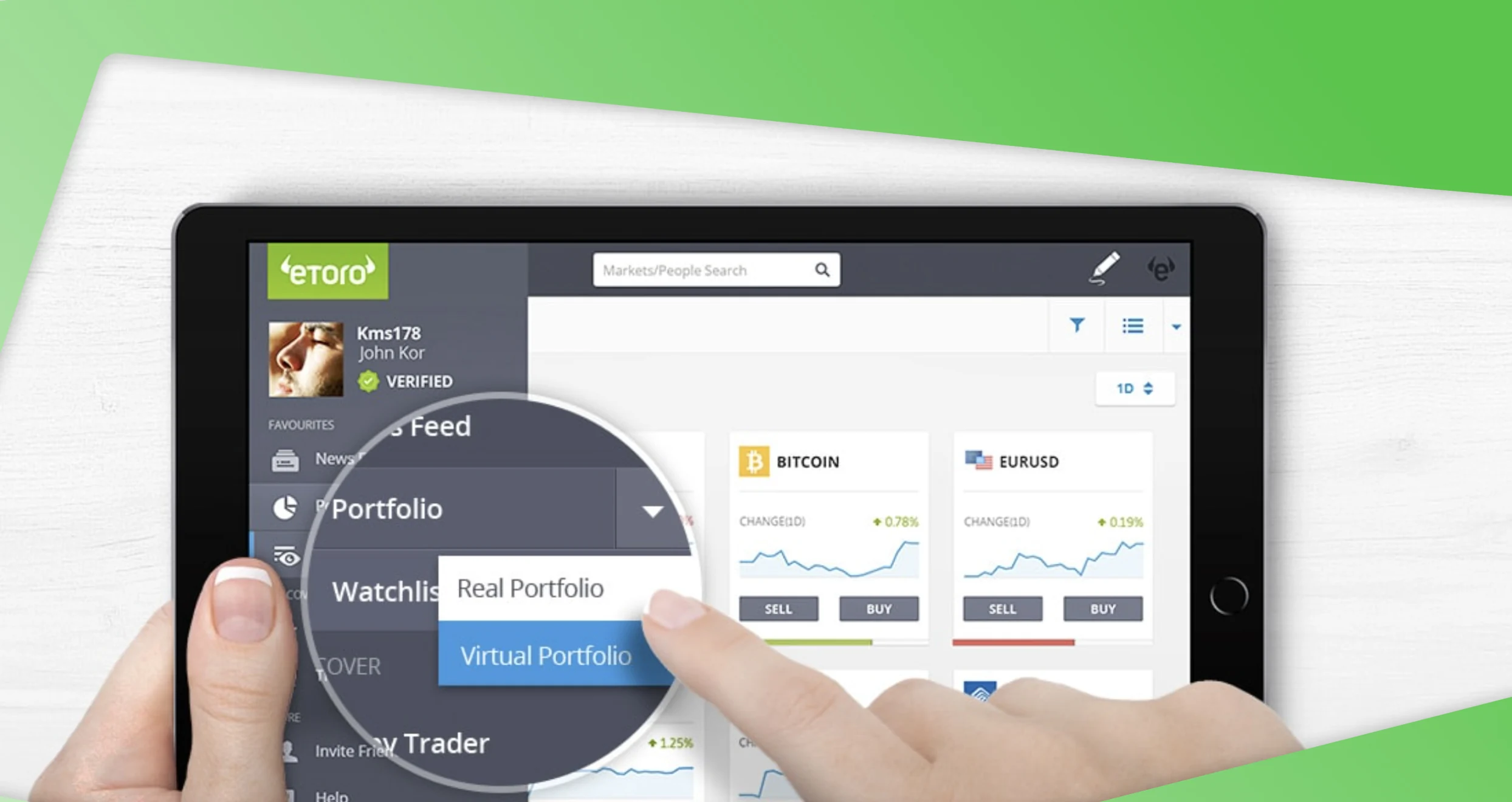

eToro is a popular choice for beginners thanks to its simple platform and commission-free share dealing. It provides investors with access to global energy companies and ETFs, making it easy to build a diversified portfolio with minimal costs. A unique feature is its social trading network, which allows you to follow and copy experienced traders. This helps newcomers learn strategies while staying engaged with the market.

✔5000+ financial instruments
✔Cost-free deposits




Pros
- User-friendly interface and social trading features.
- Commission-free share dealing on many stocks and ETFs.
- Access to a wide range of global energy companies.
Cons
- Limited research tools compared with specialist brokers.
- Currency conversion fees apply to US-listed stocks and ETFs.
If there’s anything that can eat away at your profit margins, it’s unnecessary costs. Thankfully, eToro fees UK are reasonable and pocket-friendly. We acquired a new account without paying a single cent, which was quite a relief. We also noticed that you can enjoy free deposits by using USD. That said, eToro supports many other currencies, including GBP, EUR, and RMB.
You will incur conversion fees if you use any currency other than USD. And if you use any currency that eToro doesn’t support, you must pay conversion fees to your payment provider. The exact conversion fees you may incur at any moment will depend on various factors, including your preferred currency and payment method.
Please note that eToro subjects each withdrawal request to a £5 fee. The platform uses this money to pay expenses arising from international money transfers. Most importantly, you can’t withdraw less than £30 from the eToro trading platform.
While depositing money into our account, we noticed that eToro has strict minimum deposit requirements. Britons using this platform have to deposit at least £100 the first time. Afterwards, you can fund your account with as little as £10, depending on your preferred payment method.
Commission-wise, eToro is very friendly to people who trade ETFs or invest in real stocks since the broker charges 0% for these assets. On the other hand, if you buy or sell crypto on this platform, expect to pay a 1% fee. CFD trading also attracts variable spreads depending on the involved instruments. For instance, the spreads for currencies and commodities start from 1 pip and 2 pips, respectively.
Not to forget, eToro charges a £10 monthly inactivity fee that kicks in after 12 months of dormancy.
2. IG Markets
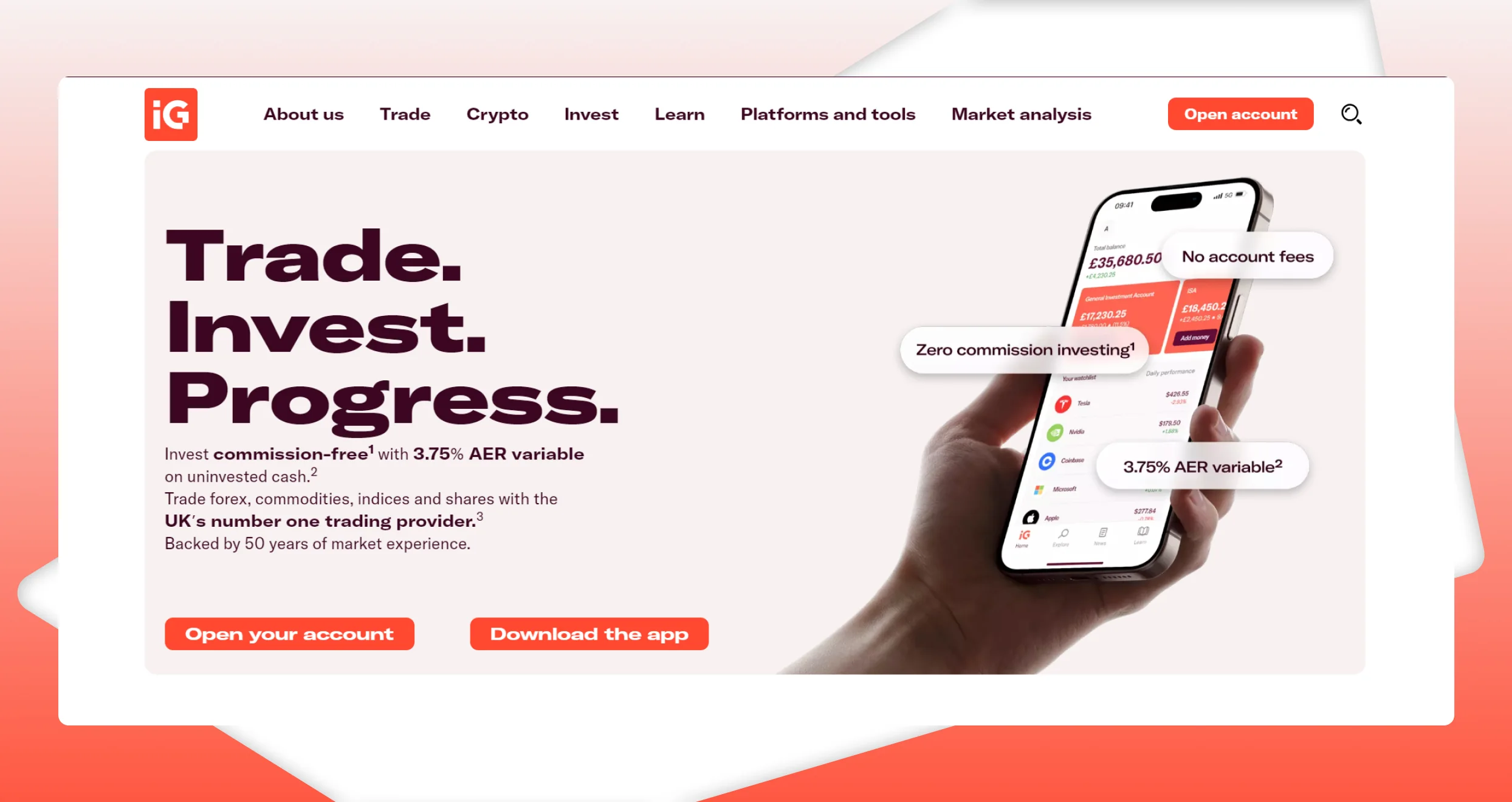
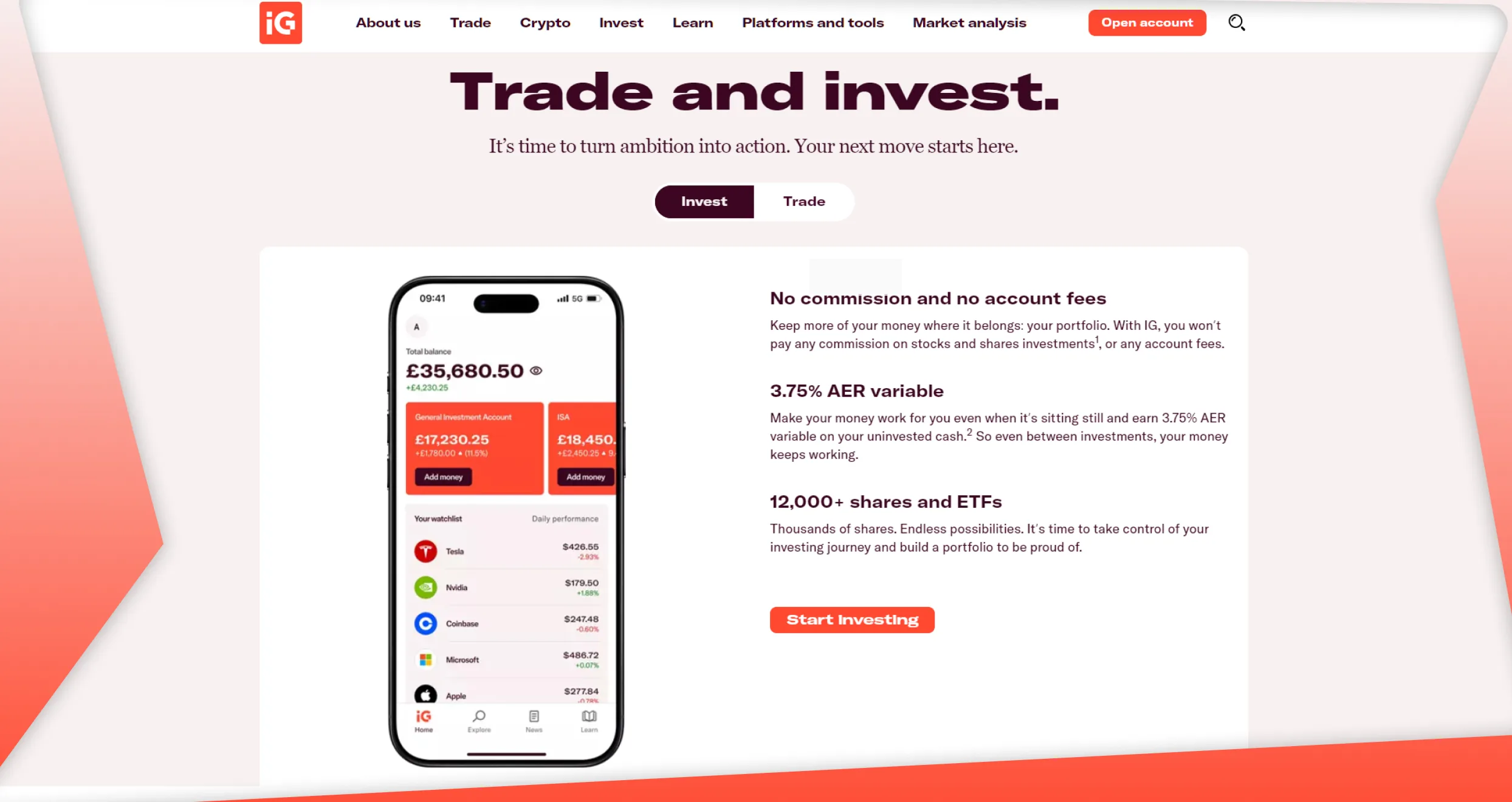

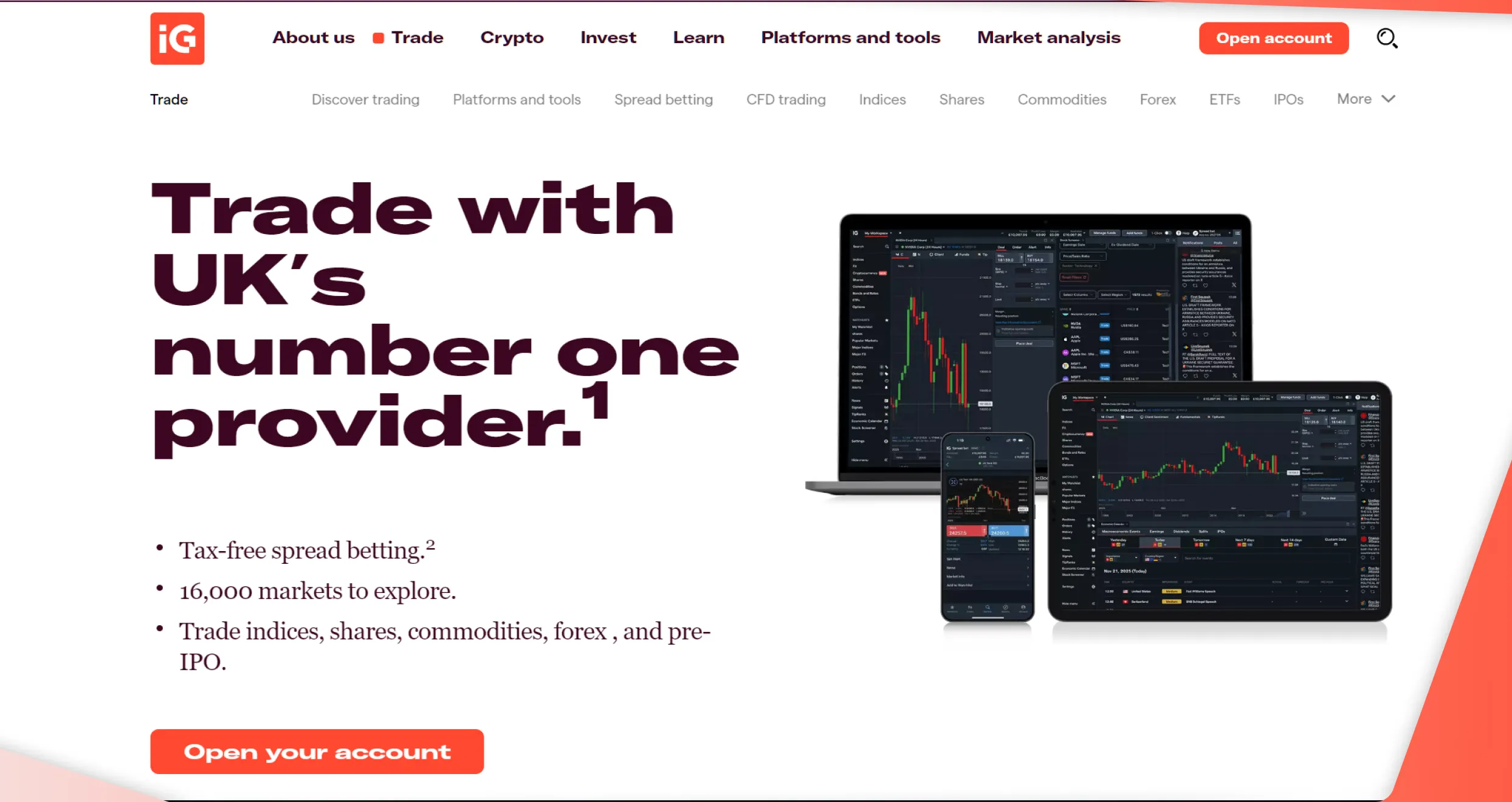
IG Markets is one of the UK’s largest and most established brokers, with a particular strength in CFDs and spread betting. It offers direct exposure to natural gas price movements, including futures and spot markets, which makes it suitable for active traders. The platform is known for its advanced charting, professional-grade analysis tools, and extensive educational resources. IG Markets is also highly regulated, which gives confidence to investors looking for safety and transparency.

✔Zero minimum deposit requirements
✔17,000+ available products
Pros
- Strong platform with advanced charts and analysis.
- Wide range of commodities, including gas futures and spot prices.
- FCA-regulated with a long track record.
Cons
- CFDs and spread bets are high-risk and not ISA-eligible.
- Inactivity fees apply if you don’t trade for a while.
Opening an IG Markets account doesn’t cost a dime. Moreover, this broker has no minimum deposit, so you don’t have to worry about compromising your budget. You can also enjoy significant savings by trading with IG Markets since it offers tight spreads, starting from 0.1 points on commodities and 0.6 points on popular currency pairs.
With that in mind, IG Markets charges overnight funding for cash CFD positions and daily funded bets (DFBs) that remain open past 10 pm UK time. The broker also requires traders to cover a small guaranteed stop fee. The fee kicks in every time the guaranteed stop feature is triggered. You should also expect to incur additional when shorting stocks and augmenting your trading experiences with premium services like live data streams.
Luckily, deposits and withdrawals are free on IG Markets. The broker only requires traders to pay a 0.5% standard currency conversion fee. Furthermore, the platform has zero inactivity fees, though your account will be terminated if it remains dormant for 24 consecutive months.
3. Hargreaves Lansdown

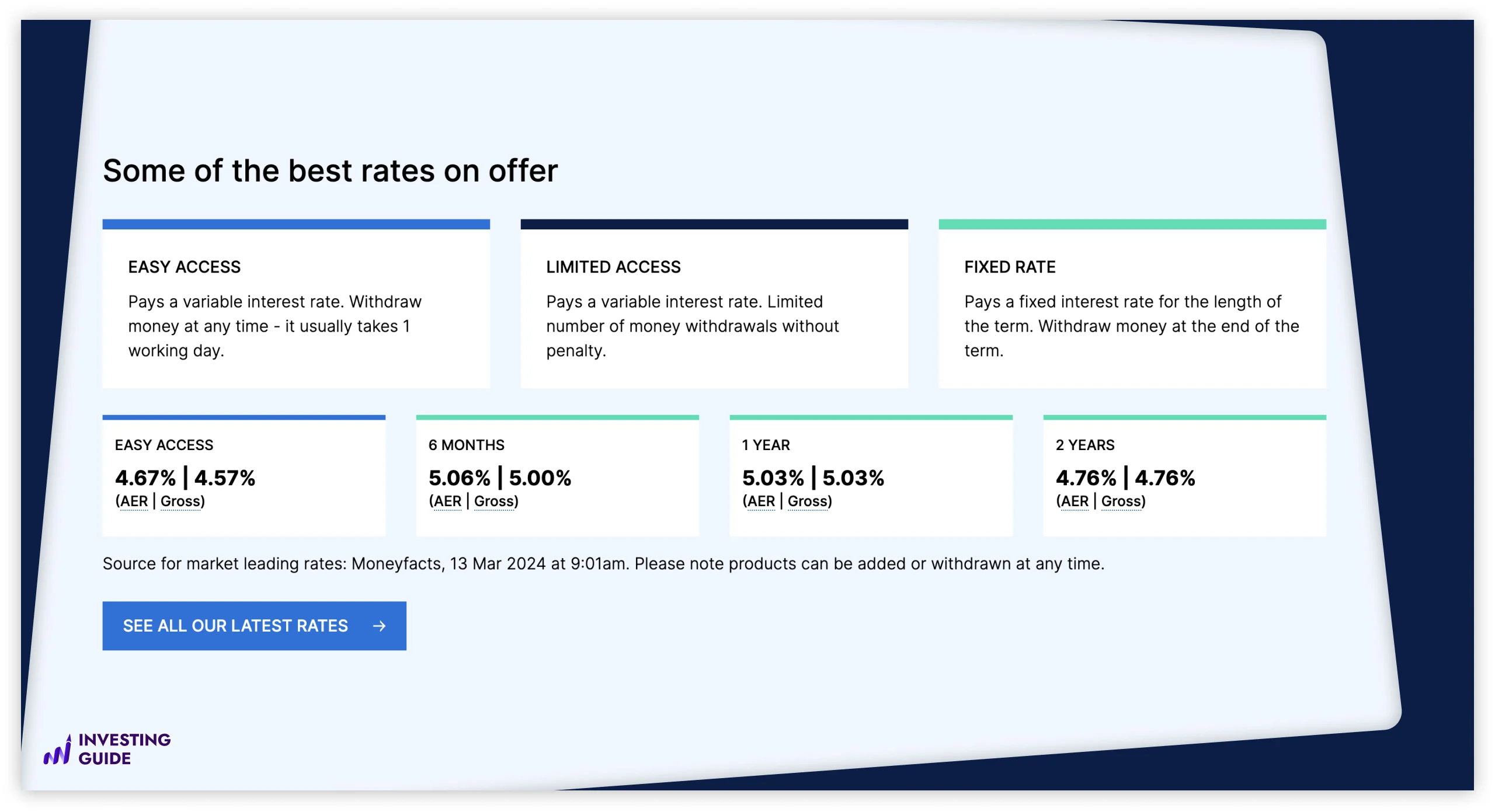


Hargreaves Lansdown is a household name in the UK and appeals to long-term investors. It provides access to natural gas shares, ETFs, and energy-focused funds, all of which can be held within an ISA or SIPP for tax efficiency. The platform is known for its reliability, strong customer service, and wide choice of investment products. While fees are higher than many online-only brokers, its reputation and stability make it a trusted option for investors who prefer a hands-off approach.
Pros
- Well-established and highly regulated UK platform.
- Wide choice of funds, ETFs, and individual energy stocks.
- ISA and SIPP accounts available for tax-efficient investing.
Cons
- Higher dealing fees than some online brokers
- Limited access to US-listed specialist ETFs.
Each of these brokers caters to a different type of investor: eToro suits beginners, IG appeals to active traders, and Hargreaves Lansdown is geared toward long-term investors. Picking the right platform ensures your natural gas investments are aligned with your goals, risk tolerance, and preferred trading style.
Should I Invest in Natural Gas?
Natural gas is not a one-size-fits-all investment. Whether it deserves a place in your portfolio depends on your risk appetite, your view on the future of energy, and how long you plan to hold the asset.
Here are key factors to consider:
Volatility: Gas prices are cyclical and can swing sharply. This creates opportunities for gains but also exposes investors to sudden losses. It is rarely a set-and-forget investment.
Transition to renewables: As more governments invest in wind, solar, and nuclear energy, the long-term demand for natural gas is being reviewed. Some analysts believe gas will act as a transition fuel for decades. Others expect usage to decline more quickly as storage and grid technologies improve.
Political risk: Natural gas frequently plays a key role in global political tensions. Conflicts, sanctions, or export bans can cause price spikes or supply shocks. This can benefit well-positioned firms, but also increase volatility in your holdings.
Inflation protection: Like other commodities, gas can act as a partial hedge against rising energy costs, though it should not replace a broader inflation strategy.
If your goal is steady income or low-risk growth, gas may not be the right choice. But as part of a diversified portfolio, gas-linked assets can offer useful tactical exposure. The key is to know how they behave and how much risk you are willing to carry.
Tax and Account Considerations
For most UK investors, the simplest way to hold natural gas assets is through a Stocks and Shares ISA or a SIPP. These wrappers shield gains from capital gains tax and allow dividends to be received tax-free, up to annual limits.
Shares in gas companies and many ETFs qualify, making them a practical choice for long-term, tax-efficient investing. By contrast, futures, options, and leveraged products typically fall outside the scope of ISA and SIPP rules. They may trigger capital gains or income tax and involve more complex reporting.
Always check whether your chosen platform supports the asset in your preferred account type. If you are uncertain about the tax treatment, consider seeking advice from a qualified financial professional.
FAQs
No. Most UK investors use shares or ETFs linked to natural gas. Futures are complex and generally better suited to experienced traders with a higher risk appetite.
Yes. Many gas-related stocks and ETFs are ISA-eligible, allowing tax-free gains. Futures and leveraged products are not permitted within ISAs.
Yes, for now. While the shift to renewables is underway, gas remains a major source of heating and electricity in many countries.
Volatility. Gas prices can swing quickly due to weather, supply issues, or geopolitical events, leading to sharp gains or losses.
Final Thoughts
Natural gas sits at a crossroads between global politics, industrial demand, and the transition to cleaner energy. It’s not a beginner-friendly asset in the traditional sense, but for UK investors willing to conduct their own research, it offers unique exposure to real-world trends that drive markets.
It may lack the buzz of growth stocks or the simplicity of index funds, but during periods of supply strain or geopolitical tension, gas can quickly move to the centre of attention. With a clear view of the risks and a defined role in your portfolio, it can be a valuable, though tactical, addition to a well-balanced investment approach.