





Yulia Pavliuk is a financial content writer with a background in language, education, and clear communication. She creates SEO-friendly articles that make complex finance topics like ETFs and forex signals clear and accessible, with a strong focus on UK audiences.

 Fact checked
Advertising Disclosure
We may receive compensation from our partners for placement of their products or services, which helps to maintain our site. We may also receive compensation if you click on certain links posted on our site. While compensation arrangements may affect the order, position or placement of product information, it doesn’t influence our assessment of those products.
Driven by falling interest rate expectations, mounting geographical tension, and sustained heavy buying from central banks, gold has repeatedly climbed to record highs this year.. This significant rally has pushed many UK savers and investors to a critical question: Is the gold price set to increase further, or is the market now due for a period of consolidation?
The metal is up more than 20 percent over the past year. It has beaten most major stock indices and outpaced returns on cash savings. Early 2026 brought yet another surge above previous peaks, triggering debate about how high gold could go if global conditions remain fragile.
In This Guide
Best Gold Brokers in the UK
1. eToro

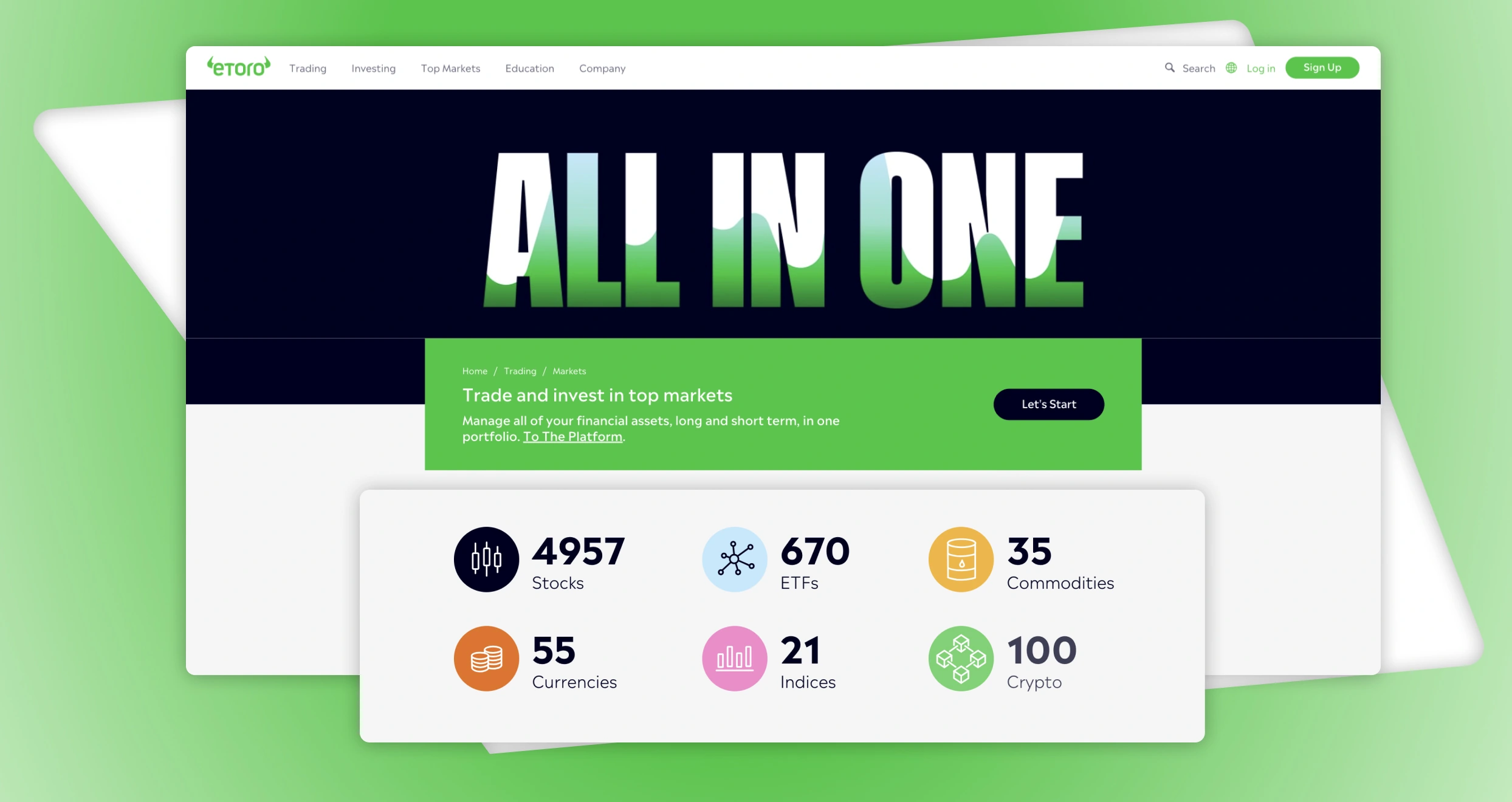
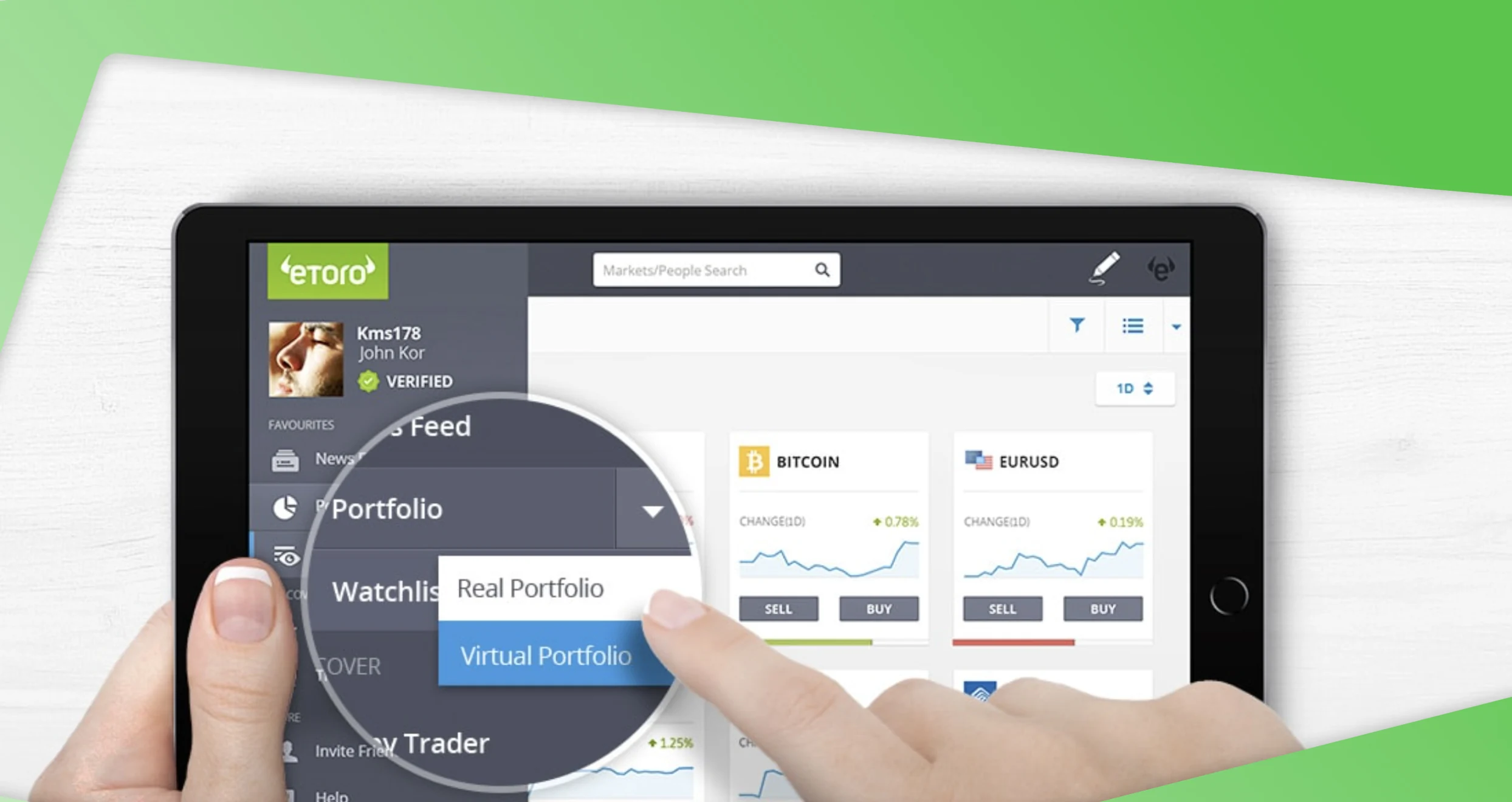

For trading gold price movements rather than holding bullion, eToro offers gold as a CFD alongside its wider commodities range. The minimum deposit is £50, and transactions are free from a GBP account. You will, however, incur a £5 withdrawal fee from a USD wallet.
Positions are opened through the web platform or app, with real-time price alerts flagging gold moves as they happen. eToro also features a CopyTrader platform, whereby you get to follow expert investors who actively trade gold and precious metals. It is useful if you want exposure to the market without building a standalone strategy from scratch.

eToro
✔5000+ financial instruments
✔Cost-free deposits
Pros & Cons
Fees
Trading Assets
Pros
- Low gold trading fees from 0.025%.
- Lists additional commodities and asset classes for portfolio diversification.
- Features CopyTrader and Smart Portfolios for a seamless experience.
- Quality learning resources.
Cons
- Gold is CFD-only, not physical bullion.
- Charges a £5 withdrawal fee from a USD wallet.
If there’s anything that can eat away at your profit margins, it’s unnecessary costs. Thankfully, eToro fees UK are reasonable and pocket-friendly. We acquired a new account without paying a single cent, which was quite a relief. We also noticed that you can enjoy free deposits by using USD. That said, eToro supports many other currencies, including GBP, EUR, and RMB.
You will incur conversion fees if you use any currency other than USD. And if you use any currency that eToro doesn’t support, you must pay conversion fees to your payment provider. The exact conversion fees you may incur at any moment will depend on various factors, including your preferred currency and payment method.
Please note that eToro subjects each withdrawal request to a £5 fee. The platform uses this money to pay expenses arising from international money transfers. Most importantly, you can’t withdraw less than £30 from the eToro trading platform.
While depositing money into our account, we noticed that eToro has strict minimum deposit requirements. Britons using this platform have to deposit at least £100 the first time. Afterwards, you can fund your account with as little as £10, depending on your preferred payment method.
Commission-wise, eToro is very friendly to people who trade ETFs or invest in real stocks since the broker charges 0% for these assets. On the other hand, if you buy or sell crypto on this platform, expect to pay a 1% fee. CFD trading also attracts variable spreads depending on the involved instruments. For instance, the spreads for currencies and commodities start from 1 pip and 2 pips, respectively.
Not to forget, eToro charges a £10 monthly inactivity fee that kicks in after 12 months of dormancy.
2. Pepperstone



Pepperstone prices gold competitively within its commodities range, with spreads that sit among the tighter end of the market(from 0.08 points). There’s no set minimum deposit required to get started, meaning you can start exploring this venture with as little as £50. You can trade gold as CFDs or spread betting.
Besides spot gold, Pepperstone supports gold forwards. On top of that, there are additional 2,700+ assets to explore. Gold CFDs can be traded through MT4, MT5, cTrader or TradingView, giving access to advanced charting and automated strategies. Pepperstone also publishes daily market analysis on gold price drivers, which pairs usefully with its 24-hour pricing on major commodities during the trading week.

Pepperstone
✔24/7 customer support
✔No inactivity fees
Pros & Cons
Fees
Trading Assets
Pros
- Tight gold spreads.
- Daily market analysis on gold drivers.
- No minimum deposit requirement.
- A user-friendly and intuitive design platform.
Cons
- No physical gold ownership.
- Overnight swap charges on positions held open.
After evaluating Pepperstone, we opened a trading account for conducting extensive tests. The process was quick and easy.
But what impressed us most was the Pepperstone minimum deposit requirement. This platform has no minimum deposit, which makes it ideal for low-budget and high-budget traders. If you are a beginner, joining this broker is advisable since you can start with a low amount and increase your stakes with time. To top it off, Pepperstone supports free deposits and withdrawals. This broker allows you to use diverse payment methods for free, from Visa debit and credit cards to PayPal and domestic bank transfers.
When it comes to spreads and commissions, Pepperstone is very cost-friendly. You can open a Razor account with this broker and enjoy 20 commission-free trades. Pepperstone’s Standard accounts also have zero commissions. On the other hand, spreads start from as low as 0.0 pips for forex pairs like EUR/USD and 0.5 for commodities like XAUUSD.
Finally, unlike most of its peers, Pepperstone charges zero inactivity fees. However, any positions you hold overnight with this platform are subject to swap rates. Visit Pepperstone’s pricing page for a detailed account of how this broker calculated swap rates for different financial instruments.
3. Capital.com
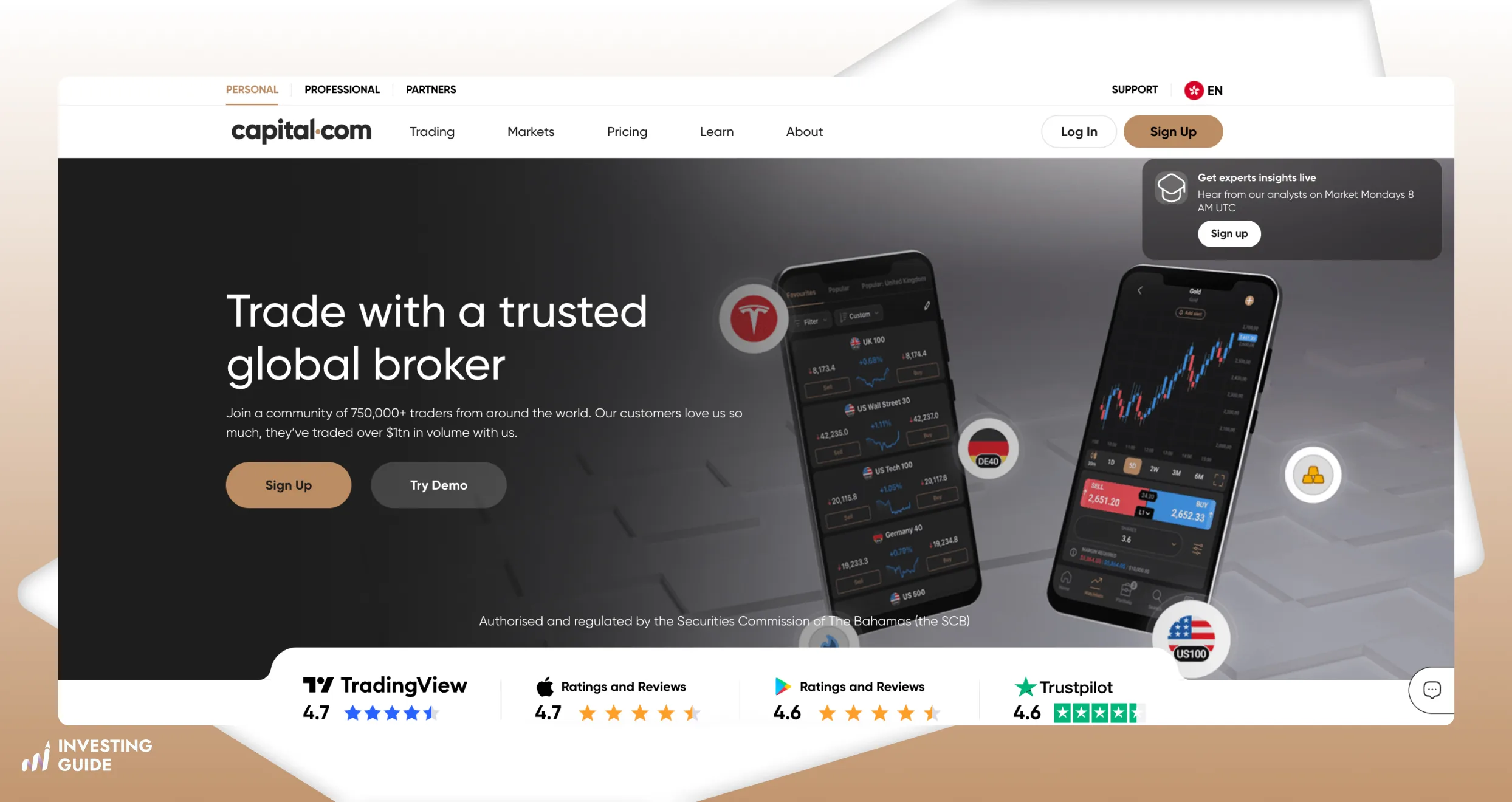
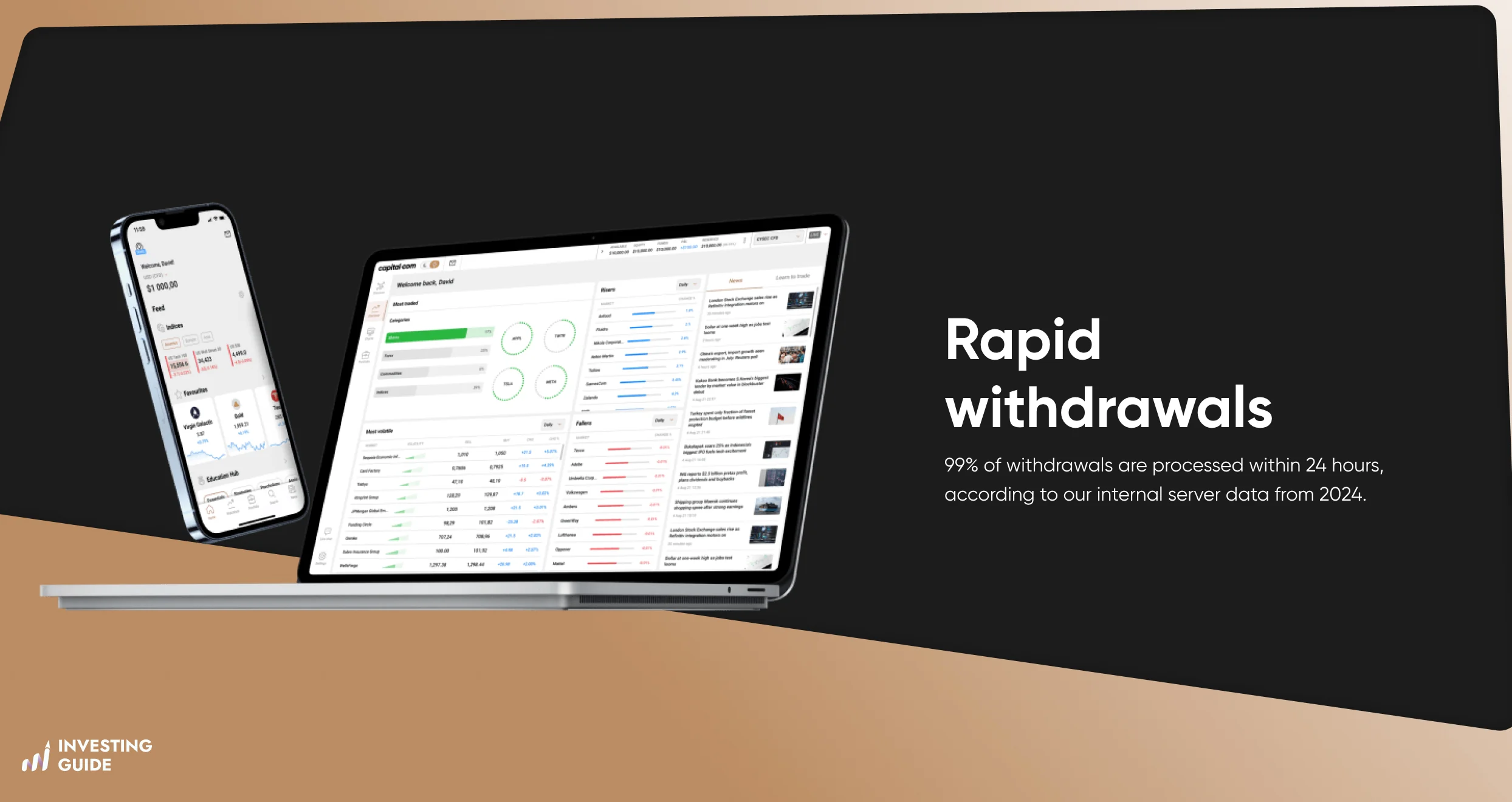
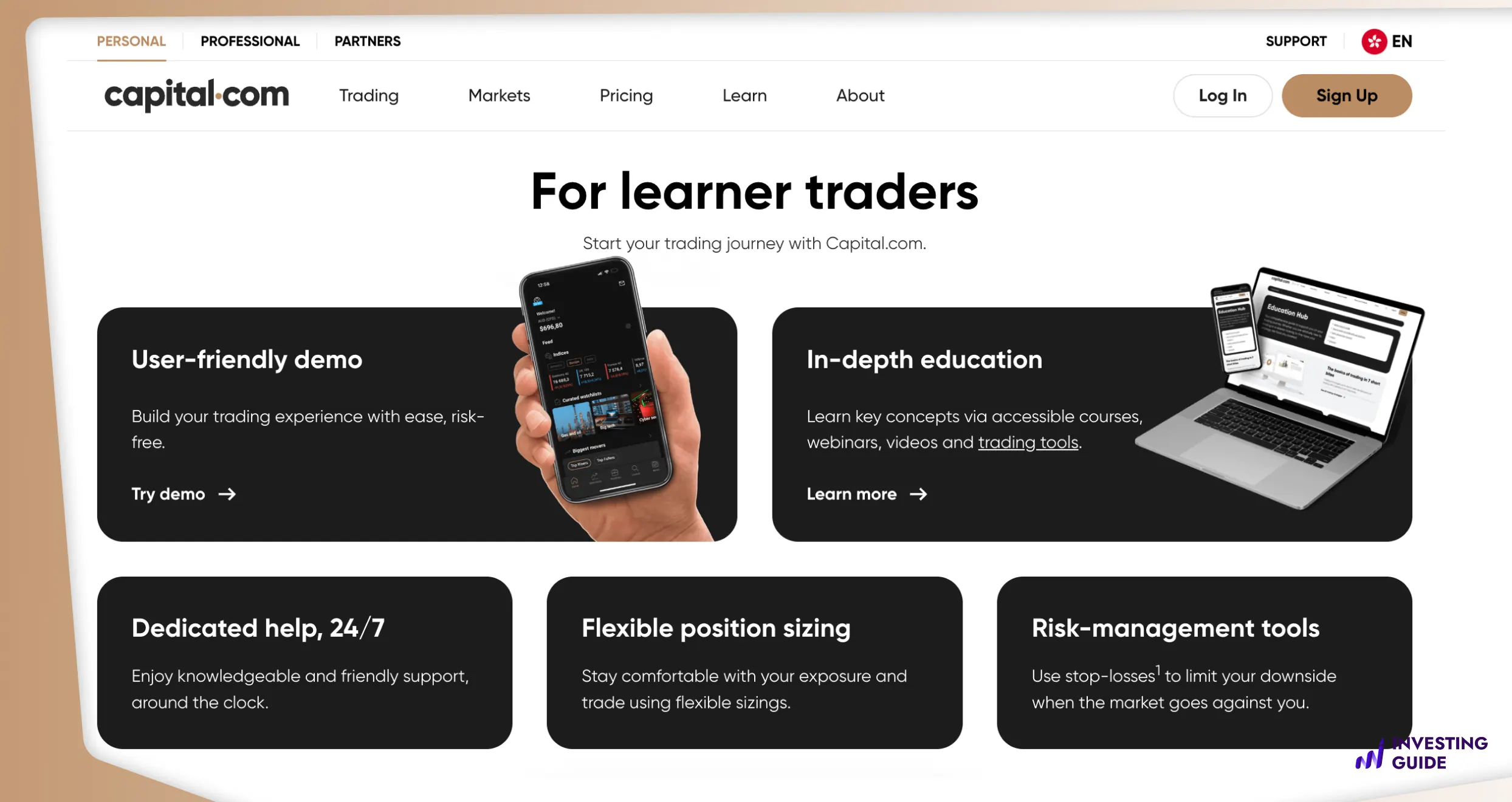
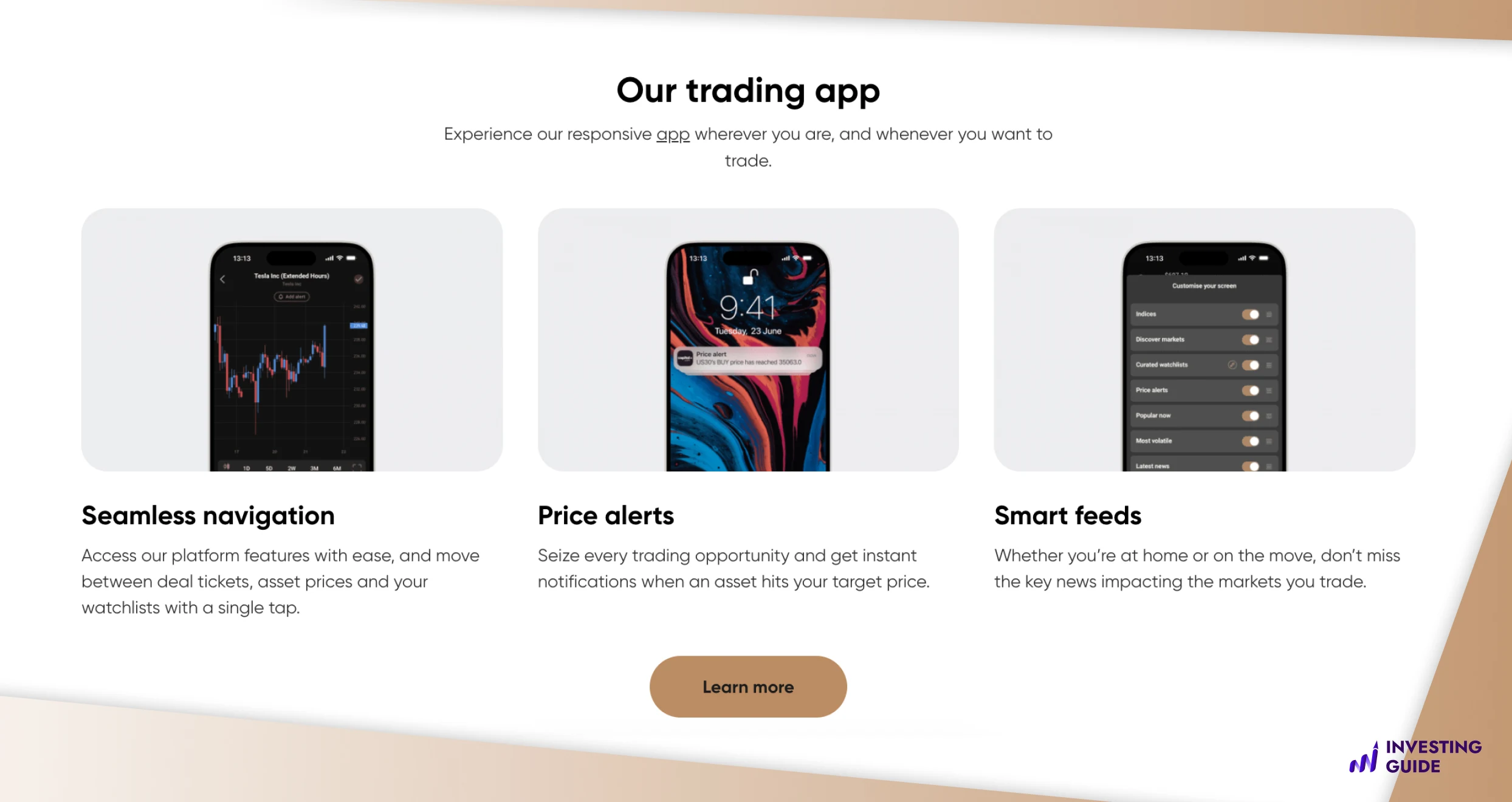
Capital.com offers gold CFDs and spread betting with spreads from around £0.30 and zero commission. Its minimum deposit requirement is £20, withdrawals are free, and there is no inactivity fee. The platform not only lists gold but also additional 60+ commodities. Plus, you get to trade shares, forex, indices, and more.
The platform’s own app and web terminal include customisable charts and price alerts, which are useful for tracking gold’s reaction to economic data releases. For traders who prefer trading on third-party platforms, the broker gives access to MT4 and TradingView.

Capital.com
✔FCA-regulated
✔24/7 customer support
Pros & Cons
Fees
Trading Assets
Pros
- Commission-free gold trading with low spreads.
- A user-friendly platform with fast execution speed.
- Quality learning and market analysis tools.
- Free transactions.
Cons
- CFD and spread betting exposure only, no physical gold ownership.
- Overnight financing applies.
| Type | Fee |
|---|---|
| Minimum Deposit | £20 |
| Commission/Spreads | Free commissions, with Capital.com spreads from 0.0006 pips |
| Overnight Funding | Yes, except for the 1X account |
| Currency Conversions | £0 |
| Guaranteed Stop-Loss Orders | Yes |
| Inactivity | £10 per month after 12 months of inactivity |
| Deposits and Withdrawals | £0 |
Why Gold Has Climbed so Fast
Gold tends to rise when investors seek safety. This year, several powerful drivers have worked in its favour. The Bank of England is expected to cut interest rates later in 2026 as inflation edges closer to target. Lower rates reduce the appeal of cash and bonds, which makes non-yielding assets such as gold more competitive.
Global uncertainty has also supported the metal. Concerns over slowing manufacturing, the US election, and shipping disruption in the Red Sea have kept markets nervous. Central banks remain big buyers, especially in Asia and emerging markets. Their steady accumulation has tightened supply and helped push prices higher.
A senior commodities strategist at a major European bank said the rally reflects both short-term caution and long-term reserve demand. He added that gold continues to act as a hedge against political and economic shocks, which explains its strength even in periods of quieter trading.
Why is the Price of Gold so High?
The main reason is simple. Demand has grown faster than supply. Global mine production has only inched higher, and recycling flows have not expanded enough to fill the gap. At the same time, investors are using gold to protect against sticky inflation and an uncertain interest rate path.
A weaker US dollar has added fuel to the rise. Gold is priced in dollars, so a softer currency makes the metal cheaper for non-US buyers. Sterling has been relatively firm, which has capped some of the gains for UK buyers. Even so, prices measured in pounds per ounce are still near record highs and remain attractive to those wary of volatile equity markets.
Gold Price Forecasts
Predictions for 2026 differ widely because so much depends on central banks and geopolitics. Several large investment houses expect gold to stay elevated even if it does not surge again. Many link the future of the gold price to the path of US inflation and the timing of Federal Reserve rate cuts.
One London metals analyst said the key question is whether prices can stabilise at these levels rather than climb every month. His team expects a period of consolidation after recent gains, with a possible return to the highs if rate cuts arrive sooner than expected.
Some banks see gold in a range of 2,300 to 2,500 dollars per ounce by the end of next year. Others see potential for stronger increases if political tensions intensify. These gold price predictions are broad projections, not firm targets. The underlying message is that analysts expect solid support unless inflation falls back sharply and global growth improves.
Will Gold Rise or Fall From Here?
Interest rates remain the biggest variable. When rates fall, the cost of holding gold falls with them. Markets currently expect the Bank of England to begin cutting rates in the second half of 2026. If inflation cools further and wage growth slows, the case for cuts strengthens. That would normally support gold.
The risk is that inflation refuses to fall or shows signs of settling above the 2 percent target. In that scenario, policymakers may keep rates higher for longer. That could weigh on the price of gold. A strong rally in global stocks or a rebound in manufacturing could also pull money away from safe haven assets.
The FTSE 100 offers another angle. Several gold miners have benefited from the rally and helped lift the index during volatile periods. If gold prices ease, mining shares may retreat and drag on the wider market.
UK Gold Price Outlook
The UK outlook is shaped partly by sterling. A stronger pound tends to cap gains because it lowers the local cost of imported metals. For now, the currency is trading in a narrow range, which suggests UK prices will continue to follow global trends closely.
Inflation in the UK remains above target but has fallen from last year’s levels. If it continues to drop, some savers may shift back towards fixed income products and cash ISAs. But if economic growth remains weak, or if mortgage costs stay high, gold may continue to appeal to households looking for stability.
Wealth managers report a rise in interest in physical gold over the past year. Clients cite political uncertainty ahead of elections in the US and Europe, along with concerns about inflation. They see gold as a diversifier when both equities and bonds face competing pressures.
How High Could Gold Go?
Technical analysts highlight strong support around the levels where gold recently broke out. They argue that as long as prices stay above those points, the broader upward trend remains intact. But they warn that the rally has been steep, which increases the risk of sharp pullbacks if sentiment shifts.
Longer-term projections are even harder to pin down. The predicted price of gold in future years will depend on supply constraints, central bank buying, and the pace of global investment in green technology. Forecasts span a wide range, reflecting the uncertainty of the economic cycle.
What Comes Next?
Gold’s direction will hinge on the same forces that drove this year’s rally. Inflation, interest rate policy, and geopolitical risk remain the key drivers. Prices look supported but stretched, which means volatility is likely to stay high.
Investors will watch upcoming Bank of England decisions, economic data from the US and China, and any signs of stress in global trade. If uncertainty persists, gold could continue to rise. If stability improves, the market may cool.
Either way, gold has reasserted its place at the centre of global finance. Few assets reflect the balance of fear and confidence as clearly, and 2026 is shaping up to be another year where that tension shapes the market.
Related Articles: